Boosting NAD naturally starts with understanding how everyday habits support your body’s energy systems. NAD plays an essential role in cellular energy, metabolism, and healthy ageing. If you’re exploring boost NAD naturally supplements, exercise, sleep, nutrition, and evidence-based NAD precursors such as NMN or NR deserve attention.
These approaches may support mitochondrial function and influence NAD levels, but supplements cannot replace healthy routines. Instead, they work best as one part of a wider strategy. Current research also demands realistic expectations because raising an NAD-related biomarker does not automatically mean greater energy, slower ageing, or a longer life.
What Is NAD+ and Why Does It Matter for Cellular Energy?
Think of NAD+ as a molecular helper that works throughout your cells. Its full name is nicotinamide adenine dinucleotide. Cells use NAD in reactions that process carbohydrates, fats, and proteins. Those reactions help transfer food-derived energy towards ATP, the form of energy that cells can readily use.
However, NAD biology stretches well beyond energy production. NAD-dependent enzymes take part in cell signalling, gene regulation, and DNA repair. This wider role helps explain why scientists study NAD in relation to ageing, metabolism, exercise, and cellular resilience. It does not mean that simply increasing NAD guarantees better health.
NAD+ and NADH Work Like a Rechargeable Shuttle
During metabolism, NAD+ accepts electrons and becomes NADH. NADH can later donate those electrons during energy-producing reactions. Think of the pair like a reusable delivery vehicle rather than disposable fuel. Both forms matter because efficient metabolism relies on continual redox cycling, not merely achieving the highest possible NAD measurement.
NAD+ Supports More Than ATP Production
Some enzymes consume NAD+ while performing specialised cellular tasks. PARP enzymes participate in responses to DNA damage, while sirtuins regulate several metabolic and stress-response processes. These mechanisms make NAD fascinating for ageing research. However, pathway activity alone cannot demonstrate that an intervention extends human lifespan or prevents disease.
NADPH Is Related, but It Has a Different Job
NAD biology also connects with NADPH, another important redox cofactor. NAD and NADH mainly participate in reactions associated with energy metabolism. NADPH provides reducing power for biosynthesis and antioxidant systems. Keeping these molecules separate prevents a common mistake: treating every NAD-related coenzyme as though it performs the same cellular function.
Why Do NAD+ Levels Change as You Age?
Ageing affects many metabolic systems simultaneously. This makes NAD levels more complicated than a fuel gauge that simply moves down each birthday. Human and experimental research suggests NAD availability can change with age, yet the size and pattern of those changes can differ between tissues, populations, and measurement methods.
The wider aging process also influences inflammation, mitochondrial activity, nutrient handling, DNA damage, and NAD-consuming enzymes. Consequently, claims that everyone loses an identical percentage of NAD by a particular age deserve caution. Biology rarely follows such a tidy graph, particularly when researchers measure different tissues and NAD-related metabolites.
The Salvage Pathway Recycles Nicotinamide
Your body does not build every NAD molecule from scratch. Through the salvage pathway, cells recycle nicotinamide towards NAD production. An enzyme called NAMPT helps convert nicotinamide into NMN. This recycling route attracts scientific interest because it provides an efficient way for cells to maintain NAD availability during normal metabolism.
DNA Damage Can Increase NAD Consumption
When DNA becomes damaged, cellular repair systems respond. PARP enzymes use NAD during parts of this response, creating a link between cellular stress and NAD consumption. However, describing this as an NAD “leak” oversimplifies the process. Cells continually balance NAD synthesis, recycling, compartmentalisation, and consumption across different tissues and conditions.
Alcohol Changes the NAD+/NADH Balance
Alcohol metabolism changes cellular redox chemistry. Oxidising ethanol increases the NADH-to-NAD+ ratio in the liver, influencing several metabolic pathways. Heavy alcohol exposure can also increase reactive oxygen species, often described as free radicals. Therefore, limiting excessive alcohol has broader metabolic value beyond any fashionable idea of an “NAD detox”.
Can You Boost NAD+ Naturally Without Supplements?
Supplements are only one part of the picture. Exercise, sleep, nutritious food, metabolic health, and sensible alcohol intake influence processes surrounding NAD metabolism. These habits also benefit health far beyond one molecule. That makes lifestyle the sensible starting point when you want to boost NAD naturally without building an elaborate supplement stack.
However, “natural” does not automatically mean evidence-based. Ideas involving molecular hydrogen, extreme fasting, or other biohacking techniques often spread before convincing human data appear. Give greater weight to established health behaviours. Then judge supplements by their ingredients, human evidence, labelled amounts, safety information, and the relevance of research to that formulation.

Exercise May Support NAD-Related Metabolism
Regular movement has one of the clearest lifestyle connections with NAD biology. Human research found that exercise increased skeletal-muscle NAMPT, which participates in NAD recycling. Aerobic exercise and resistance training also support broader metabolic and physical fitness. The benefit of exercise extends far beyond trying to maximise a single biochemical marker.
What About High-Intensity Exercise?
Short periods of high-intensity exercise create considerable metabolic demand. Intense training may influence pathways associated with NAD metabolism and mitochondrial adaptation. Still, harder is not automatically better. Your fitness, recovery, health status, and overall training volume matter. Consistent exercise is usually more practical than repeatedly exhausting yourself to chase theoretical NAD changes.
Intermittent Fasting and Calorie Restriction Need Context
Research frequently links intermittent fasting and calorie restriction with energy sensing, metabolic adaptation, and pathways involving NAD-dependent enzymes. Yet these eating patterns affect far more than NAD. Human outcomes depend on food quality, total energy intake, nutritional adequacy, body composition, and individual health. Fasting should not be marketed as a guaranteed NAD reset.
Ketosis Is Not Required for NAD Support
Very-low-carbohydrate diets or prolonged fasting can produce ketosis, shifting the fuels your body uses. This metabolic state attracts interest in ageing research. However, ketosis is not necessary for supporting general metabolic health or NAD biology. Balanced nutrition, adequate protein, regular movement, and good sleep remain more practical foundations for most people.
EMF Exposure Is Not an Established NAD Strategy
Some biohacking content claims that lowering EMF exposure preserves NAD. Robust human clinical evidence supporting EMF avoidance as an NAD-boosting strategy is lacking. Reducing late-night device use may still help your sleep routine, but that is different from claiming electromagnetic fields directly drain cellular NAD. Evidence and plausible-sounding theories should remain separate.
Which Foods and Nutrients Support Natural NAD+ Production?
Food supplies essential materials for normal NAD synthesis. Vitamin B3 forms and tryptophan can contribute directly to these pathways. Plant foods also provide fibre, vitamins, minerals, and phytonutrients that support broader health. Rather than searching for a mythical NAD superfood, build a varied dietary pattern that supplies many useful nutrients.

Whole foods also provide protein, healthy fats, minerals, and antioxidant compounds that support ordinary metabolism and mitochondrial function. However, dietary sources should not be presented as equivalent to concentrated NMN or NR products. Longevix explores that distinction further in its guide to how much NMN foods actually provide.
Niacin and Nicotinamide Feed NAD Biosynthesis
Vitamin B3 includes niacin, nicotinamide, and related compounds. Human tissues convert absorbed niacin into metabolically active NAD. The NIH Office of Dietary Supplements notes that more than 400 enzymes require NAD. However, high-dose supplementation differs greatly from obtaining vitamin B3 through an ordinary diet.
Tryptophan Uses the De Novo Route
Your body can also make NAD from tryptophan through de novo synthesis. This route is longer than recycling nicotinamide through the salvage system. Tryptophan from dietary protein therefore contributes indirectly to niacin status and NAD formation. This pathway shows why normal NAD biology does not depend solely on NMN or NR supplementation.
NMN and NR Are Different From Normal Food Intake
Foods may contain small amounts of compounds linked with NAD metabolism. However, dietary amounts can differ considerably from concentrated quantities used in supplement research. Vegetables still deserve a place on your plate because they provide fibre, micronutrients, and phytonutrients. Food builds the nutritional foundation, while supplements provide concentrated and measurable ingredients.
Which Supplements Can Support NAD+ Pathways?
The phrase “NAD supplement” covers several very different products. Some ingredients are genuine NAD precursors that feed recognised biochemical pathways. Others support separate processes such as methylation. Understanding this distinction helps you avoid assuming that every ingredient marketed beside NAD works through the same mechanism or has identical human evidence.
NMN and nicotinamide riboside receive substantial attention because both participate in NAD production pathways. Vitamin B3 forms also contribute. Meanwhile, TMG, resveratrol, and quercetin have different biochemical roles. The Longevix Science page appropriately separates mechanisms, biomarkers, human outcomes, and product-specific evidence.
NMN Feeds Directly Into NAD Biosynthesis
Nicotinamide mononucleotide sits close to NAD+ within the salvage pathway. NMNAT enzymes convert NMN towards NAD formation. Human trials show that oral NMN can increase NAD-related blood measurements. However, functional outcomes vary, which means a measurable biomarker increase should not automatically become a promise of more energy or slower ageing.
Nicotinamide Riboside Takes a Related Route
Nicotinamide riboside converts towards NMN before subsequent NAD formation. It therefore belongs among recognised NAD precursors, although NR and NMN are not interchangeable ingredients. Human trials show that NR can alter the NAD metabolome. Some studies have not found corresponding improvements in mitochondrial bioenergetics or wider metabolic measures.
TMG Supports Methylation, Not Direct NAD Formation
Trimethylglycine, also called betaine, acts as a methyl donor. It does not directly convert into NAD. Therefore, TMG should not be described as another NAD precursor. Longevix makes this distinction in its Best NAD Booster Supplement guide and Science guidance, which also cautions against treating TMG as mandatory for everyone using NR or NMN.
How Longevix Supplements Fit Into a Natural NAD+ Strategy
Longevix currently offers several products relevant to NAD support, including NMN capsules, NMN powder, NR powder, NR plus TMG capsules, and NAD+ Support Gummies. Pure TMG powder provides a separate methyl-donor option. The current Longevix shop lists these products alongside their published serving information.
Product choice should begin with formulation and format rather than extravagant benefit claims. Powders offer measured single-ingredient formats. Capsules provide fixed servings, while gummies combine several compounds. Longevix also states that customers should check the physical label for full ingredients, allergens, warnings, and directions before using a product.
|
Longevix product |
Current published serving |
Format |
Practical distinction |
|
500mg NMN per capsule |
Vegan capsules |
Pre-measured NMN |
|
| 1,000mg |
Powder |
Single-ingredient NMN |
|
| 1,000mg |
Powder |
Nicotinamide riboside chloride |
|
|
300mg NR, 250mg TMG and 5mg piperine per two capsules |
Capsules |
Combined formula |
|
|
300mg NR, 250mg quercetin, 250mg trans-resveratrol and 250mg nicotinamide per two gummies |
Gummies |
Multi-ingredient formula |
|
|
1,000mg per two scoops |
Powder |
Standalone methyl donor |
The serving details above match the current live product records.
Pure NMN Capsules and NMN Powder
Pure NMN Capsules provide 500mg NMN per capsule, with 30 capsules in the current bottle. Pure NMN Powder comes in a 50g tin with a 1,000mg labelled serving and approximately 50 servings. Both provide NMN, so format is the clearest practical difference.
Pure NR Powder and NR + TMG Capsules
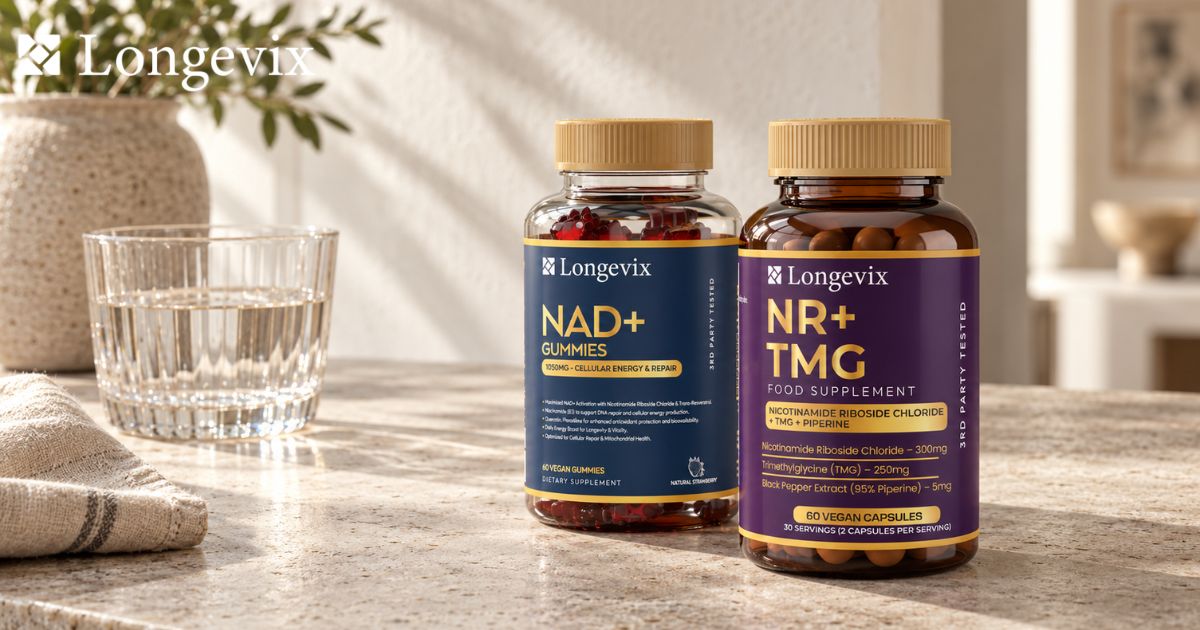
Pure NR Powder contains nicotinamide riboside chloride and uses a 1,000mg labelled serving. NR + TMG Capsules provide 300mg NR, 250mg TMG, and 5mg piperine per two capsules. The first is single-ingredient NR, while the second combines three active components.

NAD+ Support Gummies Offer a Broader Formula
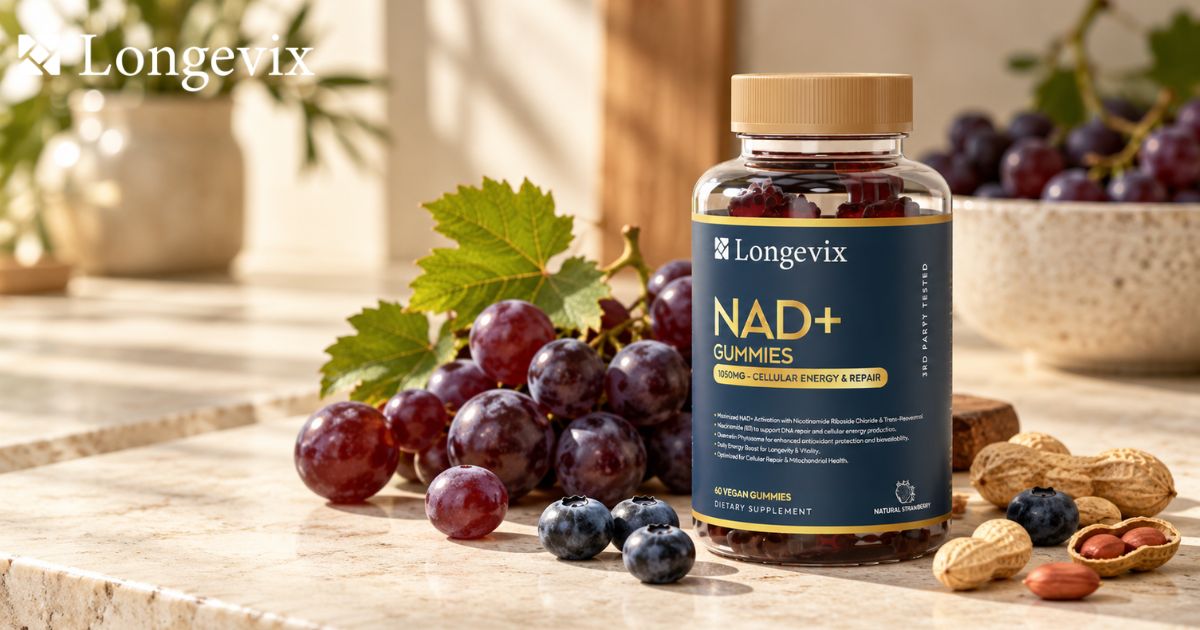
The NAD+ Support Gummies provide 300mg NR, 250mg quercetin, 250mg trans-resveratrol, and 250mg nicotinamide per two gummies. This combination differs substantially from standalone NAD precursors. If you combine products, checking overlapping ingredients becomes important because another NR or vitamin B3 product could duplicate parts of the formula.
Pure TMG Powder Has a Different Purpose
Pure TMG Powder provides a labelled 1,000mg serving using two scoops. The 50g tin contains approximately 50 servings. TMG supports methyl-donor chemistry rather than directly becoming NAD+, so it belongs beside an NAD strategy rather than inside the precursor category itself.
Do NAD+ Supplements Really Improve Energy and Healthy Ageing?
This question needs more nuance than most supplement advertising provides. Human studies show that NMN and NR can alter NAD-related biomarkers. Yet a higher biomarker does not automatically demonstrate better cellular energy, stronger muscles, improved memory, or greater longevity. Trial design, population, dose, duration, and measured outcomes all affect the result.
Longevix captures this distinction with the phrase, “Mechanism is not an outcome.” Its evidence framework warns against turning plausible biology into guaranteed benefits. No current human evidence establishes that NMN or NR stops the aging process or extends human lifespan. Healthy-ageing research remains promising, but promising and proven are different standards.
Research Case Study: A 60-Day NMN Trial
A randomised trial studied 80 healthy middle-aged adults taking placebo or 300mg, 600mg, or 900mg NMN daily for 60 days. Blood NAD concentrations increased in NMN groups. Six-minute walking distance also improved, while HOMA-IR did not show a significant between-group difference. One trial adds evidence, but cannot settle every outcome.
Research Case Study: NR Changes Biomarkers Without Guaranteeing Function
In a placebo-controlled crossover trial, 12 older men received one gram of NR daily for 21 days. NR changed the skeletal-muscle NAD metabolome, yet researchers found no improvement in mitochondrial bioenergetics. This illustrates a crucial principle: improving NAD levels does not automatically mean you will feel stronger, younger, or more energetic.
Why Longevity Claims Need Restraint
Cell and animal research links NAD biology with metabolism, stress responses, and processes relevant to longevity. Human lifespan evidence remains far less certain. An intervention that changes ageing-related pathways in a laboratory cannot automatically be described as extending human life. Clinical outcomes must catch up with the biological story before stronger claims become justified.
What About Sirtuins and Healthy Ageing?
The sirtuins require NAD and participate in metabolic regulation, gene activity, and cellular stress responses. Their connection with energy availability makes them interesting in ageing research. However, activating or influencing a pathway associated with healthy ageing does not prove slower human ageing. Mechanistic evidence explains why researchers study something; clinical trials determine meaningful outcomes.
How to Combine Natural NAD+ Support With Supplements Wisely
A sensible supplement strategy begins with lifestyle, not a crowded cupboard. Build regular exercise, balanced meals, quality sleep, and sensible alcohol habits first. Then choose supplements for a clear reason. Combining several NAD precursors can increase cost and ingredient overlap without proving that the resulting stack delivers proportionally greater benefits.
The wider metabolic picture matters just as much. Regular activity, including resistance training, helps maintain muscle and physical function. Balanced nutrition supports recovery and nutrient adequacy. Supplements can complement these habits, but they cannot compensate fully for persistent inactivity, poor sleep, excessive alcohol intake, or an otherwise unbalanced lifestyle.
Should You Combine NMN and NR?
NMN and NR feed closely related NAD-building pathways. NR converts towards NMN before subsequent conversion towards NAD+. Taking both does not therefore prove twice the benefit. Longevix’s existing NAD booster comparison also avoids presenting combined NMN and NR supplementation as automatically superior to choosing one precursor.
Do You Always Need TMG?
TMG contributes methyl groups to normal methylation chemistry and homocysteine metabolism. That explains why it sometimes appears beside NAD-related supplements. However, biochemical reasoning alone does not prove everyone taking NMN or NR requires extra TMG. Individual diet, product composition, dose, and health context all influence whether supplementation is relevant.

Watch for Formula Overlap
Combination products require closer label reading. Longevix NAD+ Support Gummies already contain NR and nicotinamide. Adding another NR or vitamin B3 product may duplicate related ingredients. The same principle applies to any supplement stack. Check each active ingredient and serving amount before assuming that more products automatically create a more sophisticated routine.

Clinical Doses Are Not Personal Prescriptions
Research doses answer specific scientific questions. They are not personalised recommendations. Trials use selected participants, defined durations, exclusion criteria, and clinical monitoring. Follow the current product label rather than copying the largest dose found in a study. Longevix likewise advises customers not to exceed the stated recommended daily amount.
NAD+ Supplement Safety, Side Effects and Who Should Take Extra Care
Safety should receive as much attention as possible benefits. Short human trials suggest studied doses of NMN and NR can be reasonably tolerated, but short-term trials cannot establish the safety of decades-long use. Medication, existing health conditions, overall nutrient intake, and multiple supplements can also change an individual’s risk profile.
Longevix advises customers not to exceed labelled daily amounts or use supplements as substitutes for a varied diet. The site also recommends qualified professional advice during pregnancy, breastfeeding, medication use, or management of a medical condition. These precautions matter because “natural” does not mean automatically suitable for everyone.
High-Dose Niacin Has Its Own Safety Profile
Supplemental niacin can cause flushing at some doses. Higher intakes can produce more serious adverse effects, including liver-related problems in certain circumstances. Nicotinamide also has its own safety profile. Therefore, avoid treating every vitamin B3 form as interchangeable. The NIH niacin fact sheet provides detailed safety information.
Piperine Deserves Attention With Medicines
Longevix NR + TMG Capsules contain 5mg piperine per labelled two-capsule serving. The complete formulation therefore deserves attention when you take medicines or manage a health condition. This does not mean every user will experience an interaction. It means supplement decisions should consider all ingredients rather than focusing only on the headline NR amount.
Certificates Should Match Your Product and Batch
Testing documents are useful only when interpreted within their actual scope. The Longevix Certificates page advises customers to match the product, batch, report date, and tests shown. A certificate covering identity or purity cannot prove unlisted contaminant tests, clinical effectiveness, or the quality of every future batch.
The Bottom Line
Boosting NAD naturally is not about finding a secret food, brutal workout, or enormous supplement stack. Regular movement, nutritious food, adequate sleep, good metabolic health, and sensible alcohol intake create the strongest foundation. NAD+ biology adds useful context, while NMN and NR provide concentrated precursor formats that researchers continue to study.
If supplements fit your routine, choose transparent formulations and realistic claims. Explore the current Longevix shop, review its Science guidance, and check relevant testing documents. Smart NAD support should complement healthy living rather than transform promising science into a guarantee.
Frequently asked questions
Can You Raise Your NAD Levels Naturally Without Supplements?
Yes. Regular exercise, sufficient sleep, balanced nutrition, maintaining metabolic health, and limiting excessive alcohol can support pathways involved in NAD metabolism. Exercise has particularly useful human evidence showing increased skeletal-muscle NAMPT, although individual changes in NAD itself can vary between tissues and circumstances.
How Do You Boost NAD Naturally?
Start with consistent exercise, good-quality sleep, nutrient-rich foods, and sensible alcohol intake. These habits support normal energy metabolism and the pathways that make and recycle NAD. Extreme diets or biohacking techniques are not necessary. Sustainable habits usually provide broader health value than focusing on a single molecular target.
What Foods Increase NAD Levels?
Foods containing niacin, nicotinamide, and tryptophan provide materials your body can use for NAD formation. Useful sources include poultry, fish, meat, nuts, legumes, enriched or whole grains, and other protein-rich foods. A varied diet matters more than trying to identify one food capable of dramatically raising NAD.
Does Exercise Increase NAD+ Levels?
Exercise influences NAD-related metabolism and can increase skeletal-muscle NAMPT, an enzyme involved in NAD recycling. However, results can depend on training type, tissue, age, and metabolic health. The strongest reason to exercise remains its broad benefits for fitness, muscle, cardiovascular health, and metabolic function rather than one isolated biomarker.
What Are the Best Natural Ways to Increase NAD Levels?
Regular aerobic activity, strength training, balanced nutrition, good sleep, sensible alcohol intake, and healthy metabolic habits provide a practical natural foundation. These behaviours support energy metabolism through numerous pathways. None should be presented as a guaranteed method for reaching a specific NAD value or reversing age-related biological changes.