Resveratrol has a healthy-ageing reputation, yet its safety deserves just as much attention as its promise. If you're considering a supplement, knowing the possible resveratrol side effects can help you make a calmer, better-informed choice. The most consistent concerns involve gastrointestinal side effects, including nausea and diarrhoea, especially at higher doses. Medicines and existing health conditions can change the picture. Even trans-resveratrol isn't automatically suitable for everyone.
This guide explains what human research actually shows, where drug interactions matter, and when to seek advice. It also examines the real ingredient amounts in Longevix NAD+ Support Gummies without claiming that the finished product has been clinically proven safe.
What Is Resveratrol and Why Does Its Safety Matter?
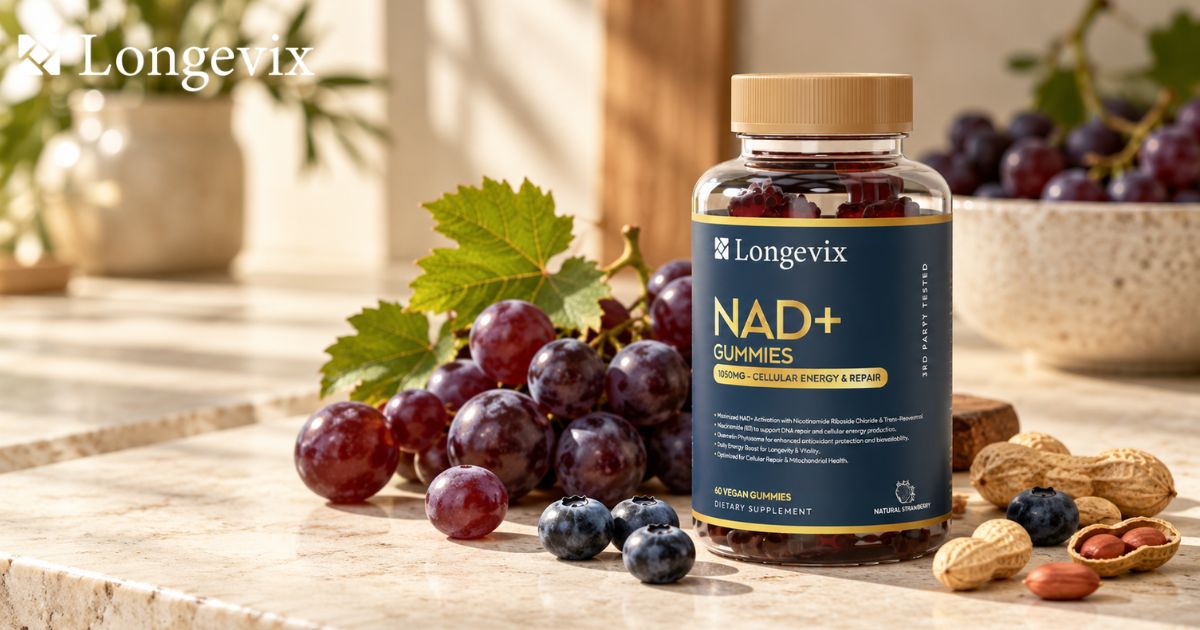
Resveratrol is a natural compound found in grapes, peanuts, and some berries. It belongs to a group of plant substances called polyphenols. Plants produce these compounds partly in response to environmental challenges. Researchers investigate resveratrol because laboratory studies suggest it influences cellular signalling, metabolism, and oxidative stress.
Interest grew when scientists investigated resveratrol's relationship with sirtuins, including an enzyme called SIRT1. These proteins participate in several normal cellular processes. However, influencing a biological pathway doesn't prove that a supplement prevents disease or extends human lifespan. Research remains promising in certain areas but far from conclusive.
Is Trans-Resveratrol Different From Resveratrol in Food?
Resveratrol exists in different molecular arrangements, including trans-resveratrol and cis-resveratrol. Researchers frequently study the trans form, while ordinary foods contain varying concentrations of resveratrol-related compounds. Supplements usually deliver much larger quantities than food. Therefore, eating grapes and taking concentrated capsules or gummies aren't equivalent experiences.
Why Does Bioavailability Matter?
After swallowing resveratrol, your digestive system absorbs some of it. However, your body rapidly converts much of the compound into metabolites. This affects bioavailability, or how much unchanged substance reaches circulation. The process complicates supplement research because a larger swallowed amount doesn't necessarily produce a proportionately greater biological effect.
For further scientific context, explore the Longevix guide to resveratrol and healthy ageing, which examines mechanisms, human evidence, and the limits of longevity claims.
What Are the Most Common Resveratrol Side Effects?
Stomach-related problems are among the most consistently reported unwanted effects. Human studies have described nausea, excessive gas, abdominal pain, and loose stools, particularly at larger doses. Some people may also experience bloating or changes in bowel habits. However, researchers haven't established reliable side-effect rates for every resveratrol formulation.
Most short-term studies suggest that resveratrol is reasonably tolerated under their particular research conditions. Nevertheless, reasonable tolerance doesn't mean universal safety. Your medical history, medicines, dose, and other supplement ingredients may influence your response. The Memorial Sloan Kettering resveratrol review describes these concerns in clinical context.
Why Can Resveratrol Cause Diarrhoea and Stomach Upset?
Higher amounts expose your digestive system to concentrated resveratrol and its metabolites. Some research participants developed gastrointestinal side effects after taking gram-level doses. Still, the exact biological explanation for every symptom isn't established. Food intolerances, infections, sweeteners, and other supplements can also produce similar complaints.

Can Resveratrol Cause Headaches or Fatigue?
Headaches and fatigue appear in some adverse-event reports, although they aren't as consistently described as digestive symptoms. Such reactions can have many causes. If symptoms repeatedly follow a new supplement, record the timing and discuss the pattern with a pharmacist. Avoid assuming the supplement is responsible without assessment.
Can Resveratrol Cause Allergic Reactions?
Allergic reactions are possible with supplements, including reactions to inactive ingredients. Skin irritation has also appeared in reports involving resveratrol-containing cosmetic products. A rash may require medical advice, while sudden throat swelling or breathing difficulty demands emergency care. The exact frequency of serious resveratrol-related allergy remains uncertain.
Can Resveratrol Side Effects Affect Your Liver or Kidneys?
The liver processes many compounds, including resveratrol. Understandably, this raises questions about liver dysfunction. Yet the evidence is less alarming than some headlines suggest. Human studies occasionally reported mild increases in liver blood-test measurements, particularly with high doses. Those findings haven't established that resveratrol commonly causes serious liver injury.
According to the NIH LiverTox review, resveratrol hasn't been convincingly linked to clinically apparent liver damage. Some studies involving approximately 1.5–3 grams daily reported small increases in liver enzymes. Measurements generally returned towards normal after supplementation stopped. These findings require context rather than sensational interpretation.
Does Resveratrol Cause Liver Damage?
An elevated liver enzyme isn't identical to permanent liver damage. Blood tests can change for several reasons, including medication use, illness, and existing liver conditions. People with non-alcoholic fatty liver disease may also respond differently from healthy participants. Anyone with liver disease should discuss concentrated supplementation with their clinician.
What About Resveratrol and Kidney Safety?
Kidney concerns mainly arise from particular high-dose research settings, including a specialised formulation investigated in patients with serious illness. Those findings don't demonstrate that ordinary supplement amounts damage healthy kidneys. However, people with existing kidney disease should avoid assuming that a natural ingredient is automatically suitable for them.
Which Symptoms Could Signal a Serious Problem?
Persistent vomiting, severe upper abdominal pain, yellowing of the eyes, unusually dark urine, or markedly reduced urination deserve prompt medical assessment. These symptoms have several possible causes and aren't proof of resveratrol toxicity. Nevertheless, they shouldn't be ignored simply because the product is sold as a food supplement.
How Does Resveratrol Dosage Influence Side Effects?
Dose makes a meaningful difference when interpreting safety research. Human clinical trials have investigated amounts ranging from a few dozen milligrams to several grams daily. Larger doses have generally produced more digestive complaints. However, differences in participants, formulations, and study duration make direct comparisons difficult.
Crucially, no universal resveratrol dose has been established to extend human lifespan or reverse ageing. Taking more doesn't guarantee additional benefits. The Linus Pauling Institute's resveratrol review provides useful detail about high doses, tolerability, and supplement research.
What Do Different Research Doses Tell Us?
|
Daily dose studied |
What the evidence tells us |
Important limitation |
|
250 mg |
Investigated in human studies, including exercise research |
Doesn't prove safety or benefit for every formulation |
|
500–1,000 mg |
Used in various clinical investigations |
Findings vary by population and treatment period |
|
Above 1,000 mg |
Digestive complaints have appeared more frequently in some studies |
Not a universal toxicity threshold |
|
2,500–5,000 mg |
Associated with increased gastrointestinal complaints in several studies |
High-dose research doesn't represent ordinary supplement guidance |
These amounts describe published research, not recommended daily intake. A study dose isn't automatically appropriate for personal use. Furthermore, a product containing several active ingredients cannot borrow the entire safety profile of a single-ingredient trial. Understanding that difference helps prevent misleading comparisons.
Does Higher Absorption Mean Better Results?
Some formulations aim to improve bioavailability through changes in particle size or delivery systems. Improved absorption may change exposure, but it doesn't automatically establish better clinical outcomes. It may also change the relevance of existing safety data. Claims about superior absorption should be supported by evidence for the actual formulation.
Resveratrol Drug Interactions: What Should You Avoid?
Potential drug interactions deserve attention because supplements can influence how medicines behave. Resveratrol has demonstrated effects on clotting-related processes in laboratory research. This creates particular concerns for people taking anticoagulant drugs or medicines that reduce platelet activity. Human interaction risks remain incompletely characterised.
Warfarin, aspirin, and clopidogrel are examples worth discussing with a healthcare professional. These medicines affect clotting through different mechanisms. Combining them with supplements that influence platelet aggregation may create additional uncertainty. Never stop prescribed medication without medical advice simply because you want to take resveratrol.
Can Resveratrol Interact With Blood Thinners?
Laboratory studies suggest resveratrol may reduce platelet aggregation. However, these observations don't establish exactly how much bleeding risk increases in humans. Memorial Sloan Kettering advises caution with blood-thinning medicines. Before using resveratrol, ask your clinician or pharmacist to assess your complete treatment plan.

What Is the Cytochrome P450 Connection?
Your liver uses cytochrome P450 enzymes to process many medicines. A human study reported changes in several enzyme activities after participants took one gram of resveratrol daily for four weeks. These included effects involving CYP3A4. Such findings make medication reviews sensible, although they don't predict every individual interaction.
Can Resveratrol Interact With Other Supplements?
Overlapping ingredients may increase total exposure without providing additional benefit. For example, someone combining a resveratrol capsule with a multi-ingredient longevity gummy could unintentionally double their intake. Herbal products and other concentrated compounds may introduce further interaction questions. Check the full ingredient panel of every product rather than comparing front-label claims alone.
Who Should Avoid Resveratrol Supplements?
Some people need a more cautious approach than others. Pregnancy, breastfeeding, bleeding disorders, planned surgery, and complex medication regimens all raise questions that ordinary supplement research cannot fully answer. Existing liver or kidney disease also changes the assessment. Professional guidance matters more than general internet dosing advice.
People receiving cancer treatment should speak with their oncology team before using resveratrol. Laboratory studies suggest possible hormone-related activity, while some experiments investigate interactions with cancer therapies. These findings don't prove that resveratrol causes cancer. They do show why unsupervised supplementation may be inappropriate in certain situations.
Is Resveratrol Safe During Pregnancy or Breastfeeding?
Adequate human safety evidence for concentrated resveratrol during pregnancy and breastfeeding is lacking. Normal consumption of resveratrol-containing foods shouldn't be confused with taking high-concentration supplements. If you're pregnant, breastfeeding, or trying to conceive, seek individual professional advice before considering supplementation.
Why Does Surgery Require Special Consideration?
Surgery often involves medicines, anaesthesia, and careful management of bleeding risk. Because resveratrol may influence clotting-related pathways, your surgical team needs to know about its use. Tell them about all supplements before a planned operation. Follow their instructions rather than choosing an arbitrary stopping date.
What About Thyroid and Hormone-Related Conditions?
Some laboratory and animal research raises questions about resveratrol's effects on thyroid and hormone signalling. However, evidence doesn't establish predictable thyroid problems in healthy supplement users. People managing thyroid disorders or hormone-sensitive conditions should discuss these uncertainties with their clinician, especially before long-term or high-dose use.
Can You Take Resveratrol Every Day Safely?
Daily supplementation sounds straightforward, but long-term safety remains less certain than short-term tolerance. Many resveratrol studies last weeks or months rather than years. Even well-designed trials cannot answer questions they never measured. An absence of serious reactions during a brief study doesn't establish lifelong safety.
Resveratrol also hasn't demonstrated reliable lifespan extension in humans. Laboratory findings involving SIRT1 and cellular signalling shouldn't be mistaken for proven anti-ageing results. The practical decision is whether the expected benefit justifies the remaining uncertainty for your circumstances. Existing medicines and health conditions deserve particular weight.
A Surprising Human Study: Resveratrol and Exercise
A 2013 randomised trial studied 27 older men undertaking eight weeks of exercise training. Participants received either placebo or 250 mg of trans-resveratrol daily. The resveratrol group showed smaller improvements in some cardiovascular measures. This doesn't prove resveratrol generally blocks exercise benefits, but it challenges simplistic longevity claims.
Read the original exercise and resveratrol clinical study for its methods and limitations. Importantly, the trial investigated trans-resveratrol with exercise, not the finished Longevix gummy formula. Sharing one ingredient amount doesn't make two interventions equivalent.
Why Are Long-Term Supplement Studies Difficult to Interpret?
Age, diet, illness, medication use, and study duration can all influence results. Researchers also measure different outcomes, from liver enzymes to cardiovascular markers. Some measurements improve while others remain unchanged. Consequently, one favourable finding doesn't establish that daily resveratrol use prevents disease or improves overall health.
Resveratrol Safety in Longevix NAD+ Support Gummies
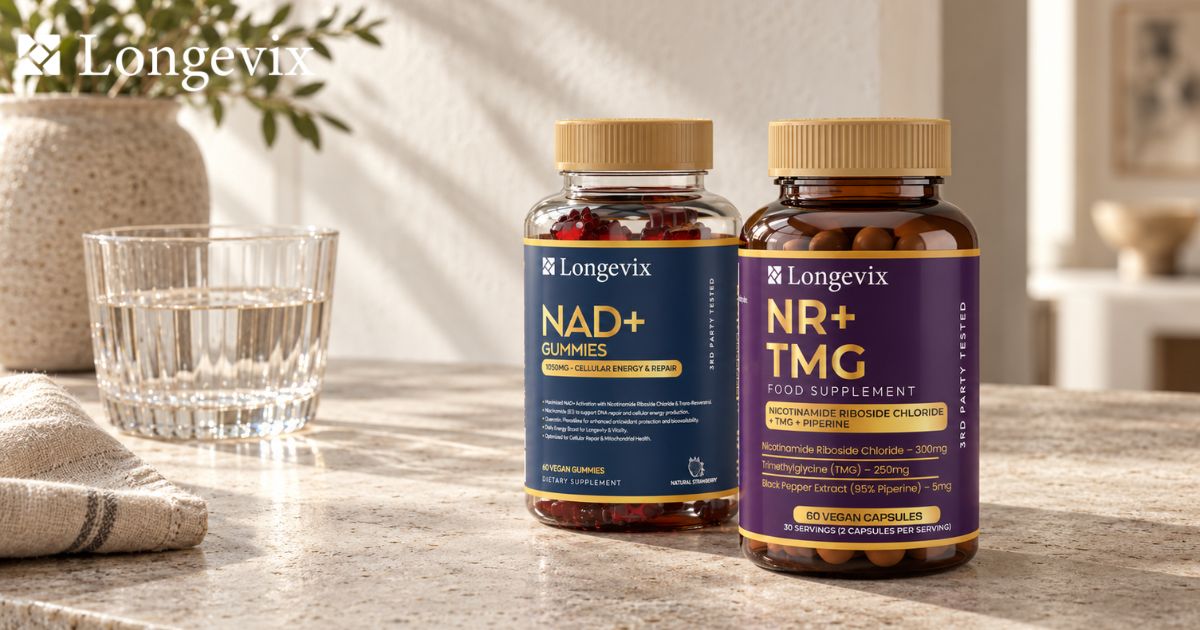
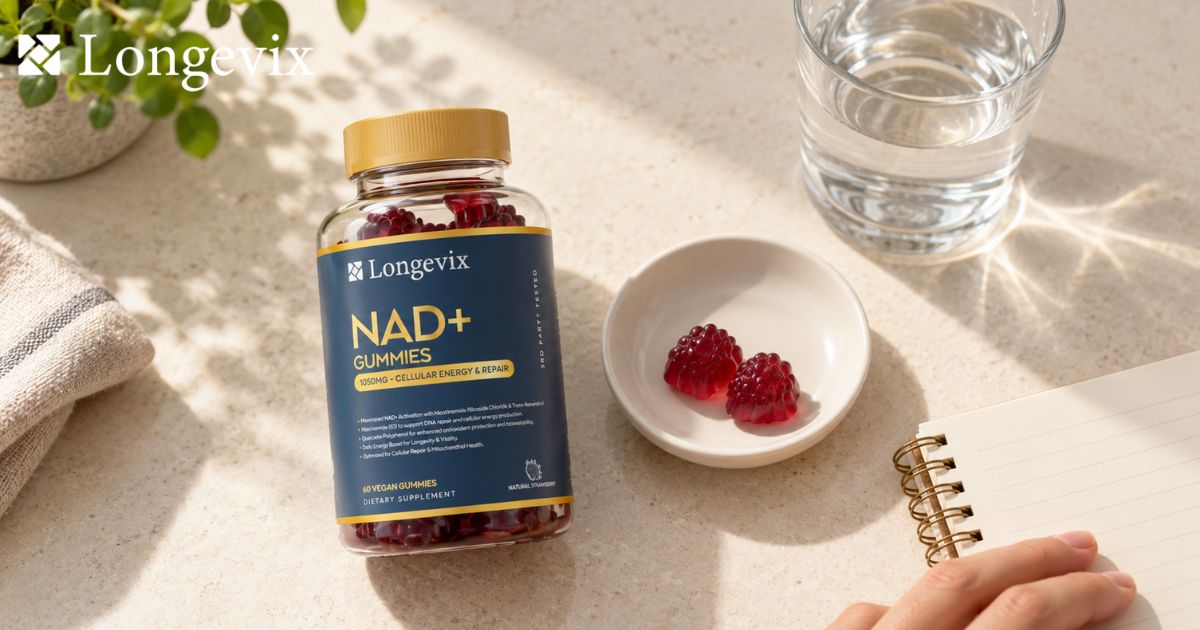
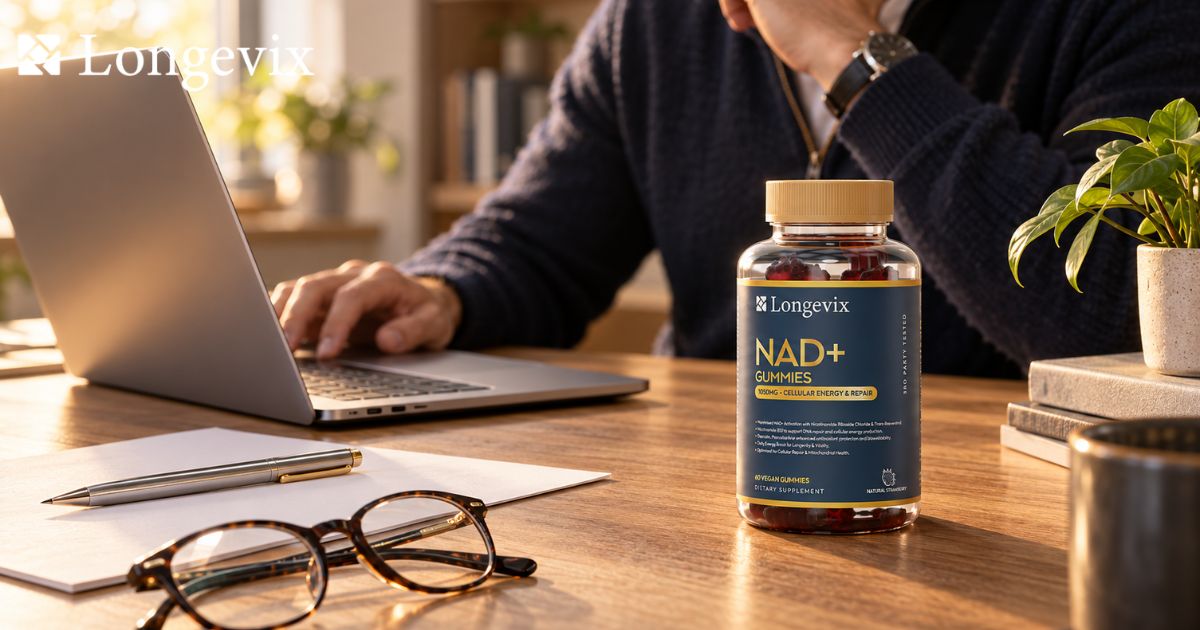
Longevix currently lists NAD+ Support Gummies, a strawberry-flavoured supplement containing four active ingredients. Its labelled serving is two gummies daily. Each 60-gummy bottle therefore provides 30 labelled servings. This is a combination product, not a standalone resveratrol supplement.
The formula pairs trans-resveratrol with nicotinamide riboside, quercetin, and nicotinamide. These compounds participate in different areas of cellular biology. However, their presence together doesn't prove better outcomes or establish the finished product's long-term safety. Individual-ingredient studies cannot substitute for direct product-specific clinical research.
What Is Actually Inside a Two-Gummy Serving?
|
Active ingredient |
Published amount |
Relevant consideration |
|
Nicotinamide riboside (NR) |
300 mg |
NAD-related precursor; study results depend on dose and formulation |
|
Quercetin |
250 mg |
Plant polyphenol with its own safety and interaction considerations |
|
Trans-resveratrol |
250 mg |
Research includes gastrointestinal and medication-related concerns |
|
Nicotinamide (vitamin B3) |
250 mg |
Total vitamin B3-related intake needs consideration alongside other products |
The amounts come from the current official Longevix product page. They describe the combined two-gummy serving, not one gummy. The physical packaging should confirm allergens, excipients, and current warnings.
Does the 250 mg Resveratrol Amount Guarantee Safety?
No. The 250 mg quantity is below many gram-level doses associated with digestive complaints, but this doesn't guarantee safety. Your medicines, medical conditions, and other supplements still matter. Importantly, the formula also provides 250 mg of nicotinamide and 300 mg of NR per serving.
Why Does the Complete Ingredient Label Matter?
Imagine two supplements that each mention resveratrol on the front. One contains purified trans-resveratrol, while another combines it with several additional compounds. Their safety assessments won't necessarily match. The ingredient source, exact amounts, allergens, and accompanying substances matter just as much as the highlighted ingredient.
How Can You Check Product Testing Information?
Longevix publishes a Certificates of Analysis page with available documents. A report may identify the tested sample, laboratory results, and relevant batch information. Match the report reference to your actual packaging. Don't assume a certificate verifies unlisted contaminants, every manufacturing batch, or clinical effectiveness.
For an ingredient-by-ingredient discussion of the combined formula, read the Longevix NAD+ gummies side-effects guide. It complements this resveratrol-specific article without replacing individual medical advice.
Resveratrol Safety Rules in the UK and USA
Supplement regulations differ across countries, making geographical context important. Great Britain regulates food supplements and applicable novel foods under defined requirements. Businesses must also follow relevant nutrition and health-claims rules. According to GOV.UK supplement-labelling guidance, foods cannot be presented as treating, preventing, or curing disease.
Resveratrol sourcing creates an additional complication. Great Britain's novel-food register contains different entries for synthetic trans-resveratrol and trans-resveratrol from a specified microbial source. Their conditions differ. Therefore, readers shouldn't interpret a single published limit as a universal safety recommendation or a complete assessment of every resveratrol product.
Does Great Britain Have a Maximum Resveratrol Dose?
One Food Standards Agency authorisation for synthetic trans-resveratrol specifies 150 mg daily in adult capsule or tablet supplements. A separate microbial-source authorisation uses different conditions linked to conventional Japanese knotweed-derived supplement use. Neither entry should be generalised without checking ingredient identity and applicability.
The published Longevix gummy description lists 250 mg of trans-resveratrol per serving. However, its online summary doesn't establish the precise source or authorisation basis. That information is necessary before reaching a product-specific compliance conclusion. The amount alone cannot prove either compliance or non-compliance.
How Are Resveratrol Supplements Regulated in the USA?
In the United States, the Food and Drug Administration generally doesn't approve dietary supplements for safety and effectiveness before sale. Manufacturers remain responsible for applicable legal requirements. Some new dietary ingredients have additional notification requirements. FDA oversight doesn't mean every commercial supplement has undergone clinical testing.
What Should You Do If Resveratrol Causes Side Effects?
A new symptom deserves attention, but timing alone doesn't establish its cause. If discomfort begins after starting a supplement, stop taking that supplement and review the situation with a pharmacist or clinician. Record the serving amount, symptoms, medication use, and timing. Don't stop prescribed medicine without professional guidance.
Some warning signs require immediate action. Severe breathing difficulty, throat swelling, collapse, or significant bleeding may indicate an emergency. Persistent vomiting, jaundice, dark urine, or severe abdominal pain also warrant urgent assessment. An ordinary stomach complaint and a serious medical reaction require very different responses.
Mild Symptoms Versus Serious Warning Signs
|
Symptom pattern |
Appropriate response |
|
Brief nausea or mild bloating |
Stop the supplement and review the complete label |
|
Recurrent diarrhoea or persistent discomfort |
Speak with a pharmacist or healthcare professional |
|
Unusual bleeding or concerning medication combination |
Obtain prompt medical advice |
|
Jaundice, dark urine, or severe persistent abdominal pain |
Seek urgent medical assessment |
|
Throat swelling, breathing difficulty, or collapse |
Call emergency services immediately |
In the UK, call 999 for suspected anaphylaxis. In the USA, call 911 for a life-threatening emergency. The NHS anaphylaxis guide explains serious allergic warning signs and emergency treatment.
A Practical Example of Checking a Possible Reaction
Consider a hypothetical adult who develops stomach cramps after adding a new longevity supplement. Their routine also includes a multivitamin and prescription medication. Rather than blaming one compound, a pharmacist would review the complete ingredient list, exposure history, and symptom timeline. This approach is more informative than experimenting with larger or smaller doses alone.
How Can You Make a More Informed Supplement Decision?
Start with the fundamentals: know the ingredient, understand the serving, check medication compatibility, and review the available evidence. Compare Longevix product information with its science and evidence guidance. If a sourcing detail or testing document remains unclear, contact Longevix for clarification before deciding.
The Bottom Line on Resveratrol Side Effects
Resveratrol isn't necessarily dangerous, but it isn't risk-free. Digestive reactions are better established than many dramatic toxicity claims, while medicine interactions and individual medical circumstances require caution. The strongest decision isn't always to take more or less. It's to understand what you're considering and why.
For Longevix shoppers, that means checking the full NAD+ Support Gummies formula rather than focusing only on resveratrol. Clear labels, verifiable testing documents, realistic expectations, and professional advice provide a sounder basis for decisions than longevity promises.
Health information notice: This article provides general educational information, not individual medical advice. Supplements don't replace a balanced diet, prescribed treatment, or professional assessment. Check the current product packaging and consult an appropriately qualified healthcare professional when necessary.
Frequently asked questions
What happens if you take resveratrol every day?
Some adults tolerate daily resveratrol during short-term studies. However, digestive symptoms and medication interactions are possible, and long-term safety remains insufficiently established.
Who should avoid resveratrol?
People with bleeding disorders, complex medication regimens, hormone-sensitive conditions, or serious medical illnesses should seek professional advice first. Pregnancy, breastfeeding, cancer treatment, and planned surgery also warrant caution.
What should you not mix with resveratrol?
Avoid combining resveratrol with blood-thinning medicines such as warfarin or antiplatelet medicines without professional guidance. Other supplements and prescription medicines may also require interaction checks.
What is the downside of resveratrol?
Its main concerns include digestive discomfort, possible drug interactions, uncertain long-term safety, and exaggerated benefit claims. Higher doses can increase unwanted reactions without guaranteeing greater benefits.
Is resveratrol hard on your liver?
Resveratrol hasn't been convincingly linked to clinically apparent liver injury. Some high-dose studies reported temporary liver-enzyme increases, so existing liver conditions and medication use remain important.