

Creatine monohydrate gummies can offer a portable alternative to mixing powder. Whether a particular gummy provides an effective amount depends on its verified creatine content per full serving, stability and regular use—not on its chewable format alone. Most established research concerns creatine monohydrate as an ingredient, rather than any specific gummy brand.
For an example of a pre-portioned option, Longevix Creatine Vitality Gummies come as 60 gummies with 15 labelled four-gummy servings. Check the actual pack for the creatine amount rather than assuming that every gummy provides the same dose as powder. See creatine chews vs powder for a practical comparison.
Reliable products should make your daily creatine intake clear and encourage consistent supplementation. This guide explains how creatine gummies work, how they compare with powder and what trustworthy labels should show. It also places Longevix Creatine Vitality Gummies within a careful, evidence-led buying framework for UK and US readers with greater clarity.
What Are Creatine Monohydrate Gummies?
Creatine monohydrate gummies are chewable supplements that place creatine monohydrate inside a flavoured gummy base. The ingredient itself isn’t new. Only the delivery format has changed. For many people, an easy to chew supplement feels simpler than a powder, capsule or large tablet.
The appeal is obvious because there is usually no mixing required. However, the gummy base may contain sweeteners, acids, flavourings, colours, coatings and gelling agents. Those ingredients influence texture, dietary suitability, dental exposure and digestive tolerance. A gummy can be convenient without being nutritionally simple.
Creatine Monohydrate Versus Other Forms
Creatine appears as monohydrate, hydrochloride, citrate and several branded variants. Creatine monohydrate remains the most extensively studied form. The International Society of Sports Nutrition position stand identifies it as the best-supported option for high-intensity exercise capacity and training adaptations. A complicated name doesn’t automatically mean better absorption or results.
Gummies, Powders, Capsules and Tablets
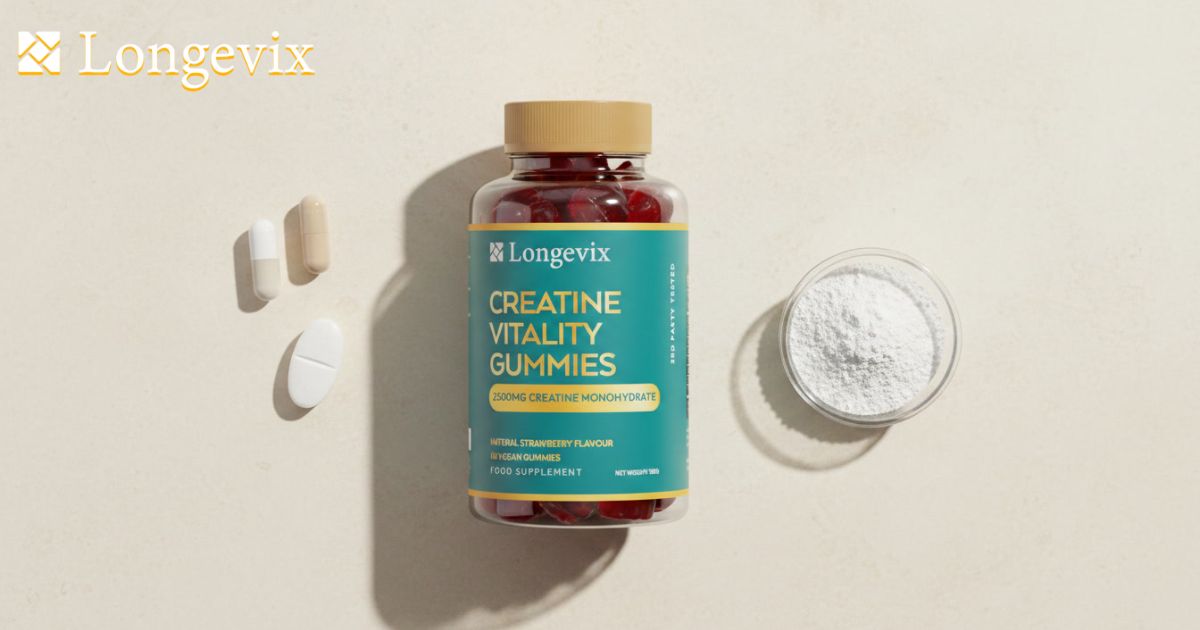
Each format solves a different practical problem. Gummies travel well and taste pleasant. Powder offers flexible measurement and often fewer added ingredients. Capsules avoid sweetness but may require several pills. Tablets provide fixed portions but can feel difficult to swallow. The best format combines accurate labelling with a routine you can sustain.
|
Format |
Main advantage |
Main limitation |
May suit |
|
Creatine gummies |
Ready to chew and portable |
Several pieces may form one serving |
People who dislike mixing |
|
Creatine powder |
Flexible and often economical |
Requires measuring and liquid |
People wanting a simple formula |
|
Creatine capsules |
Portable and unsweetened |
Several capsules may be needed |
People avoiding flavoured products |
|
Creatine tablets |
Fixed portions |
Large tablets may be awkward |
People preferring solid supplements |
How Does Creatine Work in the Body?
Creatine occurs naturally in your body and in foods such as meat and fish. Most stored creatine sits in skeletal muscle. There, it contributes to the phosphocreatine system, which helps recycle adenosine triphosphate. ATP supplies immediate energy for muscular contractions during high intensity workouts.
A simple analogy helps. ATP is like cash in your pocket, ready for immediate use. Phosphocreatine acts like a nearby reserve that helps replace that cash quickly. This system matters most during short, repeated efforts such as sprinting, jumping and heavy resistance exercise. It can support endurance and power across repeated efforts.
The ATP–Phosphocreatine Cycle

During a hard muscular effort, ATP loses a phosphate group and becomes ADP. Phosphocreatine can donate a phosphate group, helping restore ATP. Creatine isn’t a stimulant and shouldn’t feel like caffeine. Its effects depend on building or maintaining creatine stores rather than creating an instant buzz.
|
Stage |
What happens |
|
Exercise begins |
Working muscle uses ATP |
|
ATP releases energy |
ATP becomes ADP |
|
Phosphocreatine responds |
It donates a phosphate group |
|
ATP is restored |
Rapid energy becomes available again |
|
Effort repeats |
Stored creatine may support repeated intense work |
Does the Gummy Format Change Creatine’s Role?
Your body ultimately uses the creatine molecule rather than the tub, capsule or gummy around it. Therefore, an accurately formulated gummy can deliver the same active compound as powder. Format still matters when it changes potency, stability, serving accuracy, tolerance or adherence. Convenience cannot rescue an underdosed or poorly labelled product.
Do Creatine Monohydrate Gummies Actually Work?
Creatine monohydrate gummies can work when they deliver an appropriate and accurately labelled amount. Research supports creatine monohydrate for muscle strength support alongside resistance training. It can also contribute to performance enhancement during repeated short bursts of demanding activity.
However, evidence for creatine monohydrate does not verify every gummy sold online. A colourful bottle may promise muscle building support, yet marketing cannot prove potency. Results depend on the real dose, product stability, regular use, training quality, nutrition, sleep and individual response.
What Human Research Supports
A 2024 systematic review and meta-analysis found that creatine combined with resistance training improved upper- and lower-body strength more than training with placebo in adults under 50. Another 2024 meta-analysis reported a modest additional increase in lean body mass. These findings support creatine plus training, not gummies as an untested category.
Why Gummy-Specific Evidence Matters
Most clinical trials use measured creatine monohydrate rather than assorted retail gummies. A trial using five grams of verified powder cannot confirm that an unrelated gummy contains its declared amount. Ingredient evidence and finished-product evidence answer different questions. Trustworthy supplement content should never blur that boundary.
Worked Example: The Attractive Bottle Trap
Imagine two bottles containing 60 gummies. Product A requires two gummies per serving, giving 30 servings. Product B requires four, giving 15. Their bottles look equally generous. Yet the second product lasts half as long. Gummy count alone tells you little about creatine exposure, daily cost or value.
Creatine Gummies vs Powder: Which Is Better?
Creatine gummies and powder can both deliver creatine monohydrate. Gummies work as a portable creatine option, while powder often provides easier measurement and lower cost per gram. The better choice depends on transparent labelling, practical use, added ingredients and the format you will take regularly.

Taste matters because unpleasant products often gather dust. The awkward search phrase flavour options creatine reflects a genuine concern: people want something tolerable. Still, flavour should remain a supporting factor. A pleasant gummy with vague potency information may offer less value than a plain, transparent powder.
Creatine Gummies and Powder Compared
|
Comparison factor |
Creatine gummies |
Creatine powder |
|
Preparation |
Ready to chew |
Needs measuring and mixing |
|
Portability |
Easy to carry |
Usually needs a tub or sachet |
|
Serving flexibility |
Fixed by gummy count |
Easier to adjust |
|
Added ingredients |
Often includes flavours and sweeteners |
Frequently single-ingredient |
|
Taste |
Usually flavoured |
Often neutral or mildly chalky |
|
Cost per gram |
Often higher |
Commonly lower |
|
Storage concern |
Heat may soften the gummy |
Moisture may cause clumping |
|
Label check |
Calculate the full serving |
Usually stated per scoop |
When Gummies Make More Sense
Gummies may suit commuters, travellers and people who dislike powder texture. They can also help anyone who repeatedly forgets a shaker. A useful format removes friction from your day. Before buying, confirm how many pieces make one serving and whether the bottle provides enough complete servings.
When Powder May Be Better
Powder may suit someone seeking a short ingredient list, flexible measurement or better value per gram. It also makes dose comparisons easier. However, scoops can be heaped or underfilled. A small digital scale offers better precision when exact measurement matters.
How Much Creatine Should Gummies Provide?
The right creatine monohydrate dosage depends on the product, intended use and individual circumstances. Research commonly studies maintenance intakes around three to five grams daily. Yet the creatine serving size on one label cannot determine the directions for another product.
Count creatine rather than gummies. Four pieces might provide three grams in one formula and a different amount elsewhere. Claims such as full daily dose gummies remain unhelpful unless the label defines the full dose clearly. The number of pieces never replaces the amount of active ingredient.
Loading and Steady Daily Use
A traditional loading method uses roughly 20 grams daily, divided into smaller servings for five to seven days. A lower maintenance intake usually follows. An older controlled study found that three grams daily increased muscle creatine more gradually over about four weeks. Loading is optional rather than essential. Read the original study.
|
Approach |
Common research structure |
Practical meaning |
|
Loading |
About 20g daily in divided servings |
Raises muscle stores faster |
|
Steady intake |
About 3g daily for several weeks |
Raises stores more gradually |
|
Maintenance |
Commonly 3–5g daily |
Helps maintain raised stores |
|
Product directions |
Follow the current label |
Accounts for the complete formula |
The UK Three-Gram Claim
The Great Britain Nutrition and Health Claims Register allows a specific creatine performance claim when a product provides three grams daily and its conditions are met. The claim concerns successive bursts of short-term, high-intensity exercise. It is not a universal prescription or proof that every gummy supplies three grams.
Simple Label Maths
Suppose a hypothetical serving provides 3,000mg through four gummies. Each gummy supplies 750mg. A 60-gummy bottle contains 15 complete servings and 45g of labelled creatine in total. This is a calculation example only. It does not represent a confirmed Longevix dosage.
|
Hypothetical label detail |
Calculation |
|
Creatine per serving |
3,000mg |
|
Gummies per serving |
4 |
|
Creatine per gummy |
750mg |
|
Gummies per bottle |
60 |
|
Complete servings |
15 |
|
Total labelled creatine |
45g |
How to Choose High-Quality Creatine Gummies
Begin with the full ingredient panel. People searching for vegan sugar free gummies should not judge from colour, fruit flavour or texture. Check the gelling agent, sugars, polyols, coatings and allergen statement. Vegan and sugar-free are separate claims, and each requires label evidence.
Next, confirm the creatine form and amount per complete serving. Review serving count, storage instructions and manufacturer details. The phrase guaranteed creatine content should rest on relevant potency evidence. Confidence should come from verifiable information rather than forceful wording.
A Practical Buying Checklist
|
What to check |
Why it matters |
Warning sign |
|
Creatine form |
Monohydrate has extensive research support |
The form is unclear |
|
Amount per serving |
Shows actual daily exposure |
Only bottle totals appear |
|
Gummies per serving |
Reveals the real serving count |
Serving maths is hidden |
|
Added ingredients |
Affects suitability and tolerance |
Active amounts are undisclosed |
|
Sugars and sweeteners |
Matters for diet and digestion |
“Sugar-free” lacks clear support |
|
Dietary suitability |
Vegan claims depend on ingredients |
Suitability is implied |
|
Laboratory documents |
Can support identity and potency |
No product or batch match |
|
Storage directions |
Help protect product quality |
No clear instructions |
|
Cost per gram |
Enables fair comparison |
Only bottle price is promoted |
UK and US Labels Differ
UK products usually use the term “food supplement”. US products use “dietary supplement” and carry a Supplement Facts panel. The FDA explains that it does not approve ordinary dietary supplements before sale. Manufacturers remain responsible for safety, lawful labelling and truthful claims.
Watch for Claims That Outrun the Evidence
Avoid promises of instant muscle, effortless fat loss, disease prevention or guaranteed mental transformation. Creatine may support training outcomes, but it cannot turn inactivity into exercise. UK commercial claims must follow the authorised register. US supplement claims must also remain truthful and must not present a supplement as a disease treatment.
What Can Independent Testing Tell You?
Independent testing can assess identity, potency, purity or selected contaminants. These tests are not interchangeable. A heavy-metal test does not confirm creatine potency. A raw-material certificate does not automatically prove that the finished gummy retained the declared amount after production and storage.
Useful documents should identify the product, batch, laboratory, test date, method, specification and result. The phrase independently verified creatine should mean that a relevant laboratory measured the correct material or finished product. Vague references to “lab tested” reveal very little.
What Common Laboratory Tests Mean
|
Test |
Main question |
What it cannot prove alone |
|
Identity |
Is the declared ingredient present? |
The exact quantity |
|
Potency |
How much active ingredient is present? |
Long-term stability |
|
Purity |
Does the sample meet specifications? |
Clinical effectiveness |
|
Heavy metals |
Were selected metals assessed? |
Creatine dose accuracy |
|
Microbiology |
Were selected microbes assessed? |
Every possible contaminant |
|
Stability |
Does potency remain acceptable over time? |
Suitability for every person |
How to Read a Certificate of Analysis
Match the product name and batch number first. Then review the sample description, laboratory, date and method. Compare every result with its specification. A “pass” mark looks reassuring, but it has little value when the report covers a different product, raw ingredient or unmatched batch.
“Every finished product batch is third-party tested for contaminants and verified for potency.” — Longevix About page
Longevix’s Current Certificate Position
Longevix says it tests finished batches and publishes certificates. However, the current Certificates of Analysis page does not display a separate certificate for Creatine Vitality Gummies. Until a matching document appears, this article should not describe the product as having a publicly available creatine-gummy COA.
How Longevix Creatine Vitality Gummies Fit the Checklist
The current Longevix Creatine Vitality Gummies listing identifies creatine monohydrate, taurine, trimethylglycine and vitamin B12. The Longevix shop lists 60 gummies and a four-gummy serving, giving 15 labelled servings per bottle.
This makes the product a broader creatine-led combination. It should not be described only as a muscle recovery supplement. Creatine, taurine, TMG and vitamin B12 have distinct biological roles. Their presence together does not automatically prove superior recovery, absorption or synergy.
Confirmed Product Details
|
Product detail |
Current online information |
|
Product |
Longevix Creatine Vitality Gummies |
|
Creatine form |
Creatine monohydrate |
|
Supporting ingredients |
Taurine, TMG and vitamin B12 |
|
Bottle contents |
60 gummies |
|
Labelled serving |
Four gummies |
|
Servings per bottle |
15 |
|
Individual active amounts |
Check the latest physical label |
|
Public product-specific COA |
Not currently shown on the certificate index |
Why Supporting Ingredients Need Context
Taurine participates in several physiological processes. TMG acts as a methyl donor, while vitamin B12 contributes to normal energy-yielding metabolism when authorised conditions are met. However, ingredients do not become more effective merely because they share a gummy. Formula-specific synergy requires evidence using the actual combination and quantities.
What the Webpage Does Not Confirm
The accessible online information does not publish each active ingredient quantity. Therefore, no article should borrow a three-gram or five-gram creatine figure from a competitor. Check the latest physical label before calculating creatine, taurine, TMG or B12 intake. The methylation supplement guide makes the same distinction.
Avoiding Ingredient Overlap
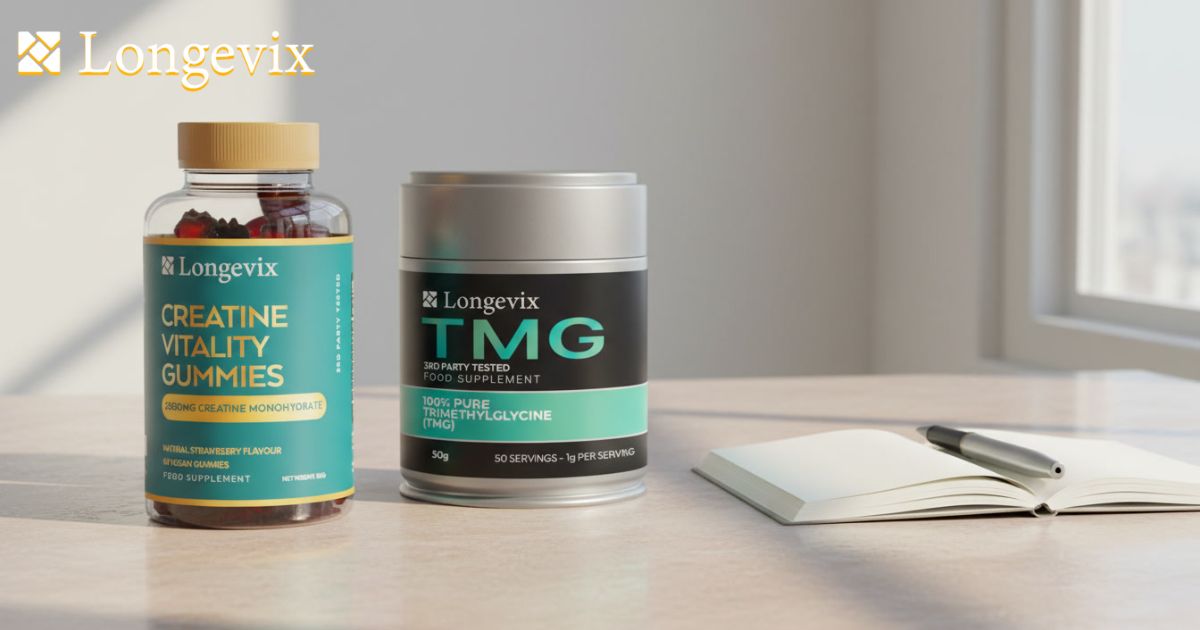
Longevix also sells Pure TMG Powder and NR + TMG Capsules. Anyone combining these products should count total TMG from every label. The guide to TMG supplement side effects explains why overlapping formulas deserve careful review. More products do not automatically create a better routine.
How and When Should You Take Creatine Gummies?
Timing creates more noise than clarity. Some people place creatine within pre workout nutrition, while others connect it with post workout recovery. Current evidence does not establish one perfect daily window. Regular intake and total exposure appear more important than chasing an exact minute.
Choose a time that supports consistent supplementation. Breakfast may work well. Others prefer a meal near training. Follow the current product directions because a gummy may contain ingredients absent from plain powder. Do not copy a competitor’s gummy count or a powder protocol without checking the label.
Before or After Exercise?
A 2021 within-subject trial found similar gains when creatine was taken immediately before or after resistance training. The study was small, so it should not settle every timing question. It does support a practical message: adherence probably matters more than a narrow timing ritual.
Rest Days and Protein Supplements
Muscle creatine stores do not disappear on rest days. Regular protocols normally continue across training and non-training days. Creatine and protein also perform different jobs. Protein supplies amino acids, while creatine supports rapid energy recycling. Neither replaces balanced food, progressive training, hydration or sleep.
Gummies and Intermittent Fasting
Flavoured gummies may contain energy, sweeteners or other ingredients that matter during a strict fast. Check the complete label rather than assuming every gummy is calorie-free. Longevix discusses this topic separately in its guide to creatine gummies and intermittent fasting.
Side Effects, Safety and Who Should Take Extra Care
Creatine is generally well tolerated in healthy people within studied conditions. Possible effects include increased body water and digestive discomfort. Gummies add acids, sweeteners and supporting ingredients, which may also cause symptoms. A stomach reaction does not automatically prove creatine intolerance.
Medical context changes the decision. The UK Food Standards Agency advises following label directions and seeking professional advice when pregnant, breastfeeding, taking medicines or managing a medical condition. Never exceed the recommended amount.
Digestive Effects and Body Weight
Large single servings may cause nausea, bloating or loose stools in some users. Sugar alcohols can also disturb digestion. Creatine can increase water stored with muscle, so scale weight may rise before visible body-composition changes occur. This early gain does not automatically represent body fat.
Creatine and Kidney Tests
A 2026 systematic review and meta-analysis found a small rise in serum creatinine without significant differences in urea or estimated glomerular filtration rate. Creatine can therefore complicate the interpretation of creatinine-based tests. Tell your healthcare professional about supplementation before kidney-related blood work.
Who Should Seek Individual Advice?
People with diagnosed kidney disease, unexplained abnormal kidney results or medicines affecting renal function need individual guidance. The same caution applies during pregnancy and breastfeeding. Children and teenagers also require age-appropriate professional advice rather than adult supplement directions.
Allergies, Sweeteners and Dental Care
Check whether the gummy uses pectin, gelatine or another gelling agent. Review flavours, colours, coatings and allergen warnings. In the US, “sugar-free” means less than 0.5g of sugars per labelled serving and reference amount. Even sugar-free gummies may contain acids or polyols, so dental care and digestive tolerance still matter.
Choose Creatine Monohydrate Gummies with Clarity
Good decisions begin with arithmetic rather than advertising. Check the creatine form, amount per full serving, pieces required, servings per bottle and supporting ingredients. Then examine testing, storage, dietary suitability and cost per gram. A useful product should answer basic questions before asking for your trust.
For Longevix, the current information confirms creatine monohydrate, taurine, TMG, vitamin B12 and 15 four-gummy servings. Check the physical label for individual quantities. You can also explore the Longevix science page, shop and testing documents.
This article provides general educational information for adults. It does not offer personalised medical advice, diagnosis or treatment. Food supplements should not replace a varied diet, balanced lifestyle or appropriate healthcare.
Frequently asked questions
Do Creatine Gummies Work as Well as Powder?
They can when both formats provide an equivalent, accurate amount of creatine monohydrate. The delivery format matters less than potency, product stability and regular use. Powder often offers easier dose control, while gummies may improve convenience.
How Many Creatine Gummies Should You Take Daily?
Follow the specific label because potency varies. Research often studies three to five grams daily, but that is not a universal gummy count. One product may require two pieces, while another may require four or more.
Are Creatine Gummies Good for Muscle Growth?
Creatine may modestly support gains in lean mass and strength when combined with resistance training and sufficient nutrition. It is not a stand-alone muscle builder. Training quality, protein intake, sleep and adherence remain central.
What Are the Side Effects of Creatine Gummies?
Possible effects include digestive discomfort and increased water weight. Sweeteners, acids or additional active ingredients may also affect sensitive users. Stop using the product and seek advice if symptoms are severe or persistent.
Are Creatine Monohydrate Gummies Vegan and Sugar-Free?
Not automatically. Check whether the product uses gelatine or pectin, then examine sugars and sweeteners. The search phrase vegan sugar free gummies describes two separate requirements. A fruit flavour or soft texture proves neither.


