TMG supplement side effects can include nausea, bloating, diarrhoea and other digestive discomfort. Some human research also raises questions about cholesterol changes at higher intakes. Side effects vary by dose, health circumstances and any other supplements or medicines used. Serious or persistent symptoms warrant professional advice.
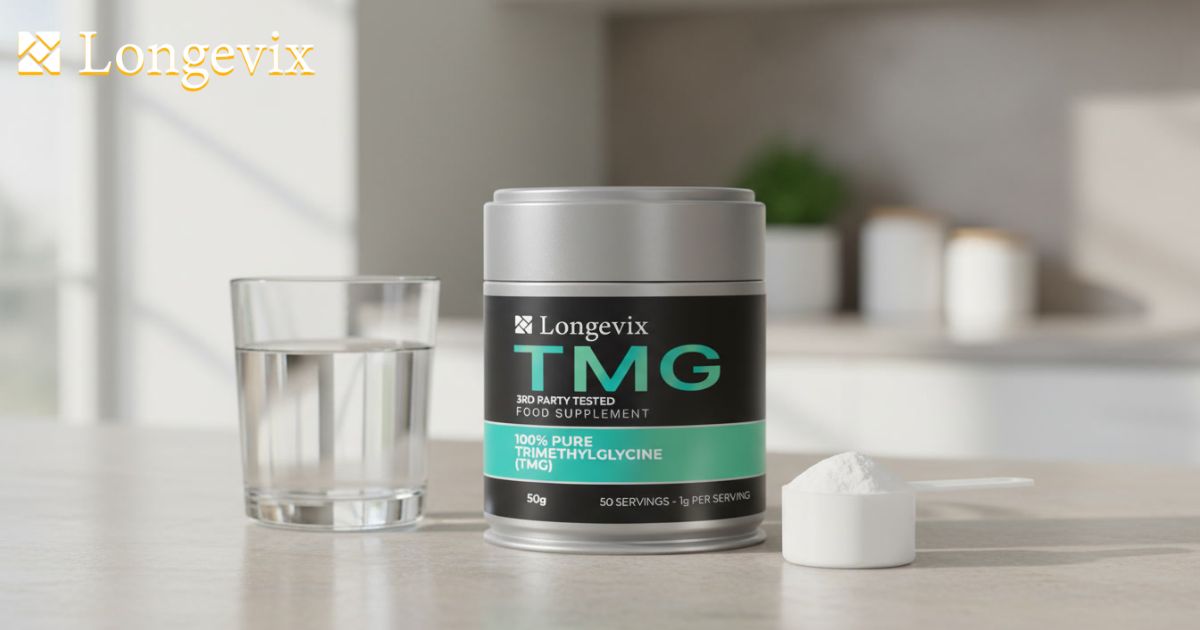
For practical label checking, compare the stated serving and ingredients on Longevix Pure TMG Powder. For a timing-focused explanation, see when to take TMG. A product link is not evidence that TMG treats a condition.
Editorial evidence note: This article discusses research and general information, not a diagnosis or a promise that a product will prevent, treat or cure a condition. Clinical questions and supplement suitability require individual professional advice.
“Do not exceed the stated recommended daily amount.” — Longevix product guidance.
This article provides general information rather than personalised medical advice. Speak with a qualified doctor, pharmacist or registered dietitian when symptoms persist or your medical history may affect supplement safety.
TMG Supplement Side Effects at a Glance
The best-supported potential side effects involve nausea, diarrhoea, abdominal discomfort, bloating and an unpleasant taste. Prescription betaine records also mention occasional odour complaints. However, most reports come from patients receiving medically supervised treatment. They don’t provide dependable reaction rates for healthy adults using ordinary food supplements.
Greater concerns involve blood lipids and methionine. Meta-analyses found that betaine may increase total and LDL cholesterol, particularly at larger supplemental amounts. Prescription betaine can also worsen high methionine in people with CBS deficiency. That rare medical warning shouldn’t be presented as a routine reaction among healthy adults.
|
Possible reaction |
What the evidence shows |
Important context |
Sensible response |
|
Nausea or stomach discomfort |
Reported during clinical use |
Reliable frequency data are unavailable |
Pause use and review the full routine |
|
Diarrhoea or loose stools |
Recognised gastrointestinal reaction |
Other ingredients may also contribute |
Avoid exceeding the product label |
|
Bloating or cramps |
Possible but nonspecific |
Diet, sweeteners and creatine may contribute |
Introduce one product at a time |
|
Unpleasant taste or odour |
Occasionally reported |
It isn’t inevitable or necessarily dangerous |
Review the formula and preparation |
|
Higher total or LDL cholesterol |
Seen in pooled human evidence |
Risk appears more relevant at larger amounts |
Discuss lipid testing when appropriate |
|
Anxiety or palpitations |
Mostly anecdotal or postmarketing |
Direct causation remains uncertain |
Review caffeine, medicines and other ingredients |
|
Severe methionine elevation |
Established in CBS deficiency |
It mainly concerns medically managed patients |
Specialist monitoring is essential |
TMG may help lower homocysteine in certain settings. Researchers have also explored its possible effects on metabolism, athletic performance and heart-related biomarkers. Yet one encouraging laboratory result doesn’t erase every downside. A supplement can improve one measurement while moving another in an unfavourable direction.
Claims that TMG can improve athletic performance, prevent insulin resistance or reduce depression symptoms require restraint. Exercise research suggests modest benefits for limited strength outcomes, while many measures show no improvement. A controlled prediabetes trial didn’t improve insulin sensitivity. Strong evidence for treating depression remains unavailable.
What Is TMG, and Is It the Same as Betaine HCl?
TMG means trimethylglycine. Scientists also call it glycine betaine or betaine anhydrous. It donates a methyl group during normal biochemical reactions. One such pathway helps convert homocysteine towards methionine. This reaction forms a small but important part of the wider methylation process.
TMG isn’t the same product as betaine hydrochloride. Betaine HCl combines betaine with hydrochloric acid and usually appears in digestive-acid formulas. TMG powder serves a different nutritional purpose. Confusing both forms can lead to unsuitable dosage recommendations, incorrect expectations and misleading safety comparisons.
TMG, Betaine Anhydrous and Glycine Betaine
In most supplement discussions, trimethylglycine, glycine betaine and betaine anhydrous refer to the same core compound. Longevix Pure TMG Powder contains TMG in a single-ingredient powder format. Its current page lists a 1,000mg serving using two included scoops.
Why Betaine HCl Is Different
Betaine HCl commonly appears in products marketed for digestive acidity. Its purpose, formulation and warnings differ from standalone TMG. Similar names can create a false sense of interchangeability. Always check the exact ingredient name rather than relying on the word “betaine” alone.
Food TMG Versus Concentrated Supplements
TMG occurs naturally in food sources (beetroot, spinach, wheat bran) and whole-grain products. A varied diet usually supplies smaller amounts spread across meals. A measured powder delivers a concentrated serving quickly. Therefore, ordinary food exposure and supplemental intake shouldn’t be treated as identical.

Supplement TMG Versus Prescription Betaine
Prescription betaine treats homocystinuria under specialist supervision. Clinicians monitor homocysteine, methionine and dietary management during treatment. Those medical doses and patient groups differ from ordinary supplement use. Prescription warnings offer useful evidence, but they cannot predict every healthy adult’s experience.
What Are the Most Common TMG Supplement Side Effects?
Digestive discomfort has the clearest practical relevance. Clinical sources describe nausea, vomiting, diarrhoea, bloating, cramps and dyspepsia during betaine treatment. These reactions may become more noticeable with high doses. However, research hasn’t established a universal amount that causes symptoms in every person.

Real-world digestive issues can also come from sweeteners, flavourings, creatine, caffeine, diet changes or illness. Starting several supplements together creates confusion. The newest ingredient often receives the blame even when another change caused the problem. A simple routine makes patterns easier to recognise.
Nausea and Stomach Discomfort
Nausea may feel like mild queasiness, indigestion or persistent stomach unease. Some people experience cramps instead. Don’t copy a research amount or another person’s routine. Follow the current product label and stop experimenting when discomfort becomes persistent, severe or difficult to manage.
Diarrhoea, Bloating and Bowel Changes
Loose stools, gas and bloating may occur during betaine use. However, these symptoms aren’t unique to TMG. Protein powders, sugar alcohols and major dietary changes can produce similar reactions. Ongoing diarrhoea can cause dehydration, so prolonged symptoms deserve professional advice.
Unpleasant Taste and Body Odour
Clinical reports have occasionally mentioned unpleasant taste or body odour. This doesn’t mean every user will develop a fishy smell. Strong or persistent odour can have dietary, metabolic or medical causes. Review the complete routine instead of assuming that TMG alone explains it.
Headaches and Dizziness
Headaches and dizziness appear frequently in online discussions, but controlled research hasn’t identified them as characteristic TMG reactions. Dehydration, fasting, caffeine withdrawal, stress and medicines offer alternative explanations. Repeated or severe symptoms require proper assessment rather than an improvised “overmethylation” diagnosis.
Allergic Reactions and Urgent Warning Signs
Facial swelling, widespread hives, wheezing, breathing difficulty or fainting require urgent medical care. Chest pain and serious neurological changes also demand prompt attention. Don’t describe these warning signs as “detox” or normal adjustment. Such language can delay necessary treatment.
Evidence Case: Prescription Betaine Reports
Prescription data contain reports of gastrointestinal upset, taste changes and psychological complaints. However, spontaneous and retrospective reports cannot calculate reliable frequency. They also cannot prove that betaine caused every symptom. Their value lies in identifying possible safety signals rather than predicting individual outcomes.
Can TMG Raise Cholesterol or Triglycerides?
Cholesterol deserves more attention than many dramatic forum claims. A systematic review of trials using at least four grams daily found a moderate rise in total cholesterol. Another meta-analysis reported increases in total and LDL cholesterol while finding no significant overall effect on triglycerides or blood pressure.

Dose appears relevant, although the boundary isn’t absolute. The cardiovascular meta-analysis suggested that amounts below four grams daily lowered homocysteine without the lipid increases seen at larger amounts. That finding doesn’t guarantee safety at lower intake. It simply provides a more accurate interpretation of the available evidence.
What Human Research Shows
|
Evidence source |
Studied intake |
Main finding |
|
Cholesterol systematic review |
At least 4g daily |
Moderate rise in total cholesterol |
|
Cardiovascular meta-analysis |
Varied amounts |
Higher total and LDL cholesterol overall |
|
Prediabetes clinical trial |
Up to 9.9g daily |
Total cholesterol increased |
|
Smaller exercise studies |
Usually 2–5g daily |
Lipid findings were inconsistent |
The table shows why context matters. Human studies used different populations, durations and amounts. One result shouldn’t become a universal prediction. People with existing cardiovascular concerns may reasonably discuss cholesterol levels with a clinician before beginning long-term supplementation.
Dose Makes the Comparison More Useful
The Longevix Pure TMG Powder page lists a 1,000mg serving. Many lipid studies used four grams or more daily. That difference is important, but it doesn’t prove that a labelled serving suits every person or every medical history.
Does Lower Homocysteine Guarantee Better Heart Health?
No. TMG may reduce homocysteine levels, yet heart health depends on many factors. LDL cholesterol, diabetes, smoking, activity, diet and blood pressure all matter. Lowering one biomarker doesn’t automatically prevent cardiovascular events or cancel an unfavourable change in another measurement.
Can TMG Cause Anxiety, Palpitations or Sleep Problems?
Some users describe anxiety, irritability, shaking, insomnia or palpitations after TMG. Their symptoms deserve attention, but timing alone cannot prove causation. Online accounts rarely control caffeine, stress, medicines, sleep deprivation or other supplements. Consequently, they offer useful questions rather than dependable incidence data.
Postmarketing prescription reports have included agitation, sleep disturbance and psychological changes. Such reports can reveal potential signals, yet they cannot establish how often TMG caused the reaction. Stronger evidence is needed before describing anxiety, palpitations or insomnia as predictable common effects.
Anecdotes Versus Clinical Evidence
A symptom beginning after TMG creates an association. It doesn’t establish the cause. Think of a smoke alarm: it signals that something needs checking, but it doesn’t identify the source. Review timing, serving size, caffeine, medicines and every ingredient taken that day.
Are “Overmethylation” Symptoms Scientifically Defined?
Wellness communities often use “overmethylation” to describe anxiety, headaches, irritability or poor sleep. Clinical medicine doesn’t recognise that symptom cluster as proof of excessive TMG. Methylation involves connected enzymes, nutrients and organs. Mood or sleep changes cannot measure the entire network.
Could Other Ingredients Cause the Reaction?
Longevix NR + TMG Capsules provide 300mg nicotinamide riboside, 250mg TMG and 5mg piperine per two-capsule serving. A reaction to this formula cannot automatically identify TMG as the cause. The full ingredient panel requires consideration.
When Palpitations Need Prompt Care
Palpitations can follow caffeine, anxiety, dehydration, medicines or heart rhythm problems. Stop taking the new supplement and seek prompt assessment when episodes persist. Chest pain, breathlessness, fainting or a sustained irregular heartbeat require urgent medical care.
Can TMG Affect Methionine, the Liver or the Kidneys?
TMG helps convert homocysteine towards methionine. This can reduce homocysteine while increasing methionine. In healthy adults, a modest rise doesn’t automatically indicate harm. However, the situation changes in inherited disorders that already disrupt methionine metabolism.
Liver and kidney questions need separate answers. Betaine hasn’t been linked convincingly with clinically apparent liver injury during medical use. Evidence regarding routine supplementation in people with kidney disease remains limited. Neither finding supports casual treatment claims or universal safety promises.
Can TMG Cause Methionine Buildup?
Serious methionine buildup mainly concerns people with cystathionine beta-synthase deficiency. Prescription betaine may raise already elevated methionine concentrations in this group. Clinicians therefore monitor blood methionine and adjust treatment or diet when necessary.
CBS Deficiency and Cerebral Oedema
The latest US prescribing information warns that severe hypermethioninaemia can lead to cerebral oedema in people with CBS deficiency. Cerebral oedema means fluid buildup around the brain. This rare warning applies to a specific medical population and shouldn’t be presented as a typical supplement reaction.
Is TMG Harmful to the Liver?
LiverTox reports no convincing link between betaine treatment and clinically apparent liver injury. However, TMG shouldn’t be marketed as a proven liver cure. Descriptions such as anti-inflammatory compound or claims about decisive antioxidant properties can exceed the strength of human clinical evidence.
Longevix discusses broader liver-related evidence in its TMG and liver health guide. Readers with diagnosed liver disease should seek personalised advice instead of relying on general wellness claims.
Is TMG Harmful to the Kidneys?
Research hasn’t clearly shown that ordinary TMG use damages healthy kidneys. However, evidence in people with impaired kidney function remains sparse. Kidney disease can affect fluid balance, medicines and laboratory results. Those patients should obtain healthcare professional consultation before using concentrated TMG.
Who Should Avoid TMG or Ask a Doctor First?
A person with homocystinuria, CBS deficiency or another medically managed metabolic condition shouldn’t self-prescribe retail TMG. These conditions may require specialist dosing, blood tests and dietary control. Adding a separate product can duplicate treatment or complicate methionine management.
Extra caution also suits people with high cholesterol, liver or kidney disease, pregnancy, breastfeeding or complex medicine routines. Longevix advises customers to seek qualified guidance when pregnant, breastfeeding, taking medication or managing a medical condition.
People With Homocystinuria or CBS Deficiency
Prescription betaine can form part of homocystinuria treatment, but specialists monitor the response. Retail powder shouldn’t be added independently. A second source could alter total intake and make laboratory results more difficult to interpret.
People With High Cholesterol
High cholesterol doesn’t automatically make TMG unsuitable. However, the lipid evidence becomes more relevant when LDL is already raised. A doctor can consider your reason for using TMG, cardiovascular history and whether follow-up blood testing would provide useful information.
Pregnancy, Breastfeeding and Childhood
Reliable evidence for concentrated TMG supplementation during pregnancy, breastfeeding and childhood remains limited. Dietary betaine from ordinary food differs from a measured supplement. Don’t create a pregnancy or paediatric routine from sports research, online anecdotes or adult product labels.
People With Liver or Kidney Disease
Studies involving healthy volunteers cannot establish safety for every chronic condition. Liver or kidney disease may change medicine use, nutrient handling and laboratory targets. A personalised review can reduce avoidable overlap and distinguish supplement symptoms from the underlying illness.
People Preparing for Surgery
Tell the surgical team about every supplement before an operation. Include powders, capsules, gummies and combination products. The concern isn’t a proven TMG-specific surgical complication. Clinicians need a complete record when reviewing medicines, fasting instructions and laboratory results.
Does TMG Interact With Medicines or Other Supplements?
A complete list of clinically established TMG medicine interactions isn’t available. Limited evidence shouldn’t be interpreted as proof that interactions cannot occur. Your pharmacist needs the exact product, serving size, medicine list and full ingredient panel to assess suitability properly.

Accidental stacking may present a more immediate problem. Someone could combine standalone TMG powder, NR + TMG capsules and gummies containing TMG. Each container looks separate, but the total intake still accumulates. More ingredients don’t automatically create more benefit.
TMG With NR or NMN
TMG commonly appears beside NAD+ precursors because both enter discussions about cellular metabolism. However, current evidence doesn’t show that every NR or NMN user needs additional TMG. Longevix explains these differences within its methylation supplement guide.
TMG With Folate, Vitamin B12 or Choline
Folate, B12, choline and TMG participate in connected one-carbon pathways, but they aren’t interchangeable. Adding several methylation-related supplements may increase complexity without proving extra value. A genuine nutritional deficiency requires appropriate assessment rather than guesswork.
TMG With Creatine
TMG interests sports researchers because creatine synthesis uses methyl groups. However, studies have found no improvement or only modest gains across selected outcomes. TMG shouldn’t replace training, protein intake, recovery or established performance strategies.
Longevix Creatine Vitality Gummies contain creatine monohydrate, taurine, TMG and vitamin B12. The website directs readers to the physical label for complete quantities. Therefore, the TMG amount shouldn’t be estimated or invented.
Longevix TMG Product Comparison
|
Longevix product |
Relevant ingredients |
Current serving information |
Main safety consideration |
|
Pure TMG Powder |
TMG or betaine anhydrous |
1,000mg using two scoops |
Measure carefully and count total TMG |
|
NR + TMG Capsules |
300mg NR, 250mg TMG and 5mg piperine |
Two capsules |
Review medicines against the full formula |
|
Creatine Vitality Gummies |
Creatine, taurine, TMG and B12 |
Four gummies |
Check the physical label for quantities |
These products serve different purposes. The powder provides standalone TMG. The capsules combine TMG with NR and piperine. The gummies form a broader creatine-led formula. None of these differences proves that combining every product will improve results.
How to Lower the Risk of TMG Side Effects
A straightforward routine reduces avoidable uncertainty. Follow the current label, measure powder with the supplied scoop and count TMG from every product. Introduce one new supplement at a time when practical. Several simultaneous changes turn cause and effect into a frustrating guessing game.

Stop using the product when a serious reaction occurs. Persistent symptoms also need attention. US consumers can report suspected supplement reactions through the FDA Safety Reporting Portal. UK consumers can report relevant safety or labelling problems through the Food Standards Agency.
Follow the Current Product Label
The Longevix TMG page lists two scoops for a 1,000mg serving. Don’t replace that information with another brand’s scoop, an influencer protocol or a dose taken from a medical study. Research amounts serve specific study designs rather than personal instructions.
Count Your Complete Daily Intake
One labelled serving of Longevix TMG Powder provides 1,000mg. The labelled serving of NR + TMG Capsules adds 250mg. Using both would total 1,250mg before considering another TMG-containing product. This example explains ingredient accounting and doesn’t recommend combining them.
Illustrative Case Study: The Crowded Routine
Imagine someone starts TMG powder, NR capsules and a caffeinated pre-workout together. Headaches begin three days later. The cause remains unclear because caffeine, piperine, hydration and TMG changed simultaneously. Introducing products separately would create a cleaner timeline and a more useful professional discussion.
Keep a Brief Symptom Record
Record the product, serving, time, food, medicines and symptoms. Note when each reaction begins and ends. A brief diary can reveal whether discomfort follows every serving or appears independently. It provides better information than memory alone.
Know When to Stop
Stop and seek prompt advice when symptoms persist or worsen. Breathing difficulty, facial swelling, fainting, chest pain or severe palpitations need urgent attention. Repeated vomiting, visual disturbance and confusion also require assessment. Don’t continue “testing” a supplement during a serious reaction.
Understand What a Certificate of Analysis Shows
Longevix lists a batch-specific document for its Pure TMG Powder on the Certificates of Analysis page. A COA may verify specified laboratory results for that sample. It cannot predict individual tolerance or prove that the product treats a health condition.
Think Carefully About Long-Term Use
Evidence regarding the long-term effects of routine supplementation remains incomplete. Some trials lasted weeks, while others lasted several months. Years of unsupervised use haven’t received the same study depth. Regular users with cardiovascular or metabolic concerns may benefit from periodic professional review.
TMG performs a genuine biochemical role, but that doesn’t make it risk-free. Digestive reactions and possible lipid changes deserve the clearest attention. Anxiety, insomnia and palpitations warrant investigation, although current evidence cannot reliably identify them as common direct effects.
The safest approach remains simple. Follow the current label, count every TMG source and avoid automatic stacking. Seek qualified guidance when you take medicines or manage a medical condition. A responsible supplement routine should become easier to understand, not more complicated.
Frequently asked questions
What Are the Side Effects of TMG Supplements?
Possible TMG supplement side effects include nausea, diarrhoea, stomach discomfort, bloating and unpleasant taste. Larger supplemental amounts may also affect blood lipids. Reliable research hasn’t established how frequently healthy users experience each reaction.
Is TMG Safe to Take Daily?
Daily use may be tolerated by some adults when they follow the product label. However, no single amount suits everyone, while evidence on years of continuous use remains limited. Seek professional advice when you use medicines or manage a medical condition.
Can TMG Cause Digestive Issues or Stomach Problems?
Yes. Nausea, diarrhoea, bloating, cramps and dyspepsia have appeared during clinical betaine use. These symptoms may also come from other ingredients or dietary changes. Persistent or severe gastrointestinal problems require assessment.
Does TMG Increase Cholesterol or Affect Heart Health?
Meta-analyses suggest that larger supplemental amounts may raise total and LDL cholesterol. The evidence doesn’t show a consistent triglyceride or blood-pressure increase. Lower homocysteine doesn’t automatically translate into fewer cardiovascular events.
Who Should Not Take TMG Supplements?
People with CBS deficiency or medically managed homocystinuria shouldn’t use retail TMG without specialist guidance. Pregnant or breastfeeding people, children, medicine users and those with liver, kidney or cardiovascular conditions should seek personalised advice before use.