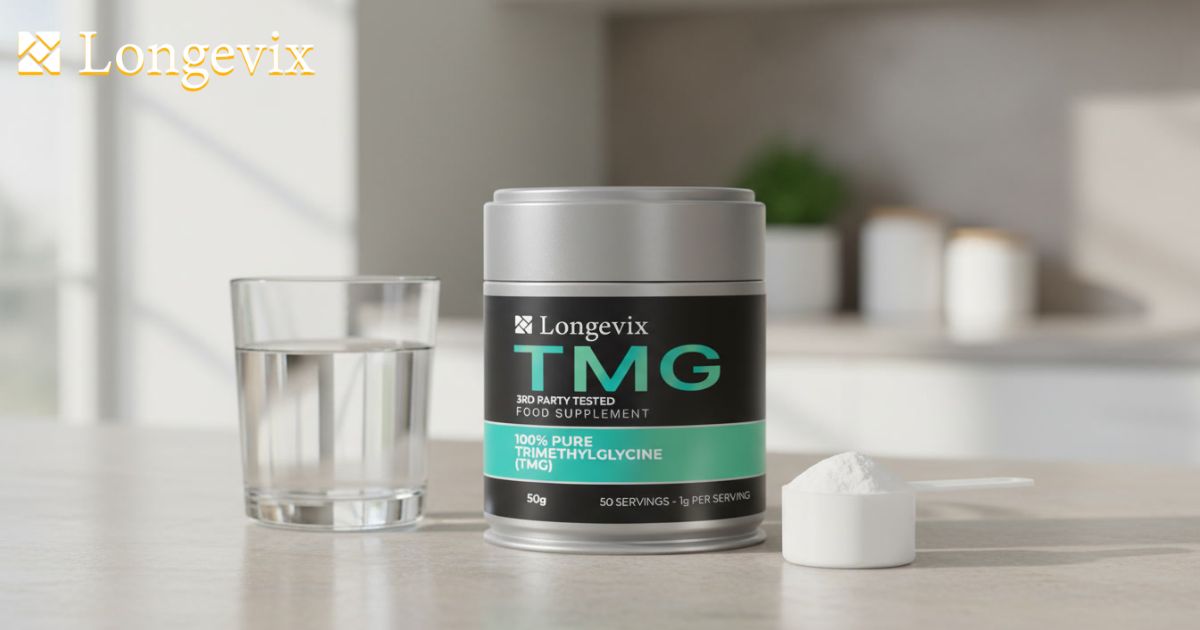
Searching for a methylation supplement can feel like walking into a chemistry lesson wearing shopping shoes. Labels mention trimethylglycine, methylfolate, methylcobalamin, MTHFR, and homocysteine, yet those ingredients do different jobs. TMG, also called betaine anhydrous, donates methyl groups through a pathway that helps recycle homocysteine toward methionine. B vitamins work through connected routes instead of acting as direct substitutes.
Editorial evidence note: This article discusses research and general information, not a diagnosis or a promise that a product will prevent, treat or cure a condition. Clinical questions and supplement suitability require individual professional advice.
That distinction matters when you compare formulas, combine products, or interpret genetic results. This guide explains the evidence, shows where Longevix Pure TMG Powder fits, and separates useful methylation pathways science from marketing noise, so you can make a calmer, better-informed decision for your routine with greater confidence.
What Does a Methylation Supplement Actually Do?
Methylation sounds mysterious because the chemistry happens on a microscopic scale. In simple terms, your body repeatedly transfers small chemical units called methyl groups. These reactions participate in DNA regulation, amino-acid metabolism and other normal processes. A supplement can provide particular nutrients involved in this network. It cannot control the entire system.
That distinction matters when advertisements connect methylation with cellular health, energy production or nutrient absorption. Those broad areas depend on numerous nutrients, enzymes and physiological systems. One capsule or powder isn't a master switch. A sensible methylation supplement should therefore have a defined nutritional role rather than an encyclopaedia of promises.
The Methyl-Group Handoff in Plain English
Think of methyl groups as tiny parcels moving through a busy delivery network. Methionine can form S-adenosylmethionine, commonly called SAM. SAM then acts as an important methyl donor. Vitamin B12 also participates in converting homocysteine toward methionine through methionine synthase. The chemistry connects many routes rather than following one straight road.
Why TMG Belongs in the Methylation Conversation
TMG deserves attention because its role differs from simply adding another vitamin. TMG means trimethylglycine and is also called betaine. It can supply a methyl group during betaine-dependent remethylation of homocysteine. That makes TMG relevant to methylation chemistry without making it a substitute for every nutrient involved.
This distinction helps you resist crowded labels. A methylated B-complex may contain several B vitamins, whereas standalone TMG provides a different compound. Likewise, vitamin B9 and TMG enter connected chemistry through different routes. Choosing between them should start with the nutritional purpose, not whichever label sounds more sophisticated.
TMG Is a Methyl Donor, Not a B Vitamin
Betaine-dependent remethylation offers another biochemical route from homocysteine toward methionine. Folate and B12 participate in a separate connected pathway. Picture two roads reaching part of the same transport network. They may influence a related destination, yet travelling on one road doesn't magically replace everything required on the other.

What Human Research Says About TMG and Homocysteine
Human research gives TMG a genuine evidence base, but the details matter. In one controlled study, healthy adults with mildly elevated homocysteine took six grams of betaine daily for six weeks. Fasting plasma homocysteine fell relative to placebo. However, the researchers specifically noted that the study did not establish reduced cardiovascular-disease risk.
Consequently, lower homocysteine levels shouldn't automatically become a promise of better cardiovascular health. Biomarkers are useful measurements, not crystal balls. NIH reviews likewise note that B-vitamin interventions can reduce homocysteine without consistently reducing cardiovascular events. This difference between biochemical effect and clinical outcome strengthens responsible supplement guidance.
|
Evidence question |
What current evidence supports |
What it does not prove |
|
Can betaine influence homocysteine? |
Controlled research shows reductions under studied conditions. |
That every healthy person needs supplementary TMG. |
|
Does lower homocysteine guarantee better heart outcomes? |
Homocysteine is a measurable biomarker. |
Automatic prevention of heart attacks or cardiovascular disease. |
|
Can one study establish an ideal consumer dose? |
Studies can test defined experimental doses. |
That a research dose should replace a product label or individual advice. |
A Biomarker Change Is Not a Guaranteed Health Outcome
This distinction is easy to miss. Changing a laboratory value proves that something measurable changed under particular conditions. It doesn't automatically prove longer life, sharper thinking or fewer cardiovascular events. Evidence becomes stronger when trials measure meaningful clinical outcomes, reproduce findings and establish a favourable balance between benefit, dosage and risk.
TMG vs Methylfolate, Vitamin B12 and Vitamin B6
TMG, folate and B12 belong in the same conversation, but they aren't interchangeable ingredients. Folate carries one-carbon units through folate-dependent chemistry. Vitamin B12 acts as a cofactor for methionine synthase. TMG contributes through betaine-dependent remethylation. Their pathways meet biochemical neighbours without becoming identical nutritional tools.
Labels can make active forms of vitamins sound universally superior. Reality is more nuanced. Methylcobalamin is metabolically active, yet NIH explains that cyanocobalamin and hydroxycobalamin can also become biologically active after conversion. Likewise, an active-form vitamin B6 belongs to B-vitamin nutrition rather than functioning as another name for TMG.
|
Nutrient or compound |
Simplified role |
Important distinction |
|
TMG / betaine |
Participates in betaine-dependent remethylation |
Not a B vitamin |
|
Folate |
Carries one-carbon units in folate metabolism |
Includes several dietary and supplemental forms |
|
Vitamin B12 |
Cofactor for methionine synthase |
Different forms can ultimately provide biologically active B12 |
|
Vitamin B6 |
Supports numerous amino-acid reactions |
Doesn't perform TMG's specific methyl-donor role |
Different Routes, Related Chemistry
A useful formula doesn't need every methylation-related ingredient under the sun. Targeted supplementation can sometimes make the label easier to understand. For example, somebody seeking betaine specifically may prefer standalone TMG. A person with a confirmed B12 deficiency has a different nutritional question that TMG alone cannot answer.
MTHFR Variants: What They Mean—and What They Don't
Few methylation topics attract more confusion than MTHFR. The gene provides instructions for an enzyme involved in folate processing. Common variants can affect enzyme activity to differing degrees. However, reduced MTHFR activity isn't the same thing as proving a nutritional deficiency, diagnosing symptoms or establishing that one particular supplement is necessary.
The CDC directly addresses a common misconception. People with common MTHFR variants can still process folic acid. The agency also states that folic acid remains the folate form proven to help prevent neural-tube defects. Therefore, internet claims telling everyone with an MTHFR variant to avoid folic acid oversimplify the evidence.
Why a Gene Result Alone Shouldn't Choose Your Supplement
Genes provide context rather than a complete instruction manual. Diet, medicines, pregnancy, kidney function, B12 status, folate intake and other factors can change what a laboratory result means. A genetic result shouldn't become a shortcut for high-dose supplementation. When testing matters clinically, interpretation deserves proper health context rather than social-media guesswork.

Where Longevix Pure TMG Powder Fits
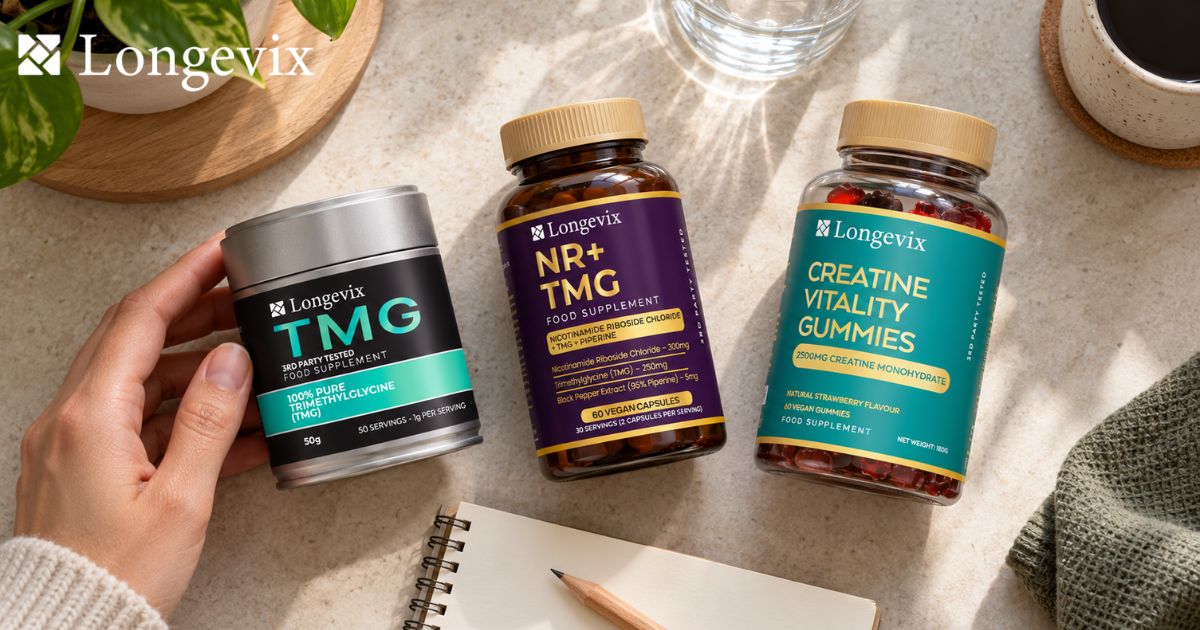
Within the current Longevix range, Pure Trimethylglycine (TMG) Powder 50g provides the most direct TMG option. The current product page lists a 50g powder containing TMG, also called betaine anhydrous. Its labelled serving is 1,000mg using two included scoops, giving approximately 50 servings.
That narrow composition can be useful when you specifically want TMG instead of a multi-ingredient bioavailable formulation. It also makes label auditing simpler. However, the product shouldn't be portrayed as a replacement for folate, B12 or professional treatment. The more precise the nutritional purpose becomes, the easier the product is to evaluate responsibly.
What the Current Label and Testing Page Confirm
Longevix links a batch-specific laboratory document from the TMG product record. Its Certificates of Analysis page currently lists a Pure TMG Powder document under reference QDF25-0098434-02. Buyers should match the product and batch and inspect the actual tests instead of assuming every certificate covers identical parameters.
Can You Combine a Methylation Supplement with NR or NMN?
NAD+ precursors and TMG attract attention because nicotinamide metabolism includes methylated metabolites. That biochemical connection creates an interesting research question. It doesn't establish a rule that every NR or NMN user automatically needs extra TMG. The Longevix existing methylation supplement guide also distinguishes these roles rather than treating them as equivalents.
If both ingredients already match your intended routine, a combined formula can offer convenience. That is different from claiming synergy without adequate evidence. Phrases involving oxidative stress, immune function or fat metabolism can also make supplement marketing sound broader than the underlying product evidence. Read the actual ingredients before reading meaning into ambitious wording.
What Longevix NR + TMG Capsules Actually Provide
Longevix NR + TMG Capsules currently provide 300mg nicotinamide riboside, 250mg TMG and 5mg piperine per two-capsule serving. The bottle contains 60 capsules, or 30 labelled servings. It is an NR-and-TMG combination rather than a complete methylated B-complex or substitute for every methylation-related nutrient.

How to Avoid Ingredient Duplication
Supplement cupboards can become biochemical jigsaw puzzles. You might use a multivitamin containing B12, another formula containing folate and a separate product containing TMG. Adding more isn't automatically better. Before buying anything new, compare full serving sizes across every product instead of looking only at the ingredient highlighted on the front.
This check also protects you from chasing unrelated promises. Iron absorption, connective tissues and neurotransmitter production involve specialised biological processes with their own nutritional requirements. Their appearance in broad wellness language doesn't prove that a methylation supplement will meaningfully improve them. Specific claims deserve specific evidence.
Audit the Whole Supplement Stack Before Adding More
Write down each supplement, its complete serving and every overlapping ingredient. Then compare totals rather than container counts. A single serving may require several capsules or gummies. This small habit makes duplicated nutrients easier to spot and gives you a cleaner picture when discussing supplements with a pharmacist, dietitian or doctor.
How to Judge Quality, Testing and Methylation Claims
Quality starts with information you can verify. Look for the exact ingredient, amount per serving, serving size, directions, warnings and testing details. A glossy phrase such as “advanced methylation support” tells you less than a transparent label. Even serotonin and dopamine references shouldn't distract from the evidence for the ingredients actually present.
Testing deserves similar precision. A certificate can document only what the laboratory tested on the identified sample. It cannot silently prove every conceivable purity or contaminant measure. Longevix itself advises customers to check product name, batch, report date, test method, result and scope when reviewing its published documents.
Read the Scope of a Certificate, Not Just “Tested”
The word “tested” isn't a complete quality specification. One document might report identity or assay, while another includes particular contaminant measurements. Check the listed method, units, specification and sample reference. A report for another product or batch shouldn't be borrowed as evidence for the bottle sitting in your cupboard.
Who Should Be More Cautious with Methylation Supplements?
A supplement question becomes more personal when medicines, pregnancy, breastfeeding or medical conditions enter the picture. Longevix advises customers in those circumstances to consult a qualified healthcare professional. This matters because methylation-related symptoms are nonspecific, while nutrient requirements and medication interactions can vary substantially between individuals.
Likewise, tiredness, concentration problems or mood changes don't prove a methylation defect. Processes involving methylcobalamin, nutrient absorption or methylation chemistry can be medically relevant, but similar symptoms have many explanations. Appropriate assessment can distinguish a genuine nutritional issue from a compelling internet theory far better than guesswork.
When Professional Guidance Beats Trial and Error
Professional assessment becomes especially useful when a deficiency is plausible or laboratory interpretation is required. For example, NIH notes that methylmalonic acid can help assess possible B12 deficiency, while homocysteine lacks specificity because folate status, kidney function and other factors influence it. One marker rarely tells the whole metabolic story.
Methylation science is fascinating precisely because the network is complicated. That complexity shouldn't make your supplement routine complicated too. TMG has a defined place as a methyl donor. Folate, B12 and B6 have their own jobs. Choose products around a clear purpose, check the evidence and keep marketing claims proportionate.
For shoppers comparing the wider category, Longevix's Best Methylation Supplement guide provides the broader comparison. If standalone TMG is your defined goal, the Pure TMG Powder product page provides the current label, serving and testing-document information.
Frequently asked questions
What Supplements Help with Methylation?
TMG, folate, vitamin B12, vitamin B6, riboflavin and choline participate in related metabolic processes. They have different roles, so the right option depends on your nutritional purpose rather than the largest ingredient list.
What Are the Signs You Need Methylation Support?
There is no reliable everyday symptom pattern that specifically diagnoses “poor methylation.” Fatigue, headaches or concentration changes have many possible causes, so persistent concerns deserve proper assessment rather than self-diagnosis.
Do I Need Methylated Vitamins If I Have MTHFR?
Not automatically. The CDC states that people with common MTHFR variants can process folic acid, so an MTHFR result alone doesn't prove that methylated vitamins are necessary.
Is Methylated Folate Better Than Folic Acid?
Not universally. Different folate forms have different characteristics, while folic acid remains extensively studied and is the form proven to prevent neural-tube defects according to CDC guidance.
What Is a Methylation Supplement Used For?
The term usually describes supplements containing nutrients or compounds involved in methyl-group metabolism, such as TMG, folate or B12. Their roles differ, so “methylation supplement” describes a category rather than one standard formula.