Trimethylglycine (TMG), or betaine anhydrous, participates in methylation and the conversion of homocysteine to methionine. That biochemical role is well established, but it does not mean TMG supplements prevent heart disease, reverse ageing or improve performance for everyone. Human findings vary with dose, population and outcome measured.
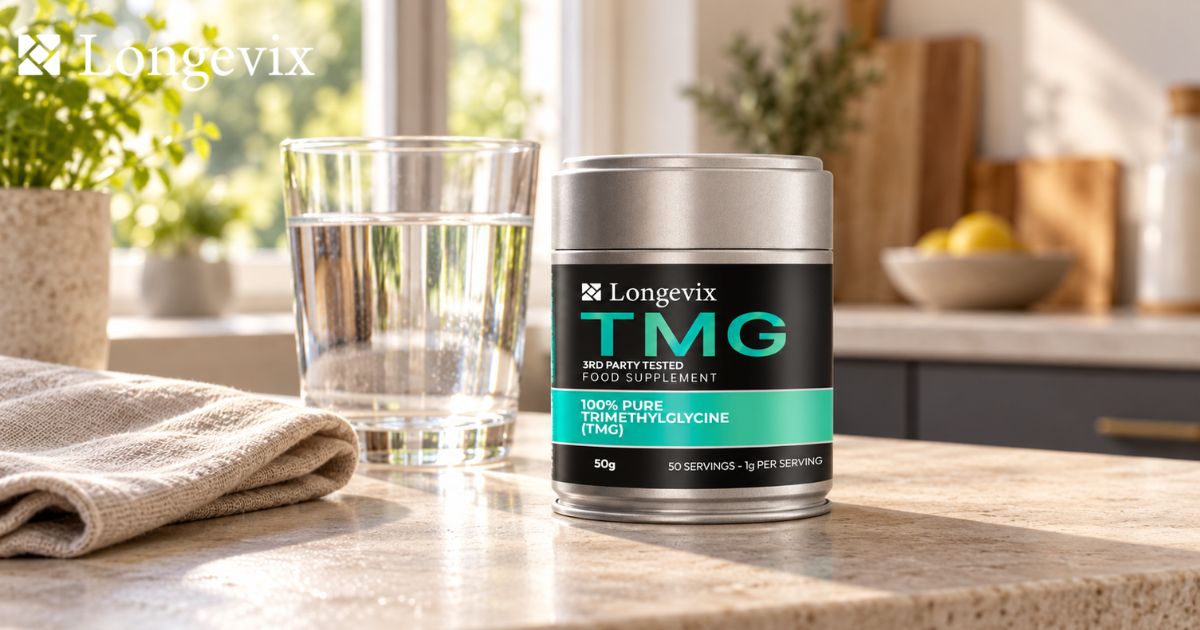
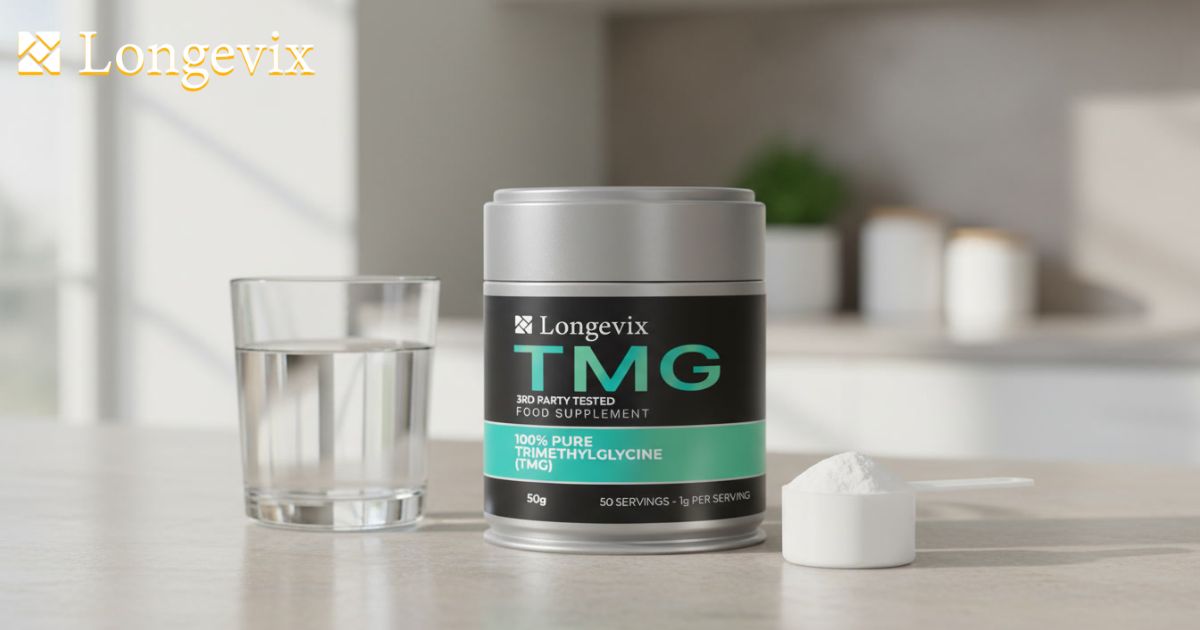
Readers comparing products can check the full ingredients and labelled 1,000mg two-scoop serving of Longevix Pure TMG Powder. See the separate TMG side-effects guide before choosing whether supplementation is suitable.
Some effects have been demonstrated in human trials while others remain uncertain. Understanding what TMG actually does can help you separate credible science from ambitious longevity marketing and make better-informed decisions about diet, supplementation, safety, and healthy ageing.
What Is Trimethylglycine (TMG) and Is It the Same as Betaine?
The complicated name hides a relatively simple molecule. Trimethylglycine comes from glycine and carries three methyl groups. In nutrition research, you’ll often see TMG called betaine or betaine anhydrous. The body can also form betaine from choline, which places it within a wider network of nutrient-dependent metabolic reactions.
Terminology matters because products carrying the word “betaine” aren’t always interchangeable. Nutritional TMG commonly refers to betaine anhydrous while betaine hydrochloride, or betaine HCl, is chemically different. Therefore, research involving one form shouldn’t automatically support claims about another. Checking the ingredient statement is more useful than relying on front-label marketing.
TMG, Betaine and Betaine Anhydrous Explained
In supplement science, trimethylglycine (TMG) and betaine anhydrous commonly describe the compound discussed here. Its three attached methyl groups explain the name “trimethylglycine”. Picture TMG as a small biochemical courier. It can carry a methyl group into specific reactions where that chemical parcel becomes useful.
Is TMG the Same as Betaine HCl?
TMG and betaine HCl shouldn’t be treated as identical supplements. Betaine hydrochloride combines betaine with hydrochloride while nutritional TMG generally refers to betaine anhydrous. Their purposes, formulations, and supporting research differ. This distinction becomes particularly important when comparing dosages, supplement labels, or health claims found online.
Where Does Trimethylglycine Come From?
TMG comes from both normal metabolism and food. Choline can be oxidised to betaine inside the body. Dietary sources include beetroot / spinach / wheat bran, wheat germ, quinoa, whole grains, and some seafood. Actual amounts vary with food type, growing conditions, processing, preparation, and portion size.
How Does TMG Work in the Body?
TMG has several biochemical roles. Its best-known function involves acting as a methyl donor within one-carbon metabolism. It can transfer a methyl group during homocysteine remethylation. TMG also acts as an osmolyte, which means it participates in cellular water balance and helps cells respond to changes in their surrounding environment.
Still, interesting chemistry doesn’t automatically create a noticeable health benefit. A compound may change one pathway without improving lifespan, strength, energy, or disease risk. This distinction matters throughout longevity science. Mechanisms generate hypotheses while properly designed human studies tell us whether those hypotheses translate into meaningful outcomes.
TMG, Homocysteine and the BHMT Pathway
The enzyme betaine-homocysteine methyltransferase, usually shortened to BHMT, uses TMG during homocysteine remethylation. TMG supplies a methyl group that helps convert homocysteine into methionine. Human trials show that certain supplemental amounts can lower homocysteine levels, making this one of TMG's better-supported biochemical effects in people. Read the PubMed study.

TMG and Methylation
Healthy methylation involves far more than one nutrient. Folate, vitamins B12 and B6, choline, methionine, enzymes, genetics, diet, and health status all influence this intricate metabolic network. TMG supports one route within it. Calling TMG a universal “methylation fixer” would therefore oversimplify a highly interconnected biological system.
TMG and S-Adenosyl-Methionine
Methionine contributes to the formation of S-adenosyl-methionine (SAMe), an important methyl-group donor involved in numerous reactions. SAMe participates in pathways involving proteins, phospholipids, nucleic acids, and neurotransmitter chemistry. TMG's influence on methionine metabolism helps explain scientific interest, although extra TMG doesn’t guarantee improvements across every downstream SAMe-dependent process.
TMG as an Osmolyte
TMG also acts as an organic osmolyte. Put simply, osmolytes help cells maintain water balance when environmental conditions change. Researchers have explored this property in exercise and cellular-stress contexts. However, an osmolyte mechanism alone cannot demonstrate that taking TMG will reduce fatigue or noticeably improve physical performance in everyone.
TMG and Cellular Building Processes
Methyl-group chemistry contributes to many processes, including the DNA production / methylation process, amino-acid metabolism, and normal protein regulation. These relationships are biologically meaningful. Even so, it would be inaccurate to say TMG will automatically increase protein production simply because methyl pathways interact with cellular building and regulatory processes.
What Are the Main Trimethylglycine Benefits?
The best way to understand TMG benefits is to rank them by evidence strength. Homocysteine reduction has reasonably clear human data under studied conditions. Exercise research suggests potential benefits for some strength outcomes. Evidence concerning glucose control, liver health, inflammation, mood, and healthy ageing remains more mixed or preliminary.
Context changes everything. A short trial involving trained young adults cannot predict results in older adults with different health backgrounds. Likewise, changing a blood biomarker isn’t equivalent to preventing disease. Dose, population, trial duration, baseline diet, and measured outcome all influence how confidently a result can be interpreted.
TMG and Healthy Homocysteine Metabolism
A dose-response study involving healthy adults tested 1g, 3g, and 6g of betaine daily. Plasma homocysteine fell significantly with 3g and 6g after one week while the 1g change wasn’t statistically significant. These findings support homocysteine lowering at studied doses rather than proving a universal ideal intake. View the human study.
Does Lower Homocysteine Mean Better Heart Health?
This distinction is crucial. Elevated homocysteine has associations with cardiovascular risk, yet lowering the marker doesn’t automatically improve heart health or prevent cardiovascular events. Heart health depends on many variables including blood pressure, lipids, smoking, exercise, glucose control, genetics, and medical care. Biomarker improvement shouldn’t become a disease-prevention promise.
Case Study: Homocysteine Versus Blood Lipids
Controlled research demonstrates why evidence needs context. In several studies, 6g of betaine daily lowered homocysteine but also increased LDL cholesterol and triglycerides compared with placebo. One marker moved in a potentially favourable direction while others moved differently. This makes simplistic cardiovascular benefit claims difficult to justify. Read the randomised research.
TMG Benefits for Athletic Performance and Strength
Exercise science provides another interesting example. A 2024 systematic review and meta-analysis included 17 studies involving 317 participants. Researchers found a significant overall effect on maximal strength, particularly lower-body strength. However, results differed across other performance measures. View the systematic review.
Can TMG Boost Athletic Performance?
The answer depends on how researchers define performance. Evidence offers some support for muscular strength, particularly maximal lower-body strength. Yet improvements weren’t consistent for upper-body strength, muscular endurance, cycling sprint power, or every power measure. Saying TMG will universally boost athletic performance would therefore go beyond current evidence.
For more detail, Longevix explores the studies separately in its TMG and Exercise Performance guide.
TMG and Creatine Synthesis
TMG also attracts sports-nutrition interest because methyl metabolism intersects with creatine synthesis. The body uses methyl groups during endogenous creatine formation. However, this relationship doesn’t make TMG a source of creatine. Nor does it establish TMG as a substitute for creatine monohydrate, which has its own distinct evidence base.

TMG, Insulin Resistance and Metabolic Health
Preclinical research has generated interest in TMG and insulin resistance. Yet human results appear less striking. A randomised trial in adults with obesity and prediabetes found little overall metabolic benefit. Importantly, clamp-measured insulin sensitivity did not improve significantly. Read the randomised clinical trial.
Does TMG Regulate Blood Sugar?
Claims that TMG can regulate insulin levels require restraint. In the prediabetes trial, fasting glucose showed only a trend towards reduction while clamp-measured insulin sensitivity didn’t improve. Current evidence therefore doesn’t justify presenting TMG as a reliable method for controlling blood sugar levels or managing prediabetes.
TMG Benefits for Liver Health
Betaine metabolism has close links with the liver, which prompted research in fatty liver conditions. However, a randomised placebo-controlled trial using 20g daily for 12 months didn’t show broad improvement in major disease outcomes. More recent lower-dose pilot work continues, so liver research remains active rather than settled. Read the placebo-controlled trial.
TMG and Anti-Inflammatory Effects
Laboratory, animal, and mechanistic research has explored possible anti-inflammatory and antioxidative effects of betaine. Those findings help scientists identify potential pathways worth studying. They don’t establish that standard TMG supplementation prevents inflammatory disease or produces clinically important antioxidant benefits in generally healthy adults.
TMG, Brain Health and Mood
Methylation intersects with neurotransmitter metabolism, which sometimes leads to claims that TMG may improve symptoms of depression. Current evidence doesn’t support presenting nutritional TMG as a treatment for depression, anxiety, dementia, or other neurological conditions. People experiencing mental-health symptoms need appropriate professional assessment rather than supplement-based promises.
Trimethylglycine Benefits for Ageing: What Is Actually Proven?
Healthy ageing gives TMG an interesting scientific context. Homocysteine metabolism, methyl-group transfer, cellular osmotic balance, and nutrient interactions all contribute to normal physiology. Those mechanisms become particularly interesting as researchers study metabolic resilience with age. Yet biological relevance alone doesn’t turn a nutrient into a proven longevity intervention.
Current human evidence does not establish that TMG slows biological ageing, extends lifespan, or prevents age-related disease. That distinction is essential. Longevity claims often jump from mechanism to outcome without enough evidence between them. A trustworthy interpretation keeps biochemical plausibility, biomarkers, symptoms, clinical outcomes, and lifespan research separate.
Why Methylation Matters During Ageing
Methylation supports DNA regulation, amino-acid metabolism, phospholipid synthesis, neurotransmitter pathways, and many other functions. Age, diet, genetics, medicines, and health conditions can influence this network. TMG participates in one methylation route. It doesn’t single-handedly determine whether someone's overall methylation status is optimal.
Can TMG Slow Ageing?
Human clinical research hasn’t demonstrated that TMG slows ageing or extends lifespan. Its biochemical functions may intersect with pathways discussed in ageing research, but pathway relevance isn’t proof of anti-ageing efficacy. TMG is therefore better described as a metabolically active nutrient than as a clinically proven longevity treatment.
Biomarkers Aren’t the Same as Healthspan
Think of a biomarker like one gauge on a car dashboard. It provides useful information but doesn’t reveal the condition of the whole vehicle. Lower homocysteine may matter biologically. Yet researchers still need meaningful clinical outcomes before connecting that change with longer healthspan, lower disease incidence, or greater lifespan.

What Human Studies Still Need to Answer
Stronger ageing research needs longer trials, older participants, greater female representation, clearer dose comparisons, and clinically meaningful endpoints. Researchers also need better information about baseline diet, methyl-donor status, medicines, genetics, and supplement combinations. These factors could explain why different groups respond differently to the same intervention.
TMG, NAD+ Precursors and Methylation: How Are They Connected?
TMG often appears beside NMN and nicotinamide riboside in longevity discussions. The association comes from metabolic pathways rather than proof that the combination is essential. Nicotinamide metabolism can interact with methylation pathways, which has encouraged researchers and supplement users to ask whether additional methyl donors might matter.
However, biochemical plausibility shouldn’t become a universal supplement rule. The body receives methyl-related nutrients from several dietary and metabolic sources. Dose, diet, formulation, health status, and individual physiology all matter. Current evidence doesn’t demonstrate that everyone using an NAD+ precursor must automatically add TMG.
Why TMG Is Often Paired With NR or NMN
Online discussions sometimes claim that NR or NMN inevitably exhausts methyl groups. That wording is too absolute. Nicotinamide metabolism can involve methyl-dependent clearance pathways, but human methyl metabolism contains multiple inputs and regulatory mechanisms. An interesting biochemical connection doesn’t prove universal deficiency or the need for supplementation.
Do You Need TMG When Taking NMN?
Current human evidence doesn’t establish a universal requirement for supplemental TMG whenever NMN is used. Dietary methyl donors, NMN intake, nutritional status, genetics, and overall supplement use could all influence the picture. Adding another product simply because two biochemical pathways interact isn’t an evidence-based rule.
Do You Need TMG When Taking NR?
The same reasoning applies to nicotinamide riboside. Published NR studies don’t routinely require additional TMG for every participant. Therefore, the relationship between NR metabolism and methylation shouldn’t be translated into a blanket recommendation. Combination products offer a format choice rather than proof that every NR user needs TMG.
Where Longevix NR + TMG Capsules Fit
Longevix currently offers NR + TMG Capsules. The current two-capsule serving provides 300mg nicotinamide riboside, 250mg TMG, and 5mg piperine. The bottle contains 60 capsules and provides 30 labelled servings. These facts describe the formulation rather than proving universal synergy.

TMG Alone Versus a Combined Formula
Standalone powder and combination capsules serve different practical preferences. A single-ingredient powder makes TMG intake easier to track separately while a combination provides fixed amounts together. Neither format is automatically superior. Convenience, serving size, other supplements, and personal circumstances matter more than assuming complexity equals effectiveness.
Food Sources vs TMG Supplements: Which Is Right for You?
Supplements aren’t the only source of betaine. Various foods naturally provide it alongside fibre, vitamins, minerals, and phytochemicals. Whole grains and particular vegetables can contribute meaningful dietary amounts. That broader nutritional package is worth remembering because isolated supplements don’t recreate everything supplied by a varied diet.
Supplements offer different practical advantages. They provide a labelled quantity in a convenient format, which can make intake easier to track. Even so, supplement use shouldn’t replace dietary quality. Your overall diet, reason for supplementation, existing products, health circumstances, and professional advice all influence what makes sense.
Foods Naturally Containing Betaine
Research identifies beetroot, spinach, wheat bran, wheat germ, quinoa, whole grains, and certain seafood as dietary sources of betaine. Amounts vary considerably between foods and serving sizes. Cooking, processing, cultivar, growing conditions, and moisture content can also change the quantity you actually consume.
How Much Betaine Can Foods Provide?
There isn’t one dependable figure for every meal. Food-composition studies report substantial variation across ingredients and preparation methods. Wheat bran, wheat germ, spinach, beetroot, quinoa, and some shellfish can contain relatively high amounts. Yet practical intake depends on how much you eat rather than the concentration alone.
Can You Get Enough TMG From Food?
“Enough” is difficult to define for general healthy ageing because there isn’t a universal TMG supplementation target for healthy adults. Dietary intake can differ markedly between people. Someone eating whole grains and betaine-containing vegetables may naturally consume more than someone following a very different diet.
TMG Powder Versus Capsules
Format mostly changes convenience and measurement. Powder allows a clearly measured standalone ingredient according to label directions. Capsules provide fixed servings without scooping. Combination products include additional active ingredients. When comparing formats, focus on the actual amount of TMG per serving instead of container size or marketing language.
Current Longevix TMG Formats
Longevix Pure Trimethylglycine Powder 50g currently lists a 1,000mg serving using two included scoops with approximately 50 servings. The online ingredient information identifies TMG/betaine anhydrous. Longevix also provides product-linked testing documentation for customers to check against their relevant batch.
Longevix additionally lists NR + TMG Capsules with 250mg TMG per two-capsule serving. Creatine Vitality Gummies also contain TMG alongside other listed ingredients. Where individual active quantities aren’t published online, readers should check the current physical product label rather than relying on estimates.
TMG Sources at a Glance
|
Source or format |
What it provides |
Practical consideration |
|
Beetroot and spinach |
Naturally occurring betaine |
Amount varies with serving and preparation |
|
Wheat bran and whole grains |
Dietary betaine alongside other nutrients |
Intake depends on food choice and portion size |
|
Pure TMG powder |
Standalone measured TMG |
Follow the labelled serving |
|
TMG capsules |
Fixed-dose convenience |
Compare TMG per serving |
|
Combination formulas |
TMG alongside other active ingredients |
Check total intake across products |
The table should act as a comparison tool rather than a hierarchy. Food and supplements serve different purposes. A powder isn’t automatically better because it is concentrated while dietary sources aren’t automatically sufficient for every research-specific use. Context determines how each source should be interpreted.
How Much TMG Should You Take? Dosage and Timing Explained
TMG dosage is one area where search results often become confusing. Clinical studies have tested very different amounts depending on the research question. A dose used to investigate homocysteine, exercise performance, prediabetes, or liver disease shouldn’t automatically become a general supplement recommendation for a healthy person.
For Longevix Pure TMG Powder, the current online product information lists a 1,000mg serving using two scoops. The product page tells customers to follow the physical label and relevant directions. This product-specific serving should remain distinct from experimental doses used under controlled research conditions.
What TMG Dosages Have Human Studies Used?
Human research spans a wide range. Homocysteine studies have examined 1g, 3g, and 6g daily while exercise and disease-specific studies have used other protocols. This variation shows why there is no single “scientific TMG dose” that can be taken from one trial and applied universally.
Research Dose Versus Product Serving
A research dose answers a predefined scientific question under controlled conditions. A labelled supplement serving has a different purpose. Clinical trial quantities may also involve populations with specific health conditions. Therefore, a statistically significant study result shouldn’t be converted into personalised dosage advice without considering context.
Should You Take TMG in the Morning or at Night?
Current research hasn’t established one universally superior time of day for general TMG supplementation. Morning-versus-night claims can sound precise without being well supported. Following the current product directions consistently is more sensible than chasing a supposed perfect timing window that clinical evidence hasn’t established.
Should TMG Be Taken With Food?
Strong evidence doesn’t establish one meal-timing method as universally better for TMG. Some people may prefer supplements with meals because it fits their routine or digestive comfort. Others may follow different label instructions. Product directions should therefore take priority over generic online timing rules.
Can You Take TMG Every Day?
Daily TMG administration has appeared in multiple clinical trials. However, that fact alone doesn’t establish the ideal long-term intake for every person. Total TMG exposure, health conditions, medicines, dietary intake, other supplements, and the purpose for taking TMG all deserve consideration.
TMG Side Effects, Safety and Who Should Be Cautious
Benefits are only half of a responsible supplement discussion. Research has reported gastrointestinal effects in some settings while higher-dose studies have raised questions about blood-lipid changes. These findings don’t mean TMG is universally unsafe. They show why dose, duration, health status, and total supplement exposure matter.
People who are pregnant, breastfeeding, taking medicines, or managing medical conditions should seek appropriate professional advice before adding supplements. The current Longevix product information includes similar caution. People using several products containing TMG should also compare labels because combined intake can rise quietly.
What Are Common TMG Side Effects?
Reported tolerability concerns can include digestive issues, such as gastrointestinal discomfort. The likelihood and severity may differ with dose and individual sensitivity. Importantly, side effects reported with unusually high experimental amounts shouldn’t automatically be assumed to occur at the same frequency with ordinary labelled supplement servings.
Can TMG Affect Cholesterol?
This deserves attention because cardiovascular evidence isn’t one-directional. Randomised research found that 6g of betaine daily increased LDL cholesterol and triglycerides relative to placebo. Lower doses produced smaller, non-significant changes in that analysis. This finding complicates attempts to equate homocysteine reduction with automatic cardiovascular benefit. View the research.
Who Should Speak With a Healthcare Professional?
Professional advice becomes particularly important when someone uses regular medicines, has a diagnosed condition, is pregnant, or is breastfeeding. Concerns involving cholesterol, glucose control, liver disease, or unusual symptoms also require individual assessment. A general supplement article can explain evidence but cannot replace personalised healthcare.
Watch for Accidental TMG Stacking
Stacking can happen without much thought. A person might use standalone TMG powder while also taking an NR + TMG product or another combined formula. Each label may look modest alone. Together, total intake changes. Always compare the complete routine rather than viewing each supplement in isolation.
How to Choose a TMG Supplement Without Falling for Hype
Supplement marketing can make simple products sound mysterious. Words such as “clinical”, “premium”, “advanced”, and “longevity” don’t tell you how much TMG appears per serving or what evidence supports a claim. Ingredient identity, serving information, directions, batch details, and accessible testing documents usually provide more meaningful information.
Claims also need regulatory context. US dietary supplements generally don’t undergo FDA pre-market approval for safety and effectiveness. UK food supplements must follow food and health-claim rules and cannot be promoted as treatments for disease. Responsible product evaluation therefore requires more than persuasive packaging.
Check the Ingredient Form
Start with the ingredient statement. If you’re comparing a TMG study with a supplement, confirm the product actually provides trimethylglycine or betaine anhydrous. Research involving one form of betaine shouldn’t be casually applied to another form simply because both labels contain the word “betaine”.
Compare Amounts Per Serving
Container size says surprisingly little. A 50g powder tin and a 60-capsule bottle cannot be meaningfully compared until you examine active quantity per serving. Serving size, servings per container, other active ingredients, and daily directions provide the information needed for a sensible comparison.

Understand Third-Party Testing
Third-party testing can improve transparency, but the phrase alone doesn’t answer every quality question. Different laboratory reports may examine assay, identity, selected heavy metals, microorganisms, or other characteristics. Read the actual report and its scope rather than assuming “tested” automatically means every conceivable parameter was assessed.
Why Batch-Specific Testing Matters
Testing becomes more useful when you can connect a document with the relevant product and batch. Longevix currently links testing information for its Pure TMG Powder and advises customers to check product-specific documentation. You can review the existing Longevix Certificates of Analysis page.
Don’t Confuse Purity With Proven Benefit
Quality testing and clinical effectiveness answer different questions. Laboratory analysis can help establish what a tested sample contains. A clinical trial examines what happened when people used an intervention. High assay values don’t independently prove greater absorption, superior outcomes, slower ageing, or stronger physiological effects.
Recognise Overstated TMG Claims
Be wary of promises that TMG reverses ageing, prevents cardiovascular disease, treats fatty liver disease, or guarantees better exercise results. The same caution applies to claims that every NMN or NR user must add TMG. Strong claims require direct human evidence rather than attractive biochemical theories.
UK and US Supplement Rules Differ
US readers can review the FDA's dietary supplement information. UK readers should consider current food-supplement and health-claim requirements. Different regulatory systems apply, but neither turns plausible supplement mechanisms into permission to make unsupported treatment or disease-prevention claims.
The Bottom Line: What Do TMG Benefits Really Mean for Healthy Ageing?
TMG deserves scientific attention because its biology is genuine. Its role as a methyl donor is well established while human studies support homocysteine-lowering effects at certain doses. Exercise research also suggests potential benefits for selected strength outcomes. These findings make TMG scientifically interesting without requiring exaggerated claims.
At the same time, research doesn’t establish TMG as a treatment that slows human ageing or extends lifespan. The strongest approach is to separate proven biochemical effects from emerging hypotheses. Diet quality, exercise, sleep, metabolic health, appropriate medical care, and sustainable habits still form the broader foundation of healthy ageing.
TMG Benefits at a Glance
|
Area |
What current evidence suggests |
Confidence |
|
Methyl-donor function |
Established biochemical role |
Strong |
|
Homocysteine reduction |
Supported at studied doses |
Strong for the biomarker |
|
Cardiovascular outcomes |
Homocysteine reduction alone doesn’t prove fewer events |
Uncertain |
|
Maximal strength |
Meta-analysis suggests a benefit, especially lower-body strength |
Promising |
|
Overall athletic performance |
Results differ between exercise outcomes |
Mixed |
|
Insulin sensitivity |
Randomised evidence hasn’t shown clear improvement |
Limited |
|
Blood-glucose control |
Human findings remain inconclusive |
Limited |
|
Liver health |
Clinical findings remain mixed |
Limited |
|
Anti-inflammatory effects |
Mechanistic and preliminary evidence exists |
Emerging |
|
Healthy ageing |
Relevant biological pathways exist |
Emerging |
|
Human lifespan extension |
Not established |
Insufficient |
|
Mandatory use with NMN or NR |
Not established |
Insufficient |
This evidence hierarchy gives readers a clearer picture than simply labelling TMG “proven” or “unproven”. Some biological actions are well characterised while certain human outcomes remain uncertain. Good supplement decisions come from understanding that gradient instead of treating every laboratory mechanism as an established clinical benefit.
What the Exercise Evidence Teaches Us
The 2024 meta-analysis is a useful lesson in scientific interpretation. Maximal strength improved overall, particularly lower-body strength, while several other measures didn’t. A compound may affect one aspect of athletic performance without improving everything athletes care about. Read the systematic review.
What the Prediabetes Trial Teaches Us
Metabolic research provides another reality check. Despite promising preclinical findings, a randomised human trial found little overall metabolic benefit in people with obesity and prediabetes. Clamp-measured insulin sensitivity didn’t significantly improve. This is why mechanistic claims about insulin resistance shouldn’t replace controlled human outcomes. Read the clinical trial.
What the Liver Research Teaches Us
Liver research demonstrates how scientific understanding evolves. Early pilot findings created interest while a later randomised NASH trial produced more restrained results. More recent pilot investigations continue. Conflicting stages of research aren't unusual. They show why confident health promises should wait for stronger, replicated human evidence.
Where Longevix Pure TMG Powder Fits
For readers considering supplementation, product information should stay factual. Longevix Pure TMG Powder currently contains 50g of TMG/betaine anhydrous. Its labelled serving provides 1,000mg using two included scoops with approximately 50 servings per tin. Product-linked testing information is also available.
The current formulation can be reviewed on the Longevix Pure Trimethylglycine (TMG) Powder 50g page. Customers should still compare online information with the current physical product label and relevant batch documentation before use.
Final Takeaway
The most credible trimethylglycine benefits sit where established biochemistry meets careful human evidence. TMG participates in homocysteine remethylation and other important metabolic pathways. Research also suggests potential benefits for selected strength outcomes. Claims about guaranteed energy, disease prevention, or human lifespan extension remain much less certain.
Healthy ageing rarely depends on one nutrient. Food quality, regular movement, sleep, metabolic health, medical care, and consistent habits still do the heavy lifting. TMG may form one small part of that wider picture. It shouldn’t be mistaken for the whole picture.
Frequently asked questions
What are TMG supplements used for?
TMG supplements are mainly used to provide trimethylglycine, which participates in methylation, homocysteine metabolism, and other biochemical processes. Researchers have also studied TMG in relation to selected exercise, metabolic, and liver outcomes, although evidence strength differs considerably between these areas.
Is TMG anti-inflammatory?
TMG shows possible anti-inflammatory activity in laboratory, animal, and mechanistic research. However, current human evidence doesn’t establish TMG as a treatment for inflammatory conditions. These findings are better viewed as research leads than proof of a clinically meaningful anti-inflammatory effect.
Does TMG affect sleep?
Current evidence doesn’t clearly show that TMG directly improves or worsens sleep in most people. Sleep research hasn’t established TMG as a dependable sleep aid or stimulant. Individual experiences can differ, but personal anecdotes shouldn’t be treated as evidence of a universal effect.
Should you take TMG in the morning or night?
Research hasn’t established a best time of day for TMG supplementation. Morning and evening schedules may both be practical depending on routine and product directions. Consistency and following the current label are more evidence-based approaches than claiming one specific clock time improves results.
Does TMG lower homocysteine?
Yes. Controlled human research shows that certain doses of betaine can lower homocysteine levels. However, the effect depends on dose and study conditions. Importantly, reducing homocysteine is a biomarker finding and shouldn’t automatically be interpreted as proof that supplementation prevents cardiovascular events.