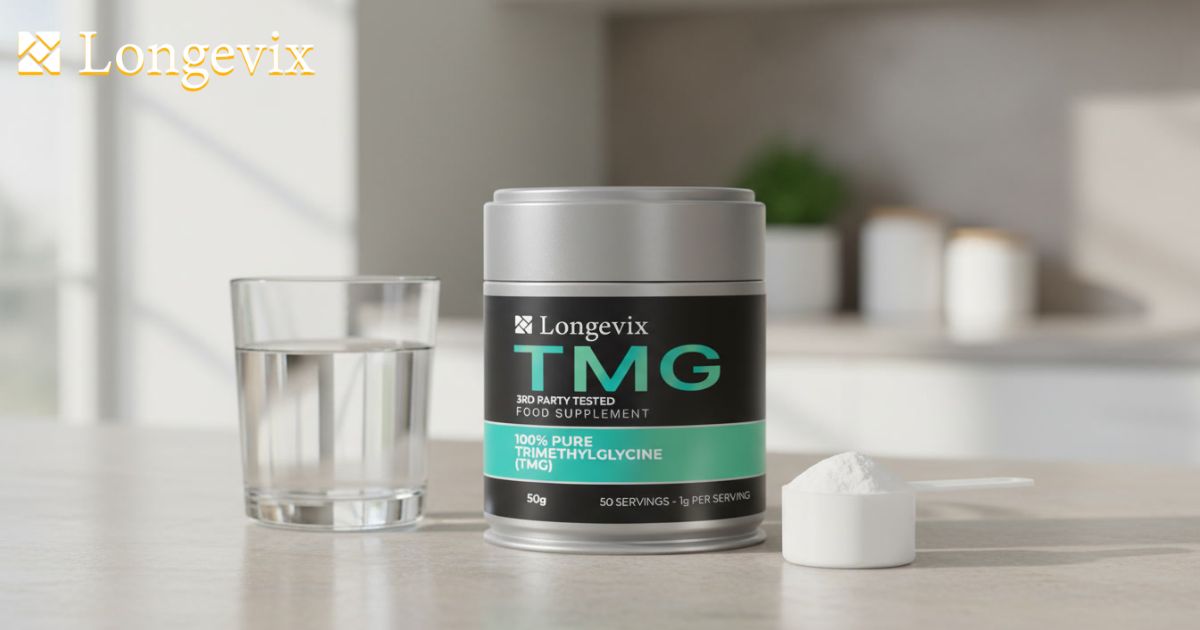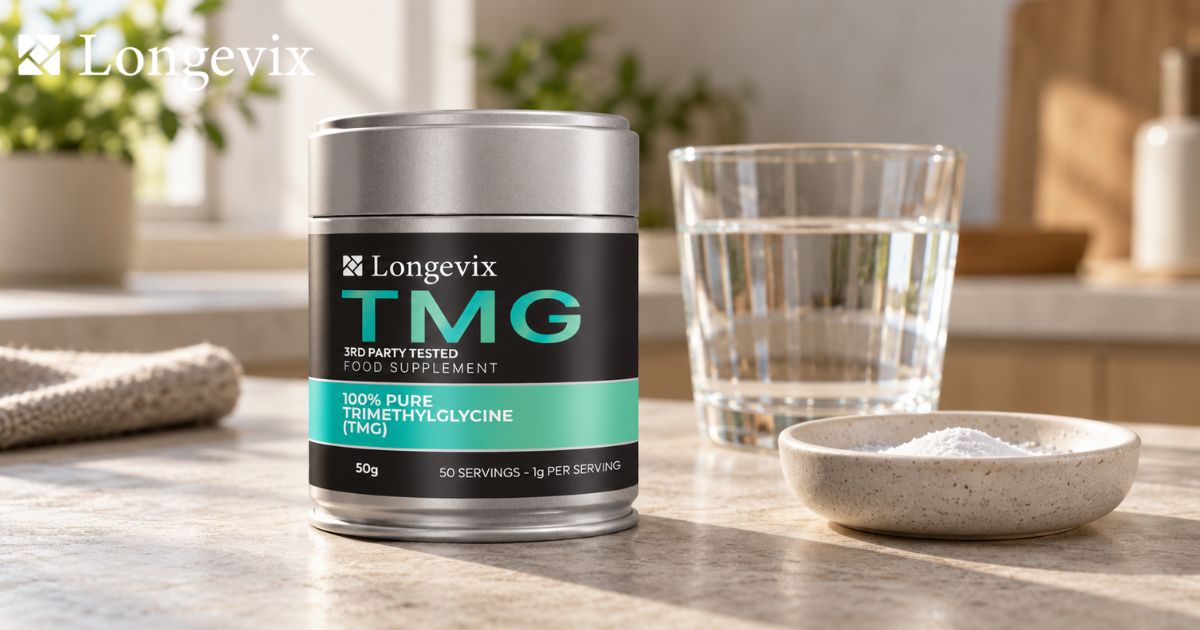
Pure TMG powder looks refreshingly simple, but a short ingredient list doesn’t answer every useful question. Before choosing a product, you still need to understand trimethylglycine, betaine anhydrous, serving size, testing, storage, and the evidence behind common health claims. TMG acts as a methyl donor within pathways involved in homocysteine metabolism, yet that biochemical role shouldn’t be stretched into guaranteed heart, liver, or longevity benefits.
For UK and US buyers, the smartest approach is label-first: confirm the ingredient identity, measure the stated serving correctly, check product-specific documentation, and review your wider supplement routine. This guide explains those details using current Longevix product information and human research in practical.
What Pure TMG Powder Actually Means
The word “pure” sounds reassuring, yet ingredient identity should come first. TMG is short for trimethylglycine, a naturally occurring compound involved in methylation chemistry. Supplement labels frequently use betaine anhydrous as another name. That identity matters because a purity headline alone tells you little about serving directions, testing scope, or cellular function claims.
A trustworthy comparison starts with facts you can verify. The current Longevix product record identifies its powder as Trimethylglycine (TMG/Betaine Anhydrous), gives its pack size and serving information, and links a testing document. That provides more useful evidence than relying only on wording such as “premium”, “clean” or third party tested without context.
TMG, Trimethylglycine and Betaine Anhydrous
TMG, trimethylglycine and betaine anhydrous describe the same core compound in this supplement context. The names can look different on search pages, but they shouldn’t be treated as three separate ingredients. Likewise, broad claims about healthy metabolism or DNA repair require their own evidence; chemical identity alone cannot establish those health outcomes.
Read Ingredient Identity Before Any Purity Claim
Front-label language can make similar-looking powders appear interchangeable. They aren’t always. Search pages regularly connect TMG with terms such as liver detoxification and heart health support, but those phrases shouldn’t distract you from the ingredient field. First establish exactly what the powder contains. Then evaluate any proposed benefit separately.
That sequence also protects against overinterpreting cardiovascular health language. Human research supports an effect of betaine on homocysteine under specific trial conditions. However, changing a cardiovascular biomarker does not automatically demonstrate fewer cardiovascular events. Strong supplement information keeps ingredient identity, biological mechanism and clinical outcomes in separate boxes.
Betaine Anhydrous vs Betaine HCl
Betaine anhydrous is the TMG form discussed in methylation research. Betaine HCl includes hydrochloride and is a different supplement ingredient. Shared use of the word “betaine” can therefore mislead shoppers. When comparing products or research involving homocysteine levels, check the complete ingredient name before assuming the evidence applies. The broader Longevix betaine guide explores this distinction further. Read the Longevix Betaine Anhydrous Powder guide

How TMG Works in Methylation and Homocysteine
TMG participates in one-carbon metabolism by donating a methyl group during a pathway that converts homocysteine towards methionine. That mechanism is well established. It helps explain why researchers have studied betaine supplementation in relation to circulating homocysteine. However, mechanisms are starting points for research rather than automatic guarantees of better long-term health.
A simple pathway looks like this:
TMG → methyl donation → homocysteine → methionine → downstream methylation pathways
Human trials give this mechanism practical context. A 2013 meta-analysis evaluated five randomised controlled trials using at least 4g of betaine daily for six to twenty-four weeks. The pooled result showed a 1.23 μmol/L reduction in plasma homocysteine. That finding concerns a biomarker, not proof that everyone should take the studied amount. Read the PubMed homocysteine meta-analysis
Evidence Case Study: A Biomarker Is Not a Health Outcome
The homocysteine evidence illustrates an important research lesson. A supplement can produce a measurable biochemical change without proving disease prevention or longer life. Later cardiovascular analyses have continued to separate homocysteine changes from harder outcomes. This distinction makes the evidence more useful because it prevents an interesting laboratory result from becoming an exaggerated promise.
Pure TMG Powder vs Capsules and Combination Formulas
Powder, capsules and combination formulas solve different practical problems. Powder provides a standalone ingredient format and removes the need to swallow capsules. Fixed formulas can simplify a routine by combining ingredients. Neither format becomes scientifically superior merely because of its delivery method. Your decision should depend on label clarity, serving information and ingredient overlap.
Format also doesn’t prove claims about body composition, muscle maintenance or weight management. Those outcomes need direct human evidence. A 2024 exercise meta-analysis found some benefit for maximal strength, particularly lower-body strength, yet several other performance outcomes did not improve significantly. A powder format alone cannot guarantee any of those results.
When a Standalone Powder Makes Practical Sense
Standalone TMG can suit someone who wants to manage that ingredient separately from NR, creatine or other compounds. Longevix currently offers both Pure TMG Powder and an NR + TMG capsule formula, allowing different approaches to the same ingredient. The better fit depends on your existing routine rather than a universal hierarchy. View Longevix Pure TMG Powder

How to Read Serving Size and Measure TMG Correctly
Serving size is one of the easiest label details to overlook. A study amount, another brand’s scoop and your current product serving are three different things. Research protocols answer specific scientific questions. They shouldn’t quietly become personal dosage instructions. Follow the directions supplied with the product you actually have unless suitable professional advice says otherwise.
The current Longevix listing states that two included scoops provide the labelled 1,000mg serving. Its 50g pack therefore provides approximately 50 labelled servings. Those are product-specific facts, not a claim that 1,000mg represents the ideal amount for every person or every research objective.
|
Current Longevix product detail |
Verified information |
|
Product |
Pure Trimethylglycine (TMG) Powder |
|
Pack size |
50g |
|
Ingredient shown online |
Trimethylglycine (TMG/Betaine Anhydrous) |
|
Labelled serving |
1,000mg |
|
Measuring method |
Two included scoops |
|
Approximate labelled servings |
50 |
|
Product testing |
Product-linked testing document available |
Longevix Pure TMG Powder 50g at a Glance
The table gives the useful facts without borrowing directions from competitors. Longevix also tells customers to consult the physical product label for the complete ingredient and allergen information. That matters because product information can change. The pack in your hand remains the most relevant source for current directions and warnings.
What Testing Documents Can and Cannot Prove
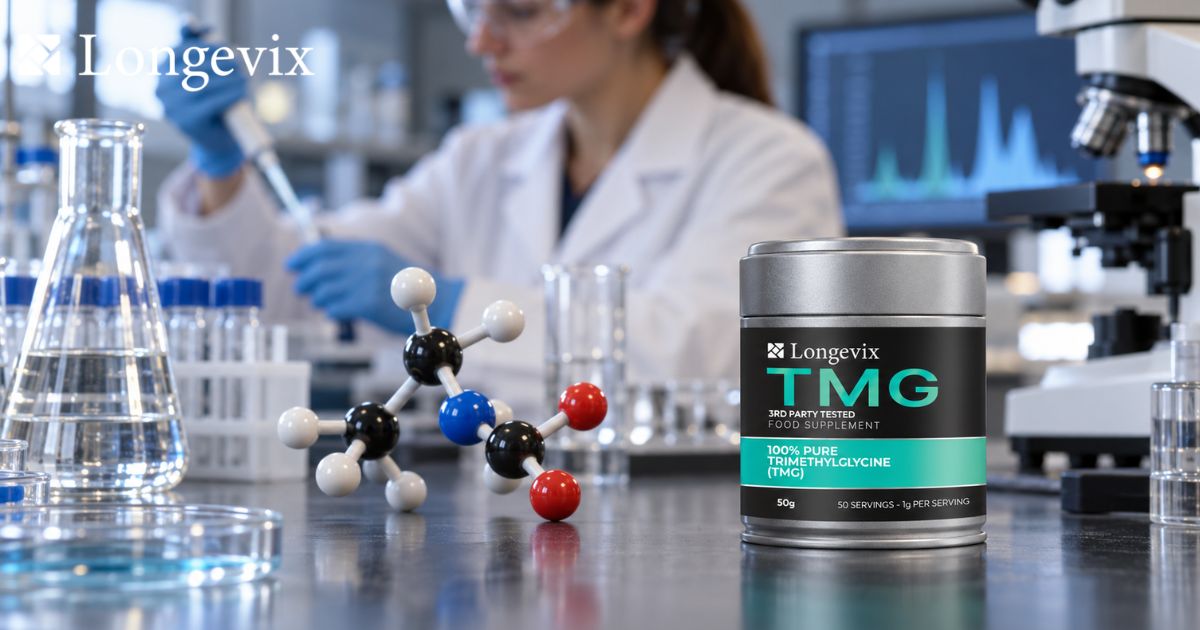
Testing deserves precision because one laboratory report rarely answers every possible quality question. Identity, assay, purity and contaminant analyses can examine different attributes. A certificate should therefore be read according to the tests actually performed. The existence of a document does not justify claims about analyses that never appear within that report.
Longevix currently lists a testing document for Pure Trimethylglycine Powder under reference QDF25-0098434-02. Its certificates page advises readers to compare the product, batch or lot, tests performed, results, units, provider details, dates and limitations. That is a much stronger approach than treating the word “tested” as a blanket quality guarantee.
Match the Product, Batch, Test and Result
A useful rule is: “Check the product. Check the batch. Check the document.” A report only becomes meaningful when you can connect it with the product you hold and understand what the laboratory actually measured. For a deeper certificate-focused explanation, see Longevix’s dedicated testing guide rather than duplicating it here.

Storage and Everyday TMG Powder Handling
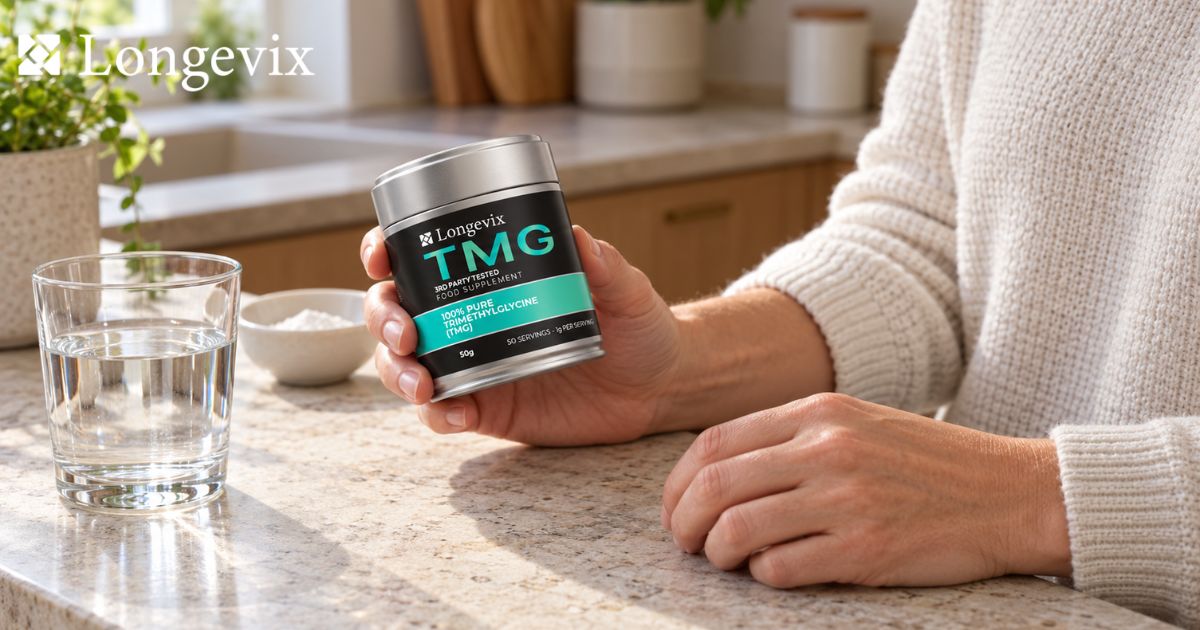
Everyday handling may seem mundane, yet it determines whether your measuring routine remains consistent. Use the supplied measuring method and follow the physical label’s storage instructions. Keep utensils clean and dry. Close the container after use. Most importantly, don’t import another manufacturer’s scoop size or storage directions simply because its product also contains TMG.
Appearance alone also cannot establish purity. Clumping, texture or flavour may be influenced by ingredient properties, environmental conditions and packaging. Likewise, a loose-looking powder isn’t automatically cleaner than a compact one. When something about your product seems unusual, compare it with the current label and relevant manufacturer information instead of guessing from photographs online.
Why Consistent Measuring Matters
A scoop is useful only when it belongs to the product whose directions you are following. Kitchen teaspoons measure volume rather than ingredient mass, while differently shaped supplement scoops can represent different quantities. Consistent product-specific measuring therefore protects the meaning of a labelled serving far better than estimating by eye.
TMG with NMN or NR: What the Evidence Really Shows
TMG often appears beside NMN and NR because NAD-related metabolism and methylation chemistry intersect. That biochemical rationale has encouraged discussions about cognitive health and mental function. Yet a plausible pathway does not demonstrate that every NMN or NR user requires additional TMG. Direct clinical evidence for mandatory pairing remains limited.
The same restraint applies when marketing expands into memory, reaction time or mental clarity. These are distinct outcomes requiring appropriate human trials. A product’s methyl-donor function cannot establish them automatically. Longevix’s existing NR and TMG article examines the pairing more deeply and concludes that formulation logic should not be mistaken for proven clinical synergy.
Separate TMG Powder vs NR + TMG Capsules
Longevix’s separate products illustrate the practical difference clearly. Pure TMG Powder provides standalone trimethylglycine, while NR + TMG Capsules currently provide 300mg NR, 250mg TMG and 5mg piperine per two capsules. Neither option guarantees emotional balance, healthy ageing or improved liver function; those outcomes need independent evidence.
Safety, Side Effects and Higher Research Doses
More isn’t automatically better with TMG. Gastrointestinal discomfort has been reported with supplementation, particularly at larger amounts. Research using at least 4g daily for six weeks or longer has also raised lipid questions. One systematic review found a modest pooled increase in total cholesterol, while its LDL, HDL and triglyceride effects were not statistically significant.
A broader cardiovascular meta-analysis likewise found reductions in homocysteine alongside increases in total and LDL cholesterol across its pooled data. Dose and study context matter. These findings shouldn’t be applied mechanically to Longevix’s 1,000mg labelled serving because the research populations, protocols and amounts were different.
Research Dose Is Not Your Product Serving
A clinical trial dose belongs to that trial. Researchers choose amounts according to a protocol, population, duration and outcome. Copying a larger research number ignores those controls. Follow your current product label and seek appropriate professional advice when pregnancy, breastfeeding, medication use, health conditions or laboratory abnormalities make personalised guidance important.
Choosing Pure TMG Powder in the UK and USA
Smart buying starts with questions that can be answered from evidence. What exact ingredient does the label name? How much does the stated serving contain? How is that serving measured? Is product-specific documentation available? Does another supplement in your routine already contain TMG? These checks matter more than oversized front-label adjectives.
UK and US shoppers should also avoid treating a supplement webpage as personalised medical guidance. Product availability, packaging and regulatory wording can differ between markets. Use the current physical label as your final product reference. Then separate formulation facts from biological mechanisms and separate those mechanisms again from proven clinical outcomes.
|
Question to check |
Why it matters |
Current Longevix information |
|
Is the exact ingredient identified? |
Distinguishes TMG from similarly named forms |
TMG/Betaine Anhydrous |
|
Is serving size clear? |
Prevents borrowed-dose mistakes |
1,000mg using two scoops |
|
Is documentation accessible? |
Enables product-specific checking |
Testing document linked |
|
Can the document be matched? |
Makes the evidence relevant |
Product/batch checking advised |
|
Could another product add TMG? |
Helps identify overlap |
NR + TMG Capsules also contain TMG |
A Better Standard Than Marketing Language
The strongest standard is traceability. Confirm the ingredient. Read the serving. Check the label. Inspect available documentation. Then assess health claims against good human evidence rather than enthusiasm. The Longevix shop lets you compare formats and current product details before deciding which formulation fits your routine.
Frequently asked questions
What is trimethylglycine powder?
Trimethylglycine powder is a powdered form of TMG, also known as betaine anhydrous. TMG participates in methyl donation and homocysteine metabolism.
What are the benefits of TMG (trimethylglycine)?
Human research shows that betaine can reduce plasma homocysteine under certain study conditions. Other outcomes, including exercise and broader health effects, have more variable evidence and shouldn’t be presented as guarantees.
What is the recommended dosage for TMG powder?
There is no single research-derived amount suitable for everyone. Follow the relevant product directions; Longevix Pure TMG Powder currently lists a 1,000mg serving using two included scoops.
Is TMG the same as betaine anhydrous?
Yes. In this supplement context, TMG, trimethylglycine and betaine anhydrous refer to the same core compound. Betaine HCl is different.
What are the side effects of trimethylglycine powder?
Some people may experience gastrointestinal discomfort. Higher-dose research has also reported changes in certain blood-lipid measures, which is another reason not to copy clinical-study doses without context.