Buying a TMG powder supplement should be straightforward, yet ingredient names, serving sizes and bold health promises often blur the picture. Trimethylglycine, also called betaine anhydrous, belongs to a wider network of methylation reactions. It can influence homocysteine measurements under studied conditions, but that doesn't prove it prevents illness or extends life. If you're comparing options in the UK or US, practical details matter just as much as laboratory findings.
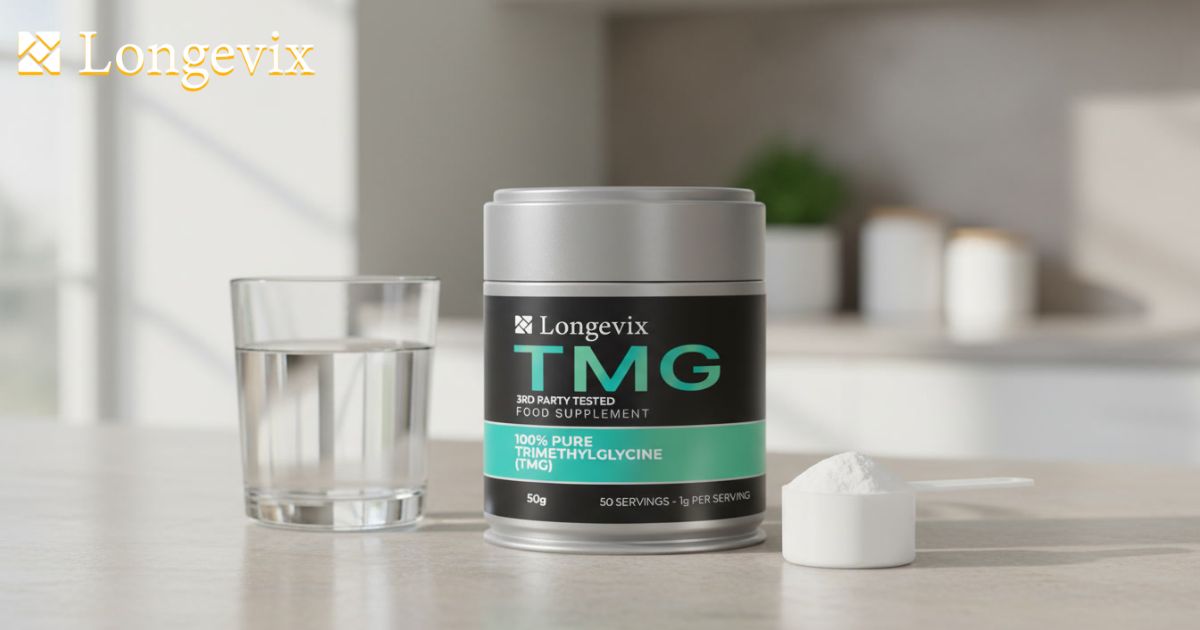
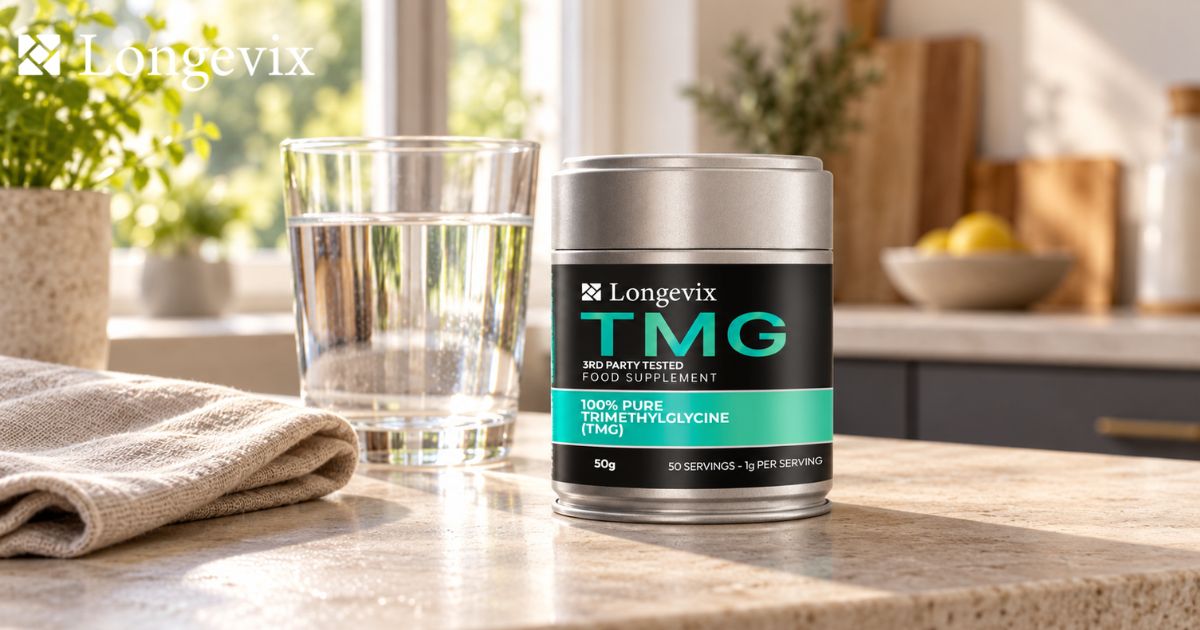
Longevix sells a real 50g powder with a labelled 1,000mg two-scoop serving. This guide explains what that tin actually provides, how it compares with other formats and which safety checks deserve your attention before spending a penny.
What Is a TMG Powder Supplement?
A TMG powder supplement contains trimethylglycine in a loose, measurable format. Scientists also call the substance glycine betaine, a naturally occurring compound involved in human metabolism. Powder changes how you handle the ingredient rather than creating a different substance. Its main practical appeal is a clearly stated quantity without the need to swallow capsules.
Chemically, TMG resembles glycine with three additional methyl groups. That's why the names look similar, although their metabolic roles differ. You may also see TMG advertised as a sports or longevity supplement. Such positioning doesn't establish that every buyer needs it. Start by checking the ingredient identity before assessing any advertised benefit.
Betaine Anhydrous Versus Betaine Hydrochloride
Similar labels can conceal an important distinction. Betaine anhydrous refers to the form normally discussed in TMG methylation research. Betaine hydrochloride, or betaine HCl, is a different compound used in other supplement contexts. Don't assume that research involving one applies directly to the other. Explore Longevix's betaine versus trimethylglycine guide for a closer comparison.
What Does TMG Do Inside Your Body?
TMG acts as a methyl donor, providing chemical units called methyl groups during specific metabolic reactions. Your body also makes betaine from choline, a nutrient found in common foods. These pathways contribute to normal cellular chemistry. However, supplying additional TMG doesn't automatically make every methylation process faster or healthier.
One important reaction helps convert homocysteine into methionine through the enzyme betaine-homocysteine methyltransferase. Normal homocysteine metabolism also involves broader nutritional pathways, including those associated with folic acid, vitamin B6 and vitamin B12. These connections explain scientific interest in TMG. They don't mean everyone requires supplements containing every related nutrient.
Why a Blood Marker Isn't the Same as a Health Outcome
Here's the crucial distinction: homocysteine is measurable, but long-term health involves much more. A study may show lower blood homocysteine without demonstrating fewer heart attacks or strokes. That's why responsible cardiovascular health discussions separate biochemical changes from real clinical outcomes. A promising mechanism is a research starting point, not a guaranteed personal result.
Which TMG Benefits Have Human Research Behind Them?
Human evidence most consistently supports betaine's ability to reduce circulating homocysteine under certain study conditions. Researchers have also examined exercise performance, metabolic outcomes and blood pressure. However, findings beyond homocysteine are less consistent. There isn't adequate evidence that ordinary TMG supplementation prevents cardiovascular disease, reverses ageing or guarantees improved athletic performance.
Other claims deserve equal caution. Early findings involving liver function and exercise don't establish a treatment for liver disease or a universal performance benefit. Higher-dose betaine research has also identified increases in LDL cholesterol. Therefore, a product's biological activity should never be confused with proof that more powder produces better results.
Clinical Example: What a Six-Week Study Actually Found
A randomised study published in The Journal of Nutrition investigated 76 healthy adults over six weeks. Participants received placebo or 1.5g, 3g or 6g of betaine daily. Fasting homocysteine levels were approximately 12%, 15% and 20% lower than placebo, respectively. These results concern blood measurements, not proven disease prevention.
|
Research question |
Human evidence |
Practical interpretation |
|
Does betaine affect homocysteine? |
Several intervention studies report reductions |
A measurable biochemical effect |
|
Does TMG prevent heart disease? |
Not established by these biomarker trials |
No prevention claim is justified |
|
Does TMG improve athletic performance? |
Mixed results across studies |
Benefits aren't guaranteed |
|
Does it produce weight loss? |
A 12-week trial found no additional body-composition benefit |
Not an established weight-loss treatment |
|
Can higher doses affect cholesterol? |
A controlled-trial analysis found increased LDL cholesterol at 6g daily |
Higher intake warrants caution |
These findings don't establish the clinical effectiveness of any specific Longevix product.
What's Inside Longevix Pure TMG Powder 50g?
The Longevix Pure Trimethylglycine (TMG) Powder 50g listing identifies trimethylglycine, also called betaine anhydrous, as its ingredient. The product comes in a 50g tin with a labelled serving of 1,000mg using two included scoops. Its description indicates approximately 50 servings per tin.
Importantly, the online ingredient field doesn't replace the complete physical label. You should still check the current packaging for full ingredients, allergens and directions. Longevix also links a batch-specific testing document. That provides an opportunity to review published information without mistaking a product description for independent proof of every possible quality claim.
What Does the Two-Scoop Serving Mean?
The labelled serving uses two included scoops to provide 1,000mg of TMG, equivalent to one gram. Don't substitute a kitchen teaspoon or assume that a scoop from another supplement holds the same weight. This is especially important when switching between brands. The correct starting point is always the measuring method printed on your own product.
|
Longevix product information |
Verified detail |
|
Product name |
Pure Trimethylglycine (TMG) Powder 50g |
|
Format |
Powder |
|
Pack weight |
50g |
|
Labelled serving |
1,000mg |
|
Supplied measuring method |
Two included scoops |
|
Approximate serving count |
50 |
|
Ingredient identified online |
Trimethylglycine / Betaine Anhydrous |
|
Testing document |
Available through the product page |
|
Listed price at research |
£17.99 |
For additional label-reading guidance, see Longevix's Pure TMG Powder: The Smart Way to Read the Label.
How Many Servings Does a 50g TMG Tin Provide?
A 50g tin contains 50,000mg of powder by weight. Divide that quantity by the labelled TMG supplement dosage of 1,000mg per serving, and the result is approximately 50 servings. This simple calculation tells you what the packaging offers. It doesn't establish how often you personally should take the supplement.
For example, imagine using 30 correctly measured servings over a month. You would consume 30g and have approximately 20g remaining. That's an illustration of pack capacity, not a suggested intake schedule. Actual serving counts may differ slightly because of powder left inside the container or inconsistent measuring.
Why Household Teaspoons Can Give Misleading Measurements
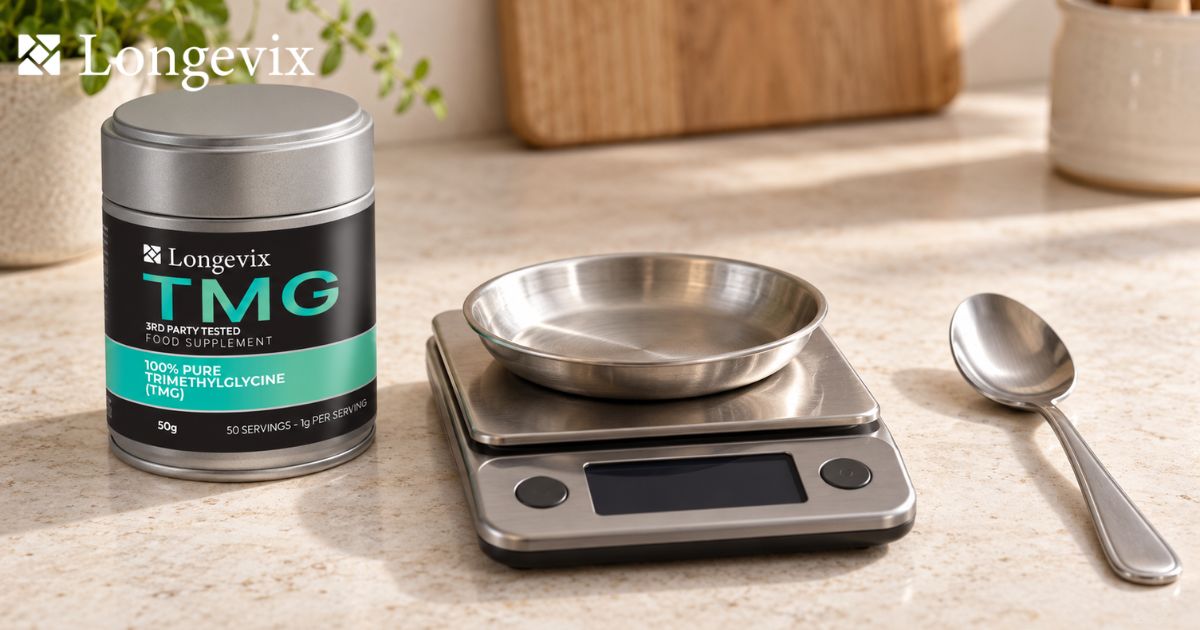
A teaspoon measures volume rather than weight. Powder density, particle size and whether a scoop is heaped can all change the amount collected. Consequently, a spoonful of one supplement may weigh differently from another. Follow the supplied scoop instructions carefully. A suitable precision scale may help verify weight when the product directions permit it.
Accurate storage matters too. Keep powder in its original container and follow the label's storage guidance. Close the lid securely after use. Avoid introducing moisture through wet utensils. If you prefer mixing supplements into water or another drink, check the product directions rather than assuming every powder requires identical preparation.
What Does Longevix TMG Powder Cost Per Serving?
A headline price tells only part of the story. At the verified listing price of £17.99, a 50g tin costs approximately 36p per labelled serving. That calculation divides the pack price by approximately 50 servings. It excludes delivery charges, discounts and changes in future pricing.
However, comparing products requires more than dividing one price by another. A formula containing several ingredients isn't equivalent to standalone TMG. It may cost more per serving because you're purchasing different substances. Compare actual ingredient amounts first. Then consider convenience, intended use and whether those additional ingredients are relevant to you.
A Transparent Comparison With Other Longevix Formats
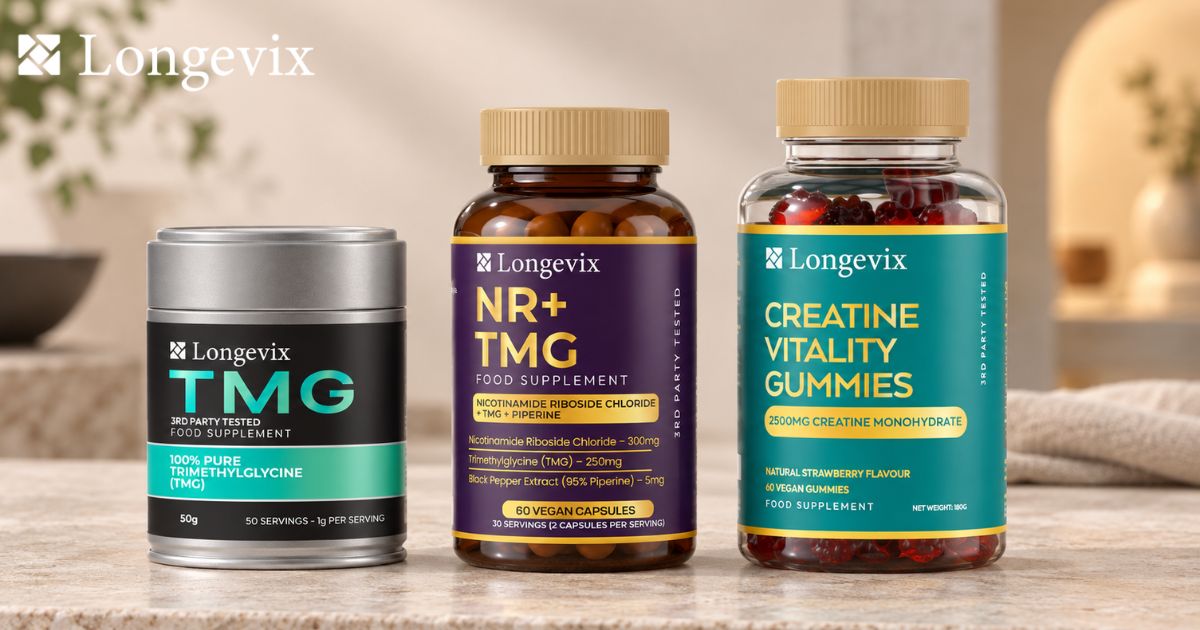
Longevix also sells NR + TMG Capsules and Creatine Vitality Gummies. These products have different ingredient profiles. Their listed prices allow a useful serving-cost comparison, but not a like-for-like TMG potency comparison. In particular, the gummy product page doesn't disclose its individual TMG amount.
|
Longevix format |
Pack price |
Labelled servings |
Approximate cost per serving |
TMG per serving |
|
Pure TMG Powder 50g |
£17.99 |
50 |
£0.36 |
1,000mg |
|
NR + TMG Capsules |
£17.69 |
30 |
£0.59 |
250mg |
|
Creatine Vitality Gummies |
£9.99 |
15 |
£0.67 |
Not individually specified online |
Prices reflect the product listings checked on 27 October 2026 and may change. These products have different ingredients and should not be treated as interchangeable.
TMG Powder vs Capsules and Gummies: What Changes?
Choosing TMG powder rather than TMG capsules mainly affects convenience, measurement and formulation. Powder requires careful handling, while capsules remove the need to measure loose ingredients. Neither format automatically guarantees better absorption or stronger results. The amount of TMG, other ingredients and consistency of use matter more than the packaging alone.
Longevix's NR + TMG Capsules provide 250mg TMG alongside 300mg nicotinamide riboside and 5mg piperine per two-capsule serving. Its creatine gummies contain TMG alongside creatine monohydrate, taurine and vitamin B12. However, the published gummy description doesn't specify each active quantity. These differences should guide comparisons before price alone does.
Check for Duplicate TMG Across Your Supplements
Here's an easily missed calculation. A labelled 1,000mg powder serving plus a labelled serving of Longevix NR + TMG Capsules would total 1,250mg of TMG. This is arithmetic, not a recommended combination. Adding gummies could increase exposure further, but their exact contribution requires the physical label. Check every product before combining them.
For a broader discussion of overlapping ingredients, read Trimethylglycine Powder: Avoid These 7 Costly Mistakes.
Can Food Provide TMG Without a Powder Supplement?
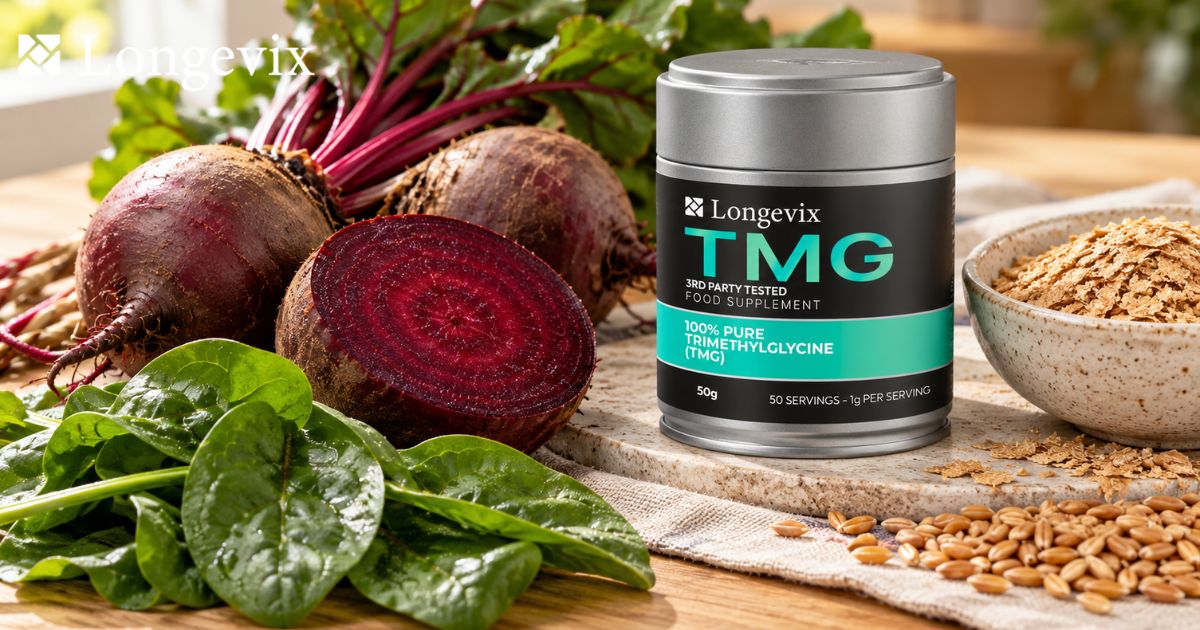
You don't need a tin to encounter dietary betaine. Beetroot, spinach, wheat bran and several cereal grains naturally contain it. Seafood can contribute too. These foods also provide other nutrients and dietary components. Their betaine concentrations vary with the food, preparation method and serving size.
Food deserves attention before supplementation because TMG isn't an essential vitamin with one universally prescribed daily allowance. Your body can also form betaine from choline. Still, dietary needs and medical circumstances differ. A balanced diet remains fundamental, while decisions about additional supplementation should reflect evidence and individual requirements.
Why Food Portions Aren't Direct Powder Equivalents
A beetroot serving isn't automatically equivalent to 1,000mg of concentrated TMG. Natural concentrations vary considerably, and food composition tables use different measurement methods. A scientific review of dietary betaine describes these variations across grains, vegetables and seafood. Avoid estimating supplement-sized doses from a single food without reliable composition data.
Which Safety, Testing and Health-Claim Checks Matter?
Good supplement decisions consider possible adverse effects alongside benefits. TMG can cause nausea, diarrhoea, bloating or other digestive discomfort, particularly at higher intakes. Some trials also associate higher doses with increased cholesterol. Before using TMG, seek qualified advice if you're pregnant, breastfeeding, taking medication or managing a medical condition.
Quality checks answer different questions. A Certificate of Analysis may document specific identity, assay or contaminant tests on a named sample. Longevix lists a TMG testing document under reference QDF25-0098434-02 in its certificate library. Check its contents and batch details before treating it as evidence for your own tin.
The UK 1.5g Health-Claim Condition Versus a 1g Serving
Great Britain's authorised betaine claim concerns normal homocysteine metabolism. Its conditions include at least 500mg per quantified portion and information that the beneficial effect is obtained with 1.5g daily. The rules also require a warning that more than 4g daily may significantly raise blood cholesterol. Longevix's labelled 1g serving alone doesn't meet the stated daily condition. This isn't an instruction to increase your dose.
For the regulatory source, consult the Great Britain Nutrition and Health Claims Register. The rules discussed here specifically apply to England, Scotland and Wales.

How Should UK and US Buyers Choose TMG Powder?
Before purchasing, compare the actual ingredient, serving size, pack weight and documented quality information. In Britain, supplement communications must follow applicable food and health-claim rules. In the United States, dietary supplements generally don't receive FDA approval before marketing. The FDA's consumer guidance explains why shoppers should assess labels and claims carefully.
Delivery arrangements deserve attention too. Longevix operates as a UK supplement business, but availability and shipping terms should be checked at checkout. Don't assume that a UK listing guarantees delivery to every US address. Equally, don't assume that a product sold in one country automatically satisfies every regulatory requirement in another.
Final Decision: Does Longevix's 50g TMG Powder Fit Your Needs?
A sensible buying decision starts with the simplest questions. Do you specifically want standalone TMG rather than a combination formula? Can you follow its measuring instructions reliably? Have you checked the evidence, safety information and other supplements you already use? If the format suits your needs, examine Longevix Pure TMG Powder 50g alongside its current label and available testing documentation.
The strongest reason to choose carefully isn't a promise of extraordinary results. It's the confidence that comes from understanding exactly what you're buying.
Frequently asked questions
What are the health benefits of trimethylglycine?
TMG participates in methylation and can lower homocysteine in certain studies. However, claims about disease prevention, longevity and broader benefits remain insufficiently established.
Is TMG the same as creatine?
No. TMG participates in methyl-transfer reactions, while creatine supports rapid energy recycling in muscles. They serve different biological functions.
Is TMG hard on the liver?
TMG has been studied in liver metabolism, but evidence doesn't justify calling it a liver treatment. Anyone with liver disease should seek medical guidance before supplementation.
How long does it take for TMG to kick in?
There is no established timeline for feeling a benefit. A small study measured homocysteine changes within two hours after higher single doses, but not after 1g.
What does the supplement TMG do for your body?
TMG supplies methyl groups in specific metabolic pathways, including the conversion of homocysteine into methionine. Its biological role doesn't guarantee that extra supplementation improves overall health.