Choosing between TMG and SAM-e can feel confusing. Both influence methylation, yet they work at different points. TMG, also called trimethylglycine, participates in the methylation cycle by supporting homocysteine remethylation. SAM-e, or S-adenosyl-L-methionine, works further downstream and supplies methyl groups for many biochemical reactions.
Those differences shape how each compound relates to homocysteine, mood research, liver metabolism and one-carbon metabolism. Understanding TMG vs SAM-e therefore means looking beyond supplement marketing. Human evidence, pathway position, safety, formulation and personal circumstances all matter. Neither compound deserves to be labelled universally superior for every person or purpose.
TMG vs SAM-e: The Quick Comparison at a Glance
Here’s the important distinction. TMG contributes to homocysteine remethylation through betaine-homocysteine methyltransferase, or BHMT. SAM-e forms from methionine and then transfers methyl groups through numerous methyltransferase reactions. Both participate in methyl metabolism, although taking one doesn’t automatically create a biological need for the other.
The evidence also travels in different directions. Controlled trials show that betaine can reduce homocysteine levels at studied intakes. SAM-e has received considerably more research attention for depression, osteoarthritis and liver conditions. However, the US NCCIH describes the clinical evidence for these SAM-e uses as inconclusive.
|
Comparison |
TMG |
SAM-e |
|
Full name |
Trimethylglycine |
S-adenosyl-L-methionine |
|
Other common name |
Betaine, betaine anhydrous |
SAMe, SAM-e, ademetionine |
|
Metabolic position |
Earlier in methionine metabolism |
Further downstream |
|
Important pathway |
BHMT-dependent remethylation |
SAM-dependent methyl-transfer reactions |
|
Main connection |
Homocysteine to methionine |
Methionine-derived methyl donation |
|
Key human research |
Homocysteine and metabolic markers |
Depression, joints and liver conditions |
|
Direct Longevix product |
Yes |
No current SAM-e product |
|
Common supplement format |
Powder, capsules and blends |
Capsules or tablets, sometimes coated |
Why “Methyl Donor” Doesn’t Mean “Same Supplement”
Picture methyl metabolism as a railway network rather than one straight track. TMG supports one route leading towards methionine. SAM-e arrives later and serves as a major methyl donor for numerous enzymes. SAM is sometimes described as the universal methyl donor, but that shorthand doesn’t make every methylation reaction identical.
What Are TMG and SAM-e, and Why Are Both Called Methyl Donors?
TMG is a naturally occurring compound related to choline metabolism. Supplement labels commonly describe it as betaine anhydrous, which shouldn’t be confused with betaine hydrochloride. TMG contains three methyl groups. Through the BHMT pathway, one methyl group can transfer to homocysteine, helping form methionine and dimethylglycine.
SAM-e works differently. Your body synthesises it from methionine and ATP. It subsequently participates in numerous methyl-transfer reactions within one-carbon metabolism. SAM also has biochemical roles beyond methyl donation. Importantly, having a broad cellular role doesn’t prove that taking supplemental SAM-e improves every pathway in which natural SAM participates.
What Is Trimethylglycine or TMG?
TMG stands for trimethylglycine, commonly called betaine. It occurs naturally in foods and is also produced during choline metabolism. In tissues expressing BHMT, betaine can donate a methyl group during homocysteine remethylation. Longevix Pure TMG Powder specifically lists trimethylglycine, or betaine anhydrous, as its ingredient.

What Is S-Adenosyl-L-Methionine or SAM-e?
SAM-e is a naturally occurring compound made from methionine and ATP. Researchers refer to S-adenosyl-L-methionine as SAM, SAMe or SAM-e, while some clinical literature uses ademetionine. It supplies methyl groups to many methyltransferases before metabolism proceeds towards S-adenosylhomocysteine and eventually reconnects with homocysteine metabolism.
Why TMG and SAM-e Aren’t Interchangeable
Pathway position explains the difference neatly. TMG contributes through an upstream pathway involved in regenerating methionine from homocysteine. SAM-e forms later and behaves as a downstream product of methionine metabolism. Their metabolic stories connect, but taking TMG isn’t chemically or physiologically equivalent to directly taking SAM-e.
How TMG and SAM-e Work in the Methylation Cycle
Following homocysteine makes the chemistry easier to understand. Your body can remethylate homocysteine through more than one route. One involves folate, vitamin B12 and methionine synthase. Another uses betaine through BHMT. These routes overlap within methionine metabolism, yet their enzymes, cofactors and tissue distribution aren’t identical.
After methionine becomes available, methionine adenosyltransferase can produce SAM. This connects methionine supply with SAMe synthesis. SAM then transfers methyl groups during numerous enzymatic reactions. Further metabolism produces S-adenosylhomocysteine, which can ultimately contribute to homocysteine again. The system behaves like a regulated cycle rather than a simple one-way pipeline.
TMG, BHMT and Homocysteine Remethylation
BHMT means betaine-homocysteine methyltransferase. The enzyme transfers a methyl group from betaine to homocysteine, producing methionine and dimethylglycine. The BHMT pathway is particularly relevant in the liver and kidney. It provides an alternative route to folate-dependent remethylation rather than simply duplicating the same biochemical machinery.
The Folate Route Works Differently
Another important route uses 5-methyltetrahydrofolate and vitamin B12-dependent methionine synthase. MTHFR helps generate the methylfolate used by this pathway. TMG therefore doesn’t simply replace folate or vitamin B12. Instead, betaine-dependent BHMT and folate-dependent methionine synthase provide distinct routes for remethylating homocysteine.
Does MTHFR Genotype Make TMG Automatically Better?
Genetics can influence one-carbon metabolism, but simple internet rules often stretch the evidence. An MTHFR genotype such as 677TT can affect folate-related metabolism. Research has found relationships between betaine, homocysteine and people who are C677T homozygous, particularly when B-vitamin status is low. Genotype alone, however, doesn’t establish an individual need for TMG.
From TMG to Methionine to SAM-e
The connection is indirect but important. TMG can donate a methyl group during the conversion of homocysteine towards methionine. Methionine can subsequently support SAM formation. SAM then participates in methyl-transfer reactions. TMG therefore doesn’t simply “turn into SAM-e”; several regulated enzymatic steps determine what happens between both compounds.

TMG / Betaine → BHMT reaction → Methionine → SAM-e → methyl transfer → S-adenosylhomocysteine → Homocysteine
Where NAD+ Metabolism Enters the Conversation
Nicotinamide N-methyltransferase uses SAM to methylate nicotinamide. Research therefore links NNMT activity with cellular methyl balance and NAD+ metabolism. However, this biochemical connection doesn’t prove everyone taking NR or NMN needs extra TMG. Longevix makes the same mechanism-versus-outcome distinction on its Science page.
“Clear evidence matters more than biochemical theatre.” — Longevix Best Methylation Supplement guide.
TMG vs SAM-e for Homocysteine: What Does Human Research Show?
Human evidence gives TMG a clearer connection with homocysteine. A meta-analysis of five randomised, placebo-controlled trials found that betaine supplementation significantly reduced plasma homocysteine levels. The studies included healthy adults taking at least four grams daily for periods ranging from six to 24 weeks.
Still, a better biomarker isn’t automatically a better health outcome. The pooled reduction was about 1.23 μmol/L, but that result doesn’t prove fewer cardiovascular events or longer life. These research amounts also differ from many retail servings. A study quantity should never quietly become a recommended clinical dose for an individual reader.

What the Human Betaine Trials Actually Tested
The 2013 meta-analysis examined trials providing at least four grams of betaine daily for six to 24 weeks. The pooled homocysteine reduction reached 1.23 μmol/L. Those figures describe research protocols, not universal intake advice. Longevix Pure TMG Powder instead carries a labelled 1,000mg serving using two scoops.
Does SAM-e Lower Homocysteine?
SAM-e belongs inside the methionine cycle, yet supplemental SAM-e shouldn’t be presented as a straightforward homocysteine-lowering product. After SAM transfers its methyl group, metabolism proceeds towards S-adenosylhomocysteine and homocysteine. This makes SAM-e biologically connected with homocysteine without establishing oral SAM-e as a proven strategy for lowering it.
Practical Example: Why Research Doses Need Context
Imagine finding a study that used four grams of betaine while your supplement provides one gram per serving. Simply quadrupling the serving would ignore participant selection, study duration, monitoring and individual health factors. Research should help you understand evidence. It shouldn’t become a do-it-yourself dosing calculator without appropriate clinical context.
TMG vs SAM-e for Mood and Depression: What Does the Evidence Really Say?
SAM-e receives far more attention in mood research than TMG. SAM-dependent methylation intersects with processes relevant to neurotransmitter synthesis, which helped create scientific interest. Yet a plausible mechanism doesn’t establish an antidepressant effect. Depression involves complex biological, psychological and environmental factors that cannot be reduced to methyl availability alone.
The clinical picture remains uncertain. The NCCIH SAM-e review notes encouraging signals alongside important limitations, including small studies and trials using injected rather than oral SAM-e. It concludes that evidence remains inconclusive, so SAM-e shouldn’t be presented as an established depression treatment.
Why SAM-e Became Linked With Mood
Researchers became interested in SAM-e because methylation participates in numerous neurological processes and some studies identified altered SAM-related biology in depression. That provides a research rationale, not proof of efficacy. Mood disorders involve genetics, stress, sleep, medication, illness and social factors alongside brain chemistry, making simple methyl-donor explanations incomplete.
What Human SAM-e Research Shows
Numerous clinical studies have examined SAM-e for depression, but their methods and results vary. NCCIH notes that some studies suggest possible benefit, while the overall evidence remains inconclusive. That wording matters. “Studied for depression” carries much less certainty than “proven antidepressant”, especially when discussing supplements alongside commercial products.
Does TMG Have Comparable Depression Evidence?
No comparable clinical evidence establishes TMG as a therapy for depression. TMG participates in methyl metabolism, but biochemical relevance doesn’t prove improved mood. Assuming every compound involved in methyl donation improves neurotransmitters or emotional wellbeing would leap from mechanism to outcome without the human evidence needed to support that conclusion.
UK and US Readers Need Extra Context
For UK readers, supplement marketing cannot claim or imply that food supplements treat, prevent or cure disease. GOV.UK guidance makes that boundary explicit. The same evidence-led caution remains sensible for US readers because dietary supplements shouldn’t replace professional assessment or recognised medical care for depression.
TMG vs SAM-e Beyond Methylation: Where Does the Evidence Differ?
The research surrounding both compounds branches in different directions. TMG appears in studies involving homocysteine, metabolic pathways and sports nutrition. SAM-e has attracted research involving depression, osteoarthritis and several liver conditions. However, a compound being investigated for a condition doesn’t establish that taking it reliably improves that condition.
This distinction becomes especially important around liver function. Both compounds intersect with hepatic metabolism, yet pathway importance shouldn’t become a treatment claim. Longevix already explores the subject more deeply in its TMG and Liver Health guide, allowing this article to remain focused on direct TMG vs SAM-e differences.
TMG and Liver Metabolism
BHMT plays an important role in hepatic methionine and homocysteine metabolism, which explains why TMG frequently appears in liver-related research. Still, an important metabolic role doesn’t mean taking TMG treats liver disease. Someone with a diagnosed liver condition needs individual medical guidance rather than conclusions drawn only from biochemical pathways.
SAM-e and Liver Research
Researchers have examined SAM-e in several liver conditions, including cholestatic and chronic liver disorders. However, NCCIH concludes that current evidence doesn’t establish broad clinical benefit for liver disease. This distinction illustrates a recurring theme: substantial research activity can still produce uncertainty rather than a dependable treatment conclusion.
SAM-e and Joint Research
SAM-e has also been studied for osteoarthritis. Some studies produced promising findings, while the overall evidence remains insufficient for a firm conclusion. NCCIH therefore describes the evidence as inconclusive. A careful comparison should acknowledge this research without upgrading it into a guarantee that SAM-e will improve joint pain or mobility.
TMG and Performance Research
Betaine appears in sports-nutrition research examining strength, body composition and exercise outcomes. Results differ across studies and populations. Those investigations shouldn’t turn every TMG product into a performance supplement. Exercise status, study duration, training programme, dosage and outcome measures all influence how much a particular trial can tell you.
TMG vs SAM-e Safety: Side Effects, Interactions and Key Differences
Safety can separate TMG from SAM-e more clearly than marketing language does. TMG may cause gastrointestinal discomfort, while higher studied intakes have raised questions about lipid changes. SAM-e brings different concerns, particularly around bipolar disorder and medicines or supplements that influence serotonin. Those differences deserve careful consideration before supplementation.

Another popular phrase needs context. Overmethylation risk sounds like a formal medical diagnosis, yet “overmethylation” doesn’t have a universally accepted clinical definition or validated symptom checklist. Anxiety, sleep disturbance, headaches and palpitations have many possible causes. Longevix discusses this nuance further in its TMG side-effects guide.
Common TMG Tolerability Issues
TMG may cause digestive discomfort in some people, particularly at larger intakes. Reported symptoms can include nausea, diarrhoea and gastrointestinal upset. These complaints aren’t specific to TMG, so context matters. Other supplements, medicines, infections and dietary changes can cause similar symptoms, making careful review more useful than immediate assumptions.
TMG and Blood Lipids
A systematic review of trials using at least four grams of betaine daily found a modest increase in total cholesterol, while effects on other lipid measures varied. Another meta-analysis also reported dose-related differences. These findings make dosage context important and shouldn’t automatically be extrapolated to every lower-dose supplement.
SAM-e, Bipolar Disorder and Antidepressants
SAM-e requires particular caution if you have bipolar disorder. NCCIH warns that it may worsen manic symptoms without professional supervision. It may also interact with antidepressants and other substances affecting serotonin, including St John’s wort and L-tryptophan. Medication users should therefore discuss SAM-e with an appropriate healthcare professional.
Why SAM-e Formulation Can Matter
Some oral SAM-e products use an enteric-coated formulation. A randomised pharmacokinetic study of enteric-coated ademetionine tablets found that food changed absorption timing and exposure in healthy participants. That doesn’t establish one commercial formulation as superior, but it shows why milligram amounts alone cannot describe every aspect of oral delivery.
Pregnancy and Existing Medical Conditions
Long-term SAM-e safety information remains limited, while safety during pregnancy hasn’t been established. NCCIH advises extra care for people who are pregnant, nursing, taking medicines or living with relevant medical conditions. Longevix likewise directs customers to follow labels and seek qualified guidance when personal health circumstances make supplementation less straightforward.
TMG vs SAM-e: Which Makes More Sense for Different Goals?
There’s no responsible universal winner. TMG has a direct biochemical connection with BHMT-dependent homocysteine recycling. SAM-e acts as a major methyl-group donor and has attracted more mood, joint and liver research. However, having more research in a particular field doesn’t automatically establish greater effectiveness, necessity or safety.
Your medicines, dietary intake, existing supplements, laboratory findings and health history can all change the decision. More methyl donors aren’t automatically better. The Longevix Best Methylation Supplement guide makes a similar point: defined purpose and transparent formulation often matter more than creating the most complicated possible supplement stack.
If Your Interest Is Homocysteine
TMG has the clearer direct connection. BHMT uses betaine during homocysteine remethylation, and controlled trials have measured reductions in circulating homocysteine after supplementation. However, elevated homocysteine can relate to nutrition, genetics, kidney function, medicines and other factors. A supplement shouldn’t replace appropriate investigation when a laboratory result is abnormal.
If Your Interest Is General Methylation
“Methylation support” sounds simpler than the underlying biology. Folate, vitamin B12, choline, TMG, methionine and numerous enzymes participate in connected reactions. Choosing SAM-e because it seems more direct, or TMG because it appears more foundational, overlooks regulation across the wider network. Start with a defined purpose rather than pathway marketing.
If Your Interest Is Mood
SAM-e has considerably more direct mood research than TMG, but stronger research interest doesn’t equal proven superiority. NCCIH still describes the evidence for depression as inconclusive. Bipolar disorder and medicine interactions create further concerns. Persistent or significant mood symptoms deserve proper assessment rather than trial-and-error supplementation based on methylation theories.
Can TMG and SAM-e Be Taken Together?
Their pathways can intersect, but that doesn’t create a universal reason to combine them. Evidence doesn’t establish a routine TMG-plus-SAM-e stack for healthy adults. Adding both can increase complexity and make unwanted effects harder to interpret. Medication use, mood disorders and other health factors may also alter the safety calculation.
Practical Example: Simpler Can Be Smarter
Consider someone already taking B vitamins, an NR formula and another methylation supplement. Adding separate TMG and SAM-e may create an impressive-looking routine without solving a defined problem. Reviewing duplicated ingredients and actual serving amounts first often produces a clearer decision than adding another compound simply because connected pathways appear convincing.
Where TMG Fits in the Current Longevix Supplement Range
Longevix currently offers TMG through several real formulations. These include standalone powder, NR + TMG Capsules and Creatine Vitality Gummies containing TMG. The current Longevix shop doesn’t list a SAM-e product, so SAM-e belongs in this article as an educational comparator rather than an implied Longevix offering.
That distinction strengthens trust. Product information should match current labels rather than importing competitor dosages or hypothetical formulations. Longevix also publishes Certificates of Analysis, including documentation for Pure TMG Powder. Testing information remains most useful when you match the document with the correct product and batch.

Longevix Pure Trimethylglycine TMG Powder 50g
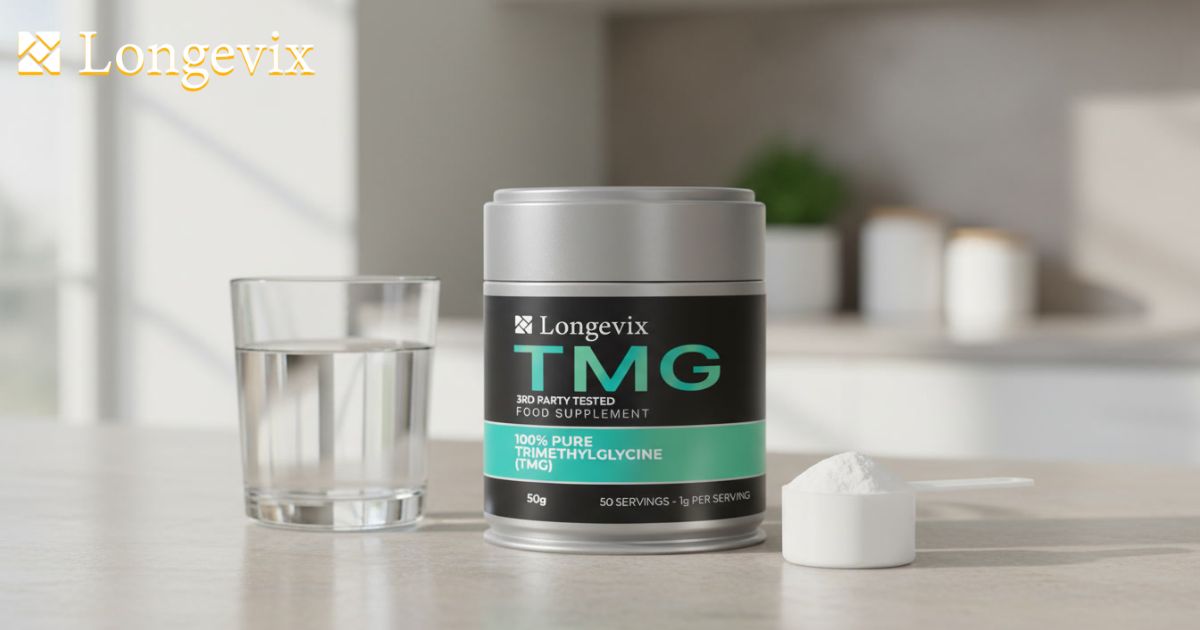
The Pure TMG Powder is the most direct Longevix TMG format. The current product page lists 50g of betaine anhydrous, with a labelled 1,000mg serving using two included scoops and approximately 50 servings. A batch-specific laboratory report is also available.
Longevix NR + TMG Capsules
The NR + TMG Capsules use a combination formula instead. Two capsules currently provide 300mg nicotinamide riboside, 250mg TMG and 5mg piperine. This provides a convenient combined format, although it doesn’t prove that every person using NR needs supplemental TMG.
Longevix Creatine Vitality Gummies
Creatine Vitality Gummies place TMG within a wider creatine-led formula containing creatine monohydrate, taurine and vitamin B12. The current shop lists 60 gummies and a four-gummy serving. Complete quantities for every active aren’t published online, so unpublished amounts shouldn’t be estimated or borrowed from another product.
Longevix TMG Products Compared
|
Longevix product |
Current format |
TMG information |
Other listed actives |
Best comparison approach |
|
Pure TMG Powder 50g |
Powder |
1,000mg labelled serving |
None listed as additional actives |
Standalone TMG format |
|
NR + TMG Capsules |
Capsules |
250mg per two-capsule serving |
300mg NR, 5mg piperine |
Combined NR and TMG format |
|
Creatine Vitality Gummies |
Gummies |
TMG listed; check physical label for full amount |
Creatine, taurine, B12 |
Broader creatine formula |
|
SAM-e |
Not currently sold by Longevix |
Not applicable |
Not applicable |
Educational comparison only |
Which Longevix TMG Format Makes Sense?
Choose by formulation rather than dramatic promises. Powder offers standalone TMG with a clearly stated serving. NR + TMG Capsules provide a fixed combination. Creatine Vitality Gummies place TMG inside a broader formula. Compare the current label, total overlapping ingredients, serving directions, personal preferences and available testing before making a purchasing decision.
Frequently asked questions
What Is the Difference Between TMG and SAMe?
TMG participates in BHMT-dependent homocysteine remethylation and can help regenerate methionine. SAM-e forms farther downstream from methionine and then supplies methyl groups to numerous methyltransferase reactions. Their pathways connect, but they remain chemically distinct compounds with different metabolic entry points and different bodies of supplement research.
Is TMG Better Than SAMe?
Neither is universally better. TMG has a clearer direct relationship with homocysteine remethylation, while SAM-e has received considerably more research involving mood, joints and liver conditions. Your goal, health circumstances and evidence quality matter more than declaring one methyl donor inherently superior to the other.
Can You Take TMG and SAMe Together?
There isn’t enough evidence to recommend routinely combining TMG and SAM-e for everyone. Their metabolism can intersect, but biochemical compatibility doesn’t prove added benefit. People taking medicines, particularly antidepressants, or those with bipolar disorder should seek qualified professional advice before considering SAM-e-containing combinations.
Does TMG Increase SAMe Levels?
TMG can support the remethylation of homocysteine towards methionine, which sits upstream of SAM formation. However, this doesn’t guarantee that taking TMG will meaningfully increase SAM-e concentrations in every person. Enzyme activity, nutritional status, tissue metabolism and other regulatory processes influence the eventual biological response.
Which Is Better for Methylation – TMG or SAMe?
There’s no universal winner. TMG supports a specific upstream remethylation pathway, while SAM-e acts farther downstream as a widely used methyl-group donor. The better question asks which pathway and outcome you’re investigating, because “methylation” describes a large metabolic network rather than one process that simply needs more methyl groups.
Is TMG the Same as Betaine?
TMG generally means trimethylglycine, which is commonly called betaine or betaine anhydrous. However, don’t confuse nutritional TMG with betaine hydrochloride. Longevix Pure TMG Powder specifically identifies its ingredient as trimethylglycine, TMG or betaine anhydrous, making the product form clear on its current page.
Which Is Safer, TMG or SAM-e?
Neither can receive a universal safety crown. TMG can cause gastrointestinal effects, while larger studied amounts may affect blood lipids. SAM-e has additional cautions involving bipolar disorder and potential interactions with serotonin-related medicines or supplements. Personal medication use and medical history therefore matter greatly when comparing safety.