Low NAD symptoms can be confusing because tiredness, poor focus, weak recovery, and sleep changes have many possible causes. NAD+ is a vital coenzyme involved in cellular energy, mitochondrial function, ATP production, DNA repair, and normal metabolism. Researchers are studying whether changes in NAD+ biology may relate to fatigue, brain fog, ageing, and physical resilience.
However, these signs do not prove that your NAD+ is low. Human evidence remains incomplete, and a measurement in blood may not reflect what is happening inside every tissue. This guide explains what science currently supports, where uncertainty remains, and why persistent symptoms deserve proper medical assessment rather than a simple assumption about NAD+.
Low NAD Symptoms: What Does the Evidence Actually Say?
Possible low NAD symptoms are best viewed as research-related clues, not as a recognised diagnostic checklist. NAD+ is involved in metabolism, energy transfer, cell signalling, and DNA repair. This provides a biological reason to study symptoms such as fatigue. It does not prove that those symptoms are caused by reduced NAD+.
This distinction is especially important for health content. Searches for “NAD+ deficiency symptoms” can make an emerging scientific idea sound like an established medical diagnosis. Current human evidence does not support that conclusion. Longevix takes a similar evidence-led approach by separating biological mechanisms from biomarkers and meaningful human outcomes on its Science and Evidence page.
Are Low NAD+ Symptoms Medically Defined?
There is no widely accepted clinical syndrome in otherwise healthy adults where fatigue, poor sleep, reduced concentration, or slower recovery alone diagnose low NAD+. Researchers can measure NAD-related compounds, but measurement and diagnosis are different things. This distinction protects readers from turning ordinary symptoms into an unsupported biochemical diagnosis.
Possible Low NAD+ Symptoms vs Proven Symptoms
A symptom is something you experience, while a biomarker is something that can be measured. A biological mechanism explains how a process may work. A clinical outcome shows what actually happens to people. These levels of evidence should not be mixed. A plausible NAD mechanism cannot prove that a person's fatigue came from low NAD+.
Is NAD+ Deficiency the Same as Niacin Deficiency?
Not necessarily. Niacin and other vitamin B3-related compounds contribute to pathways that make NAD+. Severe niacin deficiency can cause pellagra, a recognised nutritional disease. That condition is very different from the broad wellness concept of mildly reduced NAD+. Ordinary chronic fatigue or brain fog should therefore not automatically be described as NAD+ deficiency.
What Is NAD+ and Why Does Your Body Need It?
NAD+ stands for nicotinamide adenine dinucleotide. It is a coenzyme found throughout the body. One of its major roles is carrying electrons during metabolic reactions. These reactions help cells process carbohydrates, fats, and proteins. NAD+ therefore sits close to cellular energy metabolism, although NAD+ itself is not an energy stimulant.
NAD+ also participates in signalling pathways. Enzymes including PARPs and sirtuins use or depend on NAD+. Researchers study these systems in relation to gene regulation, stress responses, ageing, and cellular maintenance. Longevix correctly distinguishes NAD+, NMN, and NR instead of presenting them as identical ingredients.
NAD+, Mitochondria and ATP Production
Inside cells, mitochondria help convert energy from nutrients into ATP, the molecule cells use for many energy-demanding processes. NAD-related molecules are central to the redox reactions involved. This explains the scientific interest in NAD and ATP production. However, increasing a NAD-related blood marker does not guarantee that someone will feel more energetic.
NAD+ and Sirtuins
SIRT1 is one member of the sirtuin enzyme family. Sirtuins depend on NAD+ and are studied in metabolism, cellular stress, ageing biology, and the circadian rhythm. These mechanisms are scientifically important, but activating a pathway in laboratory models does not prove slower ageing, better sleep, or greater wellbeing in humans.
NAD+, DNA Repair and Cellular Stress
PARP enzymes use NAD+ during cellular responses to damaged DNA. This links NAD biology with DNA repair. Researchers also investigate how oxidative stress interacts with NAD-consuming systems. The connection is biologically meaningful, but taking a NAD precursor has not been proven to protect people from every form of DNA damage or cellular ageing.
NAD+, NMN and NR Are Different
NAD+ is the coenzyme used in many cellular reactions. NMN means nicotinamide mononucleotide, while NR means nicotinamide riboside. Both are discussed as NAD+ precursor ingredients because the body can process them through NAD-producing pathways. They are not simply alternative names for NAD+. The Longevix guide to NR vs NAD supplements explains this difference in greater detail.
Does NAD+ Really Decline With Age?
You may have read that NAD+ always drops sharply as people grow older. Human evidence is more complicated. A 2025 Nature Metabolism review found that consistent age-related reductions in human NAD+ have been demonstrated only in a limited number of studies. Results vary according to tissue, population, and measurement method.
A 2026 study adds an important caution. Researchers analysed whole-blood NAD+ across seven independent human cohorts and found that NAD+ levels remained remarkably stable with age and lifestyle interventions. NR supplementation still changed whole-blood NAD+. These findings suggest that one blood value should not be treated as a simple measure of biological ageing.
Why Tissue Matters
Your body contains many different cell and tissue types. Muscle, brain, liver, fat, and blood cells have different metabolic demands and NAD pools. A blood test may therefore tell researchers something useful about blood while revealing much less about another organ. This is one reason human NAD biology remains harder to interpret than simple online charts suggest.
Why NAD+ Might Change During Ageing
Researchers investigate NAD biosynthesis, salvage pathways, cellular damage, PARP activity, CD38 activity, and inflammation when studying ageing. These mechanisms may influence NAD availability in particular tissues. Their importance can differ between people and tissues, which makes it risky to convert animal findings into one universal human NAD decline curve.
What About CD38?
CD38 is an enzyme that can consume NAD+. Experimental research suggests that increasing CD38 activity may contribute to reduced NAD availability during ageing in some models. That finding is scientifically interesting, but it does not prove that a tired adult has excessive CD38 activity or that reducing CD38 would relieve everyday low NAD symptoms.
Does NAD+ Have a Set Age of Decline?
There is no scientifically validated birthday when everyone becomes “NAD deficient”. Statements claiming that NAD+ automatically drops by a fixed percentage after a particular age should be checked carefully. Human NAD biology appears tissue-specific, and recent research makes universal age-based claims difficult to justify.

7 Possible Low NAD Symptoms People Commonly Notice
Most online lists of low NAD symptoms include complaints that are common across the general population. This creates a diagnostic problem. Fatigue, poor concentration, disrupted sleep, weaker workouts, and changes in wellbeing can occur for many unrelated reasons. They are therefore poor tools for identifying one biochemical cause.
NAD+ still participates in pathways relevant to these areas, so the symptoms are worth discussing. The key is to separate biological plausibility from diagnostic certainty. The following table shows why common associations need careful interpretation.
|
Possible sign linked online with low NAD+ |
Why NAD biology may seem relevant |
Why it cannot diagnose low NAD+ |
|
Persistent fatigue |
NAD participates in energy metabolism |
Fatigue has many medical and lifestyle causes |
|
Brain fog |
Brain cells have high energy demands |
Sleep, stress, illness, medicines, and hormones affect mental clarity |
|
Poor sleep |
NAD-related pathways interact with the circadian rhythm |
Insomnia has many independent causes |
|
Muscle weakness |
Muscle depends on mitochondria and ATP |
Exercise, nutrition, ageing, injury, and illness all matter |
|
Weight or metabolic changes |
NAD is studied in metabolic function |
Body weight reflects many biological and behavioural factors |
|
Skin changes |
NAD participates in cellular maintenance |
UV exposure, genetics, hormones, and collagen synthesis matter |
|
Reduced resilience |
NAD is involved in stress-response pathways |
General wellbeing is highly nonspecific |
1. Persistent Fatigue and Low Energy
Fatigue is probably the symptom most often linked with NAD online. NAD+ is essential to energy metabolism, so the connection sounds reasonable. Yet cellular energy is not the same as feeling energetic. Poor sleep, anaemia, thyroid disorders, diabetes, infection, medicines, pain, mood disorders, and sleep apnoea can also cause fatigue. Longevix discusses this distinction further in NMN for Tiredness: Hope, Hype or Real Support?.
2. Brain Fog and Difficulty Concentrating
Brain fog can describe slow thinking, poor concentration, word-finding difficulties, or reduced mental stamina. NAD biology is relevant because neurons have substantial energy needs and rely on healthy mitochondrial function. However, human studies have not established brain fog as a diagnostic low NAD symptom. The Longevix NMN and Brain Health guide explains why changes in NAD biomarkers do not automatically prove improved cognitive function.
3. Poor Sleep or Changes in Sleep Quality
NAD metabolism interacts with the circadian rhythm through metabolic and clock-related pathways, including NAD-dependent enzymes such as SIRT1. This makes sleep a legitimate research topic. It does not mean insomnia proves low NAD+. Stress, caffeine, shift work, light exposure, alcohol, pain, menopause, breathing disorders, medicines, and mental health can all disrupt sleep.
4. Muscle Weakness and Slower Recovery
Muscle cells rely heavily on mitochondria, nutrient metabolism, and ATP production. NAD participates in these systems, which gives researchers a reason to examine exercise performance and ageing muscle. Reduced strength or slower recovery can also result from poor sleep, inadequate nutrition, over-training, under-training, injury, ageing, neurological problems, or other medical conditions.
5. Weight and Metabolic Changes
NAD metabolism has been studied alongside glucose regulation and insulin sensitivity. One controlled human trial in postmenopausal women with prediabetes found that NMN improved muscle insulin sensitivity after ten weeks. However, that finding came from a specific population and cannot show that weight gain is a low NAD symptom or that NMN is a general weight-loss treatment.
6. Skin and Ageing-Related Changes
Skin ageing involves many factors, including sunlight exposure, smoking, genetics, hormones, hydration, and changes in collagen synthesis. NAD+ also participates in cellular maintenance pathways. This gives researchers a reason to investigate NAD and skin biology, but wrinkles, dry skin, thinning hair, or brittle nails cannot diagnose low NAD+ levels.
7. Reduced Resilience and General Wellbeing
Some people describe slower recovery, reduced stamina, low motivation, or simply feeling older. These experiences can be meaningful, but they are not specific. Neurotransmitters, sleep, fitness, hormones, cardiovascular health, mental health, medicines, pain, and nutrition can all influence wellbeing. Labelling these changes as NAD deficiency symptoms risks reducing a complex situation to one fashionable explanation.
Can You Know Your NAD+ Is Low From Symptoms Alone?
No. Symptoms alone cannot reliably establish low NAD+. Even several possible low NAD symptoms appearing together do not create a specific diagnosis. If one symptom has many possible causes, combining several nonspecific symptoms does not automatically identify one biochemical pathway as the cause.
This is particularly important with chronic fatigue, cognitive changes, unexplained weakness, or persistent sleep problems. UK NHS guidance advises people to seek medical advice when unexplained tiredness continues or affects everyday life. Similar US medical guidance recognises that fatigue can arise from many health and lifestyle causes.
“Fatigue itself is not a disease; it’s a symptom.”
Why Brain Fog Is Not a NAD Test
Mental clarity depends on sleep, circulation, mood, hormones, medicines, nutrition, sensory health, and neurotransmitters. More serious cognitive impairment can also have neurological or medical causes. Persistent or worsening concentration problems should therefore not be treated as proof that NAD+ is low.
Why Several Symptoms Still Cannot Prove NAD+ Deficiency
Imagine having fatigue, poor sleep, lower exercise performance, and reduced concentration at the same time. That pattern could occur with sleep apnoea, iron deficiency, thyroid disease, infection, medication effects, heavy stress, or other conditions. Adding more vague symptoms does not automatically make NAD+ deficiency the most likely explanation.
When Symptoms Deserve Medical Assessment
Persistent fatigue, unexplained weakness, substantial weight change, worsening memory, severe sleep disturbance, breathlessness, palpitations, or symptoms that interfere with normal life deserve professional assessment. In the UK, this may begin with a GP. In the USA, it may begin with a physician or another appropriately qualified healthcare professional.
What Can Cause Low or Altered NAD+ Levels?
NAD+ is continually produced, recycled, consumed, and regenerated. Its concentration reflects a dynamic balance rather than one simple switch. Researchers examine precursor availability, NAD biosynthesis, enzyme activity, cellular demand, health status, nutrition, and ageing when trying to understand why NAD-related measurements differ.
Cause and association must still be separated. A health condition may alter NAD+ levels, but that does not prove reduced NAD+ caused the condition. Likewise, restoring a laboratory marker does not automatically reverse the biological process that altered it. This distinction is central to trustworthy discussion of NAD science.
Ageing and Cellular NAD Metabolism
Ageing changes many biological systems at once. Scientists study NAD biosynthesis, PARPs, CD38, oxidative stress, mitochondrial health, and inflammation as possible contributors to altered NAD metabolism. Some tissues appear to show age-related differences, while others do not follow the same pattern. This is why age-related decline should not be presented as universal.
Nutrition and Vitamin B3 Precursors
The body can make NAD+ through pathways involving niacin-related nutrients and the amino acid tryptophan. A balanced diet normally supplies relevant nutrients. Severe niacin deficiency can cause pellagra, but this recognised nutritional condition is different from the much broader commercial idea of “low NAD” in otherwise healthy adults.
Cellular Stress and NAD Consumption
PARPs can consume NAD+ when responding to DNA damage, while CD38 can also break down NAD+. Scientists therefore investigate whether greater consumption influences tissue NAD metabolism in ageing and disease. These pathways connect NAD biology with DNA repair and oxidative stress, but they do not provide a home diagnostic test for low NAD symptoms.
Inflammation and NAD Biology
Inflammation interacts with immune and metabolic pathways that can influence NAD biology. The relationship is complex and may work in several directions. Disease can alter metabolism, while metabolic changes can affect cellular signalling. A supplement-induced increase in a NAD-related biomarker therefore cannot be assumed to remove the source of inflammation.
Can You Test NAD+ Levels?
NAD+ and related metabolites can be measured using specialised laboratory techniques. Researchers may use methods such as liquid chromatography and mass spectrometry. The difficult part is interpretation. A laboratory can produce an accurate measurement without that number becoming a clinically validated explanation for fatigue, ageing, or brain fog.

Recent human evidence highlights this limitation. In 2026, researchers analysing seven cohorts found that whole-blood NAD+ levels remained stable across age and lifestyle interventions, although NR supplementation changed the measurement. The study questioned the usefulness of whole-blood NAD+ as a general biomarker of ageing or lifestyle status.
Blood NAD+ vs Tissue NAD+
A blood result describes what was measured in the sampled blood. It cannot automatically reveal NAD concentrations inside the brain, muscle, liver, skin, or other organs. Different tissues contain distinct metabolic environments and NAD pools. This tissue-specific problem remains one of the major limitations in translating NAD research into everyday clinical testing.
Is There an Optimal NAD+ Number?
There is no universally accepted clinical “optimal NAD+” target for healthy adults that reliably explains fatigue, poor concentration, or biological ageing. Commercial reference ranges therefore require careful interpretation. Sample handling, analytical method, cell type, measurement units, and reference population can all influence the result.
Can a NAD Test Explain Your Symptoms?
A NAD-related measurement may provide research information, but it does not automatically identify why someone feels tired or unfocused. Standard investigations for anaemia, thyroid problems, diabetes, sleep disorders, nutritional deficiencies, and other conditions may be more clinically useful when symptoms are persistent or unexplained.
Can Lifestyle Help Support Healthy NAD+ Metabolism?
Healthy lifestyle habits support much more than NAD metabolism. They influence sleep, cardiovascular health, mood, body composition, muscle function, and metabolic function. Exercise, diet, and sleep are relevant to NAD research because NAD participates in normal metabolism, but these habits should not be marketed as tricks that guarantee “youthful NAD+”.

Lifestyle also matters because many symptoms attributed online to low NAD may improve when their actual cause is addressed. Better sleep can improve concentration. Regular exercise can increase fitness. Balanced nutrition can correct some deficiencies. These improvements are valuable in their own right and do not prove that low NAD was the hidden cause.
Nutrition and NAD Precursors
A varied diet supplies niacin and other nutrients involved in normal NAD metabolism. Food should remain the foundation of nutrition. Supplements should not be used as substitutes for a varied, balanced diet and healthy lifestyle. This approach also matches the safety wording currently used on Longevix product pages.
Exercise and Mitochondrial Health
Regular physical activity supports cardiovascular fitness, muscle health, glucose control, mitochondrial function, and wider metabolic function. Exercise may also influence NAD-related pathways. However, no exercise programme can guarantee a particular increase in NAD+ for every person, and NAD should not become the sole reason to stay active.
Sleep and Circadian Health
Regular sleep supports the circadian rhythm, hormone regulation, mental performance, and physical recovery. NAD metabolism interacts with biological clock pathways, but the relationship is complex and works in both directions. Good sleep should therefore be valued for its broad health role rather than sold simply as a method for “boosting NAD”.
Fasting, Calorie Restriction and NAD+
Fasting and calorie restriction can influence metabolic pathways in experimental models. These topics are often discussed alongside SIRT1, sirtuins, and NAD+. Human outcomes are more complicated. Extreme restriction can harm nutrition and muscle mass, so an interesting biological mechanism should not be used to justify aggressive fasting without considering individual health needs.
Can NMN or NR Raise NAD+ — and Will You Feel Different?
Human studies indicate that NMN and NR can alter NAD-related biomarkers under particular trial conditions. This is one of the more consistent findings in the field. The harder question is whether those changes reliably improve energy, sleep, cognition, exercise capacity, metabolic health, or ageing outcomes. Current results remain mixed and population-specific.
This distinction also appears in the Longevix Does NMN Really Work? evidence review. A supplement can be biologically active without producing a noticeable clinical benefit. A 2025 review of human NAD+ precursor research concluded that clinical efficacy has remained limited despite strong preclinical interest.
Human Case Study: NMN and Older Adults
A 2024 double-blind randomised trial included 60 older adults who received either placebo or 250mg NMN daily for 12 weeks. NMN increased blood NAD-related measurements. Some secondary measures, including four-metre walking time and selected sleep scores, improved. However, the primary stepping-test outcome did not differ significantly between groups, and several authors were employees of the company involved in the research.
Human Case Study: NMN and Insulin Sensitivity
A ten-week trial studied postmenopausal women with prediabetes who were overweight or obese. NMN improved muscle insulin sensitivity and selected insulin-signalling measures in that specific population. This finding should not be generalised to healthy adults, weight loss, or overall energy. Wider meta-analytic evidence has not shown consistent improvements across glucose and lipid outcomes.
Human Case Study: Nicotinamide Riboside
Human trials have shown that oral NR can alter circulating NAD metabolism. This supports NR's biological activity as a precursor. However, a change in NAD-related biomarkers does not prove universal improvements in low NAD symptoms, cognitive function, physical performance, or daily energy. That difference between biochemical activity and clinical benefit is essential for E-E-A-T.
|
Evidence question |
What human research supports |
What remains uncertain or unproven |
|
Can NMN raise NAD-related blood markers? |
Several trials report increases |
Benefit across every tissue |
|
Can NR alter NAD metabolism? |
Yes, under tested conditions |
Universal symptom improvement |
|
Does higher NAD guarantee greater energy? |
No |
Reliable relief from fatigue |
|
Does it improve cognitive function? |
Evidence remains limited |
Treatment for brain fog or dementia |
|
Does it slow human ageing? |
Not established |
Longer lifespan |
|
Does it improve metabolic function? |
Selected findings exist |
Broad benefit for everyone |
Why Higher NAD Does Not Automatically Mean More Energy
A biomarker increase is one biological step. Feeling better is a separate outcome. Perceived energy depends on sleep, hormones, circulation, pain, mood, fitness, nutrition, disease, and the nervous system. A rise in NAD-related blood compounds can occur without changing these factors. More ATP in a pathway diagram therefore does not equal guaranteed vitality.

Longevix NMN and NR Options
Longevix currently offers several genuine NAD-precursor formats. These products are better compared by their labelled ingredients, serving information, convenience, and documentation than by promises to cure low NAD symptoms. The current Longevix shop lists NMN and NR options alongside other supplement categories.
|
Longevix product |
Current labelled information |
Practical format |
|
500mg NMN per capsule; 30 capsules |
Pre-measured capsule |
|
|
50g NMN powder with a 500mg measuring scoop (1g labelled serving) |
Single-ingredient powder |
|
|
Nicotinamide riboside chloride; a 1,000mg measuring scoop; 50g tin |
Standalone NR powder |
|
|
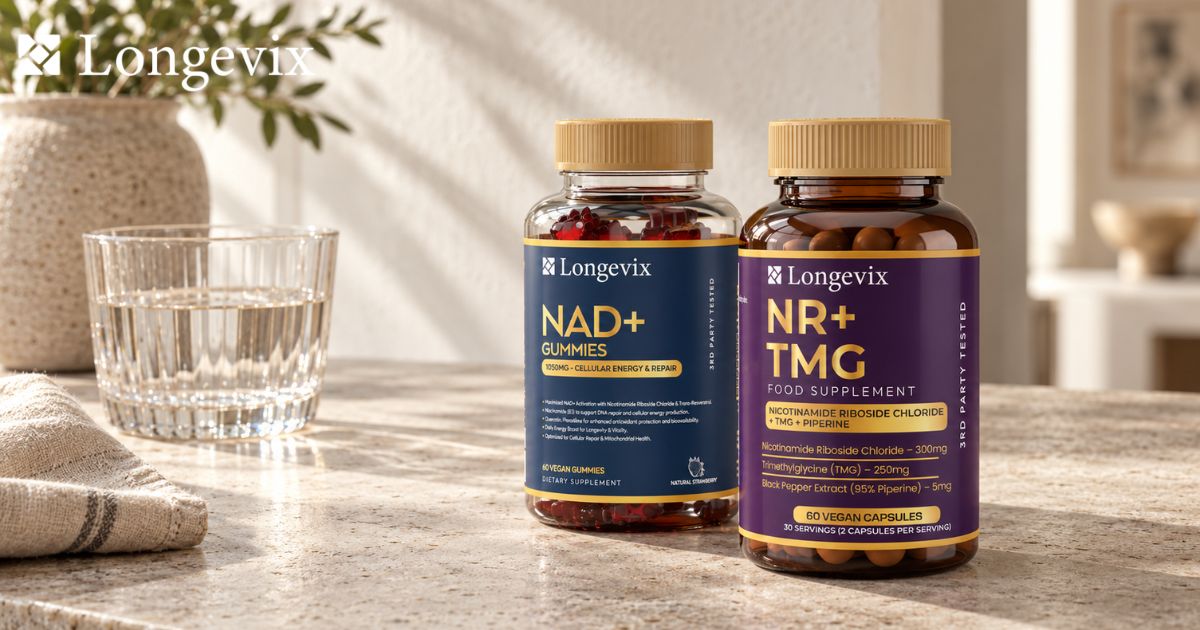
300mg NR, 250mg TMG, and 5mg piperine per two capsules |
Fixed combination |
|
|
300mg NR, 250mg quercetin, 250mg trans-resveratrol, and 250mg nicotinamide per two gummies |
Multi-ingredient gummy |
The current Longevix catalogue confirms these formulations and serving formats. Product labels should remain the final authority because formulations and packaging can change.
Powder, Capsules or Gummies?
No format has been proven universally superior for improving low NAD symptoms. Capsules offer a fixed, pre-measured amount. Powders require measuring and allow a different preparation style. Gummies provide a chewable multi-ingredient format. The sensible comparison is based on the ingredient panel, labelled serving, directions, warnings, and available documentation rather than unsupported claims about “maximum absorption”.

Why Batch Documentation Matters
Longevix publishes product-specific testing documents and advises customers to match each document with the correct product and batch. A laboratory report supports only the tests that appear within that report. It does not prove greater energy, slower ageing, clinical effectiveness, or treatment of NAD+ deficiency. Review Longevix testing documents.
Further Reading and Source Context
These external resources provide background or regulatory context. They do not prove that a particular Longevix product produces the health outcomes discussed above.
Frequently asked questions
Can I Test My NAD+ Levels?
Yes. NAD+ can be measured using specialised laboratory methods. However, a blood measurement may not represent NAD+ inside every tissue, and there is no universally accepted clinical NAD+ target that diagnoses fatigue, ageing, or brain fog.
At What Age Does NAD+ Decline Become Noticeable?
There is no fixed age when everyone experiences low NAD+. Some studies report age-related changes in particular tissues, while newer whole-blood research found no clear age-related decline. Tissue, population, and measurement method all matter.
Could My Symptoms Be Caused by Something Other Than Low NAD+?
Yes. Fatigue, poor sleep, weakness, and brain fog have many possible causes. Sleep problems, anaemia, thyroid disorders, stress, medicines, infections, nutrition, and other health conditions can produce similar symptoms, so symptoms alone cannot confirm low NAD+.
How Quickly Can NAD+ Supplementation Improve Symptoms?
There is no proven universal timetable. NMN or NR may alter NAD-related biomarkers during clinical trials, but noticeable symptom improvement is not guaranteed. A change in a laboratory marker and a change in how someone feels are separate outcomes.
What Are the Signs of Low NAD+ Levels?
Commonly discussed signs include fatigue, brain fog, disturbed sleep, weaker exercise recovery, and ageing-related changes. None can reliably diagnose reduced NAD+ on its own. Persistent or unexplained symptoms should be assessed on their own medical merits rather than automatically attributed to low NAD+.