Your brain works around the clock. It uses remarkable energy to support memory, focus, movement, and everyday decisions. That demand explains the growing interest in NMN and brain health. NMN helps your body produce NAD+, a coenzyme connected with neuronal energy, mitochondrial function, and normal cellular maintenance.
Editorial evidence note: This article discusses research and general information, not a diagnosis or a promise that a product will prevent, treat or cure a condition. Clinical questions and supplement suitability require individual professional advice.
As NAD+ levels may change with age, researchers are exploring whether supporting this pathway could influence healthy brain ageing. Early animal findings look encouraging, especially around vascular function. However, human evidence remains limited. NMN isn’t a proven treatment for brain fog or cognitive decline, despite its fascinating biological connection.
“A promising cellular pathway should begin the scientific conversation, not end it.”
What Are NMN and NAD+, and Why Does the Brain Need Them?
Nicotinamide mononucleotide, commonly called NMN, occurs naturally inside living cells. Your body uses it while producing nicotinamide adenine dinucleotide, known as NAD+. This coenzyme supports energy metabolism and numerous cellular reactions. NMN and NAD+ remain closely connected, although they aren’t identical substances.
Your brain has unusually high energy requirements. Neurons maintain electrical gradients, release chemical messengers, and repair everyday cellular wear. NAD+ helps enzymes convert nutrients into usable energy. Therefore, healthy NAD+ metabolism may support brain energy production and the cellular conditions needed for normal cognitive function.

What Is Nicotinamide Mononucleotide?
NMN is a nucleotide formed from nicotinamide and a sugar-phosphate structure. Nicotinamide belongs to the vitamin B3 family. Small quantities of NMN occur naturally within certain foods and body tissues. Once NMN enters relevant metabolic pathways, enzymes can use it to produce NAD+.
How NAD+ Supports Neuronal Communication
Every thought involves countless signals moving across connected neural networks. NAD+ supports the cellular work behind synaptic signalling, energy transfer, and routine maintenance. It doesn’t stimulate the brain like caffeine. Instead, it works quietly within pathways that help maintain communication and synaptic plasticity.
Are NMN and NAD+ the Same Substance?
NMN acts as a precursor rather than another name for NAD+. Your cells can use NMN during NAD+ biosynthesis, while NAD+ performs numerous metabolic and signalling roles. This difference also separates NMN supplements from products marketed as direct NAD+ formulations or other vitamin B3 derivatives.
Why Do NAD+ Levels Decline With Age?
Ageing changes how cells produce, recycle, and consume NAD+. Research suggests that NAD+ availability can fall in several tissues over time. Reduced synthesis may contribute. Increased consumption may also matter. However, the pattern varies between organs, health conditions, species, and laboratory measurement methods.
Meanwhile, ageing often brings greater oxidative stress, metabolic strain, and low-grade inflammation. Cells may use additional NAD+ while responding to damage. Enzymes involved in DNA repair also consume it. Consequently, cellular demand may begin outpacing supply during age-related decline.
How the Body Produces and Recycles NAD+
The body creates NAD+ through several routes. The salvage pathway recycles nicotinamide and converts it into NMN before producing NAD+. Other routes begin with tryptophan or different vitamin B3 compounds. These overlapping systems help cells maintain NAD+ rather than relying on one single source.
The Enzymes That Consume NAD+
PARP enzymes use NAD+ during responses to DNA damage. Sirtuins also require NAD+ for several regulatory activities. CD38 breaks NAD+ down and may become more active during ageing or inflammation. Researchers continue studying how these competing processes affect tissue-specific NAD+ availability.
Why Lower NAD+ May Affect the Ageing Brain
When cellular fuel management becomes less efficient, neurons may face a cellular energy deficit. Weaker repair activity and altered inflammatory signalling may further reduce resilience. However, brain ageing also reflects genetics, blood pressure, sleep, hearing, education, illness, medication, and many lifestyle influences.
How Does NMN Support the Body’s NAD+ Pathway?
NMN sits close to NAD+ within the body’s salvage pathway. Enzymes called nicotinamide mononucleotide adenylyltransferases convert NMN into NAD+. This efficient recycling route makes NMN scientifically interesting. It provides cells with a nearby precursor rather than requiring NAD+ production from earlier metabolic building blocks.
Several human studies indicate that oral NMN can increase blood NAD+ levels in certain groups. Yet blood measurements don’t reveal every tissue response. The brain, liver, muscle, and immune system may process the compound differently. Researchers still need better methods for measuring human tissue-specific changes.
From an NMN Supplement to NAD+
After you swallow NMN, digestion, absorption, and metabolism begin. Some NMN may undergo conversion before cells use it. Related metabolites may also participate. Researchers continue examining the precise transport routes, so simplified pathway diagrams shouldn’t be mistaken for a complete description of human energy metabolism.
Does NMN Cross the Blood-Brain Barrier?
The blood-brain barrier carefully controls which substances move from circulation into brain tissue. Animal studies suggest NMN administration can influence NAD+-related biology within the brain. However, direct human evidence showing how much intact oral NMN crosses this barrier remains insufficient.
NMN Versus Nicotinamide Riboside
NMN and nicotinamide riboside, known as NR, both contribute to NAD+ biosynthesis. However, they remain chemically distinct precursors. Their absorption and conversion pathways may differ. Current evidence doesn’t establish either option as universally superior for memory, attention, or long-term brain health.
How Could NMN Influence Brain Health?
The proposed relationship between NMN and brain health involves several connected systems. NAD+ supports mitochondrial activity, cellular repair, vascular signalling, and stress responses. Each process can influence healthy ageing. Still, a biologically credible mechanism doesn’t prove that supplementation improves memory or everyday mental performance.
Brain ageing rarely follows one faulty pathway. Neurons, blood vessels, immune cells, and supporting glial cells continually interact. Researchers therefore study neuroinflammation, mitochondrial health, cellular repair, and circulation together. NMN could theoretically influence this network through NAD+ metabolism, but human confirmation remains limited.
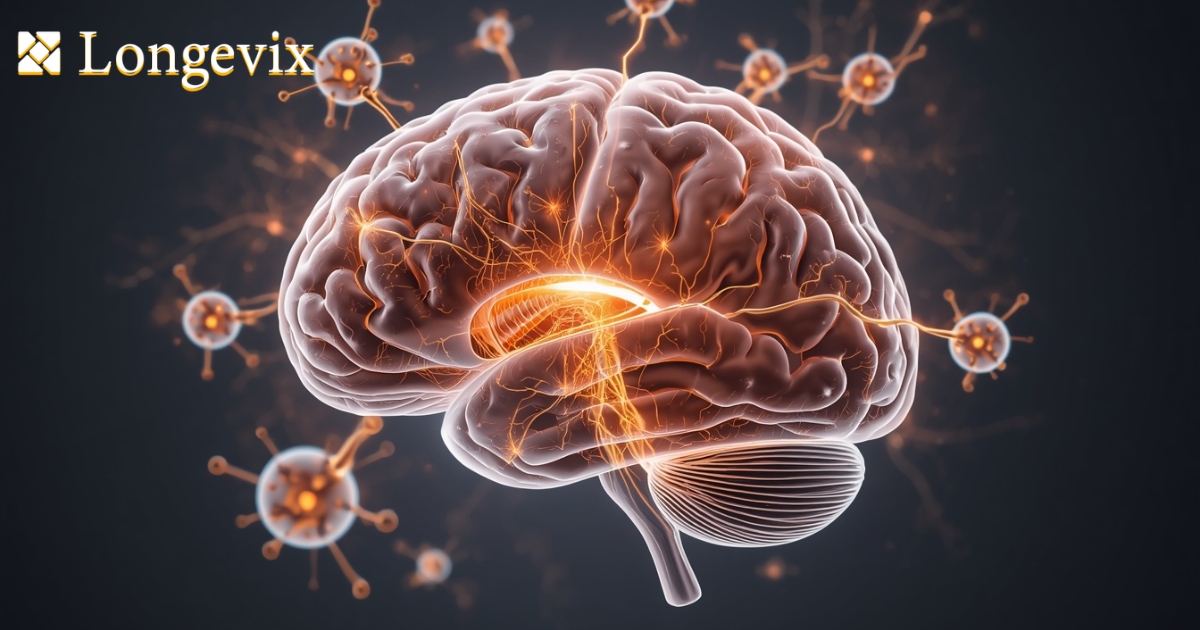
Mitochondrial Function and Neuronal Energy
Mitochondria convert nutrients into ATP, the energy currency used by cells. Healthy mitochondrial function helps neurons maintain electrical activity and communication. When mitochondria struggle, neuronal energy may become less dependable. Animal research suggests NMN can affect mitochondrial performance, although equivalent human cognitive benefits remain unconfirmed.
Mitochondrial Biogenesis Versus Better Performance
Improved mitochondrial output doesn’t necessarily mean cells created additional mitochondria. Mitochondrial biogenesis describes the production of new mitochondrial structures. Existing mitochondria can sometimes function more efficiently without increasing their number. This distinction prevents broad marketing language from oversimplifying complicated cellular changes.
Sirtuins, Cellular Maintenance and DNA Repair
Sirtuins use NAD+ while regulating metabolism, stress responses, and gene activity. Greater NAD+ availability may encourage sirtuin activation in some experimental settings. NAD+ also supports PARP enzymes involved in DNA repair. However, more precursor doesn’t guarantee that every downstream response becomes beneficial.
Cerebral Blood Flow and Neurovascular Coupling
Active brain areas need extra oxygen and glucose. Neurovascular coupling helps increase local cerebral blood flow when neurons become active. Ageing may weaken this finely tuned response. Mouse research suggests NMN can improve parts of vascular signalling, although comparable human brain-imaging evidence remains unavailable.
Proposed NMN and Brain Health Pathways
|
Biological pathway |
Why it matters |
Current evidence boundary |
|
Mitochondrial metabolism |
Helps neurons produce ATP |
Strong biological rationale; cognitive benefit unproven |
|
Sirtuin activity |
Influences metabolism and stress responses |
Mainly mechanistic and preclinical findings |
|
PARP activity |
Supports cellular responses to DNA damage |
NAD+ dependent; supplement outcomes uncertain |
|
Neurovascular coupling |
Matches blood supply with neural activity |
Encouraging evidence from aged mice |
|
Inflammatory regulation |
May influence cellular stress |
Human brain-specific evidence remains limited |
What Do Animal Studies Show About NMN and Cognitive Function?
Much of NMN’s brain-health reputation comes from laboratory studies. Researchers have tested NMN in ageing rodents and experimental disease models. Some studies reported improved vascular responses, mitochondrial activity, learning, or memory. These results justify further research into neuroprotection, but they don’t establish effectiveness in humans.
Animal experiments offer strict control over age, genetics, diet, environment, and dosage. Human lives contain far more variables. Researchers also use doses and treatment methods that may not reflect commercial supplements. Findings involving neuronal survival or memory tasks shouldn’t become direct consumer promises.

Case Study: Aged Mice and Neurovascular Function
A 2019 study published in Redox Biology treated 24-month-old mice with NMN for two weeks. Researchers reported improved neurovascular coupling, gait coordination, and selected memory measures. However, not every behavioural outcome improved significantly, creating a more nuanced picture than promotional headlines often suggest.
What the Mouse Study Found About Spatial Memory
Researchers assessed several forms of learning and memory. NMN improved certain recognition and working-memory measures. It also affected aspects of spatial memory during a radial-arm water-maze task. However, escape time and path length didn’t improve significantly, showing why one positive result shouldn’t support sweeping claims.
Oxidative Stress and Mitochondrial Findings
The researchers also studied small blood-vessel cells taken from aged brains. NMN reduced mitochondrial oxidative stress and improved several measures of cellular energy handling. Disrupting sirtuin activity weakened some effects. These findings offer a possible mechanism but don’t prove protection in the human brain.
Why Animal Evidence Has Important Limits
Mice have shorter lifespans, faster metabolisms, and highly controlled environments. Their behavioural tests also differ greatly from human cognitive assessments. Animal findings can reveal mechanisms and guide clinical trials. They cannot show that NMN prevents Alzheimer’s disease, reverses cognitive decline, or guarantees sharper focus.
What Does Human Research Actually Show?
Human NMN research has expanded, but most trials remain relatively small and short. Studies have examined blood NAD+, exercise capacity, insulin sensitivity, sleep, and physical performance. Direct brain outcomes receive much less attention. Current evidence therefore supports biological activity more strongly than improved cognitive function.
This distinction matters because biomarkers and symptoms aren’t interchangeable. Higher blood NAD+ shows that supplementation changed measurable biology. It doesn’t prove higher brain NAD+, stronger memory, or better attention. Convincing evidence would require larger trials with sensitive cognitive testing, brain-specific measurements, and longer follow-up.
Case Study: 250mg Daily in Healthy Older Men
A randomised trial published in npj Aging studied 250mg of NMN daily in healthy men aged 65 or older. Researchers reported increased whole-blood NAD+ and acceptable short-term tolerance. However, the cognitive assessments didn’t show an observable overall improvement.
Why the 250mg Trial Needs Careful Reading
The study initially enrolled 42 men. A supplement distribution error affected data collected after the six-week visit, reducing usable later results. The researchers still observed increased blood NAD+ and selected physical changes. Yet the study didn’t demonstrate a clear improvement in overall cognitive performance.
Case Study: 300mg to 900mg Daily
A randomised 60-day study assigned 80 middle-aged adults to placebo, 300mg, 600mg, or 900mg NMN groups. Blood NAD concentrations increased in the NMN groups. However, the trial didn’t establish improved memory or protection against cognitive ageing.
What Human Research Hasn’t Yet Established
Researchers haven’t confirmed that oral NMN improves memory, concentration, synaptic plasticity, or long-term neurological outcomes. They also haven’t established which populations might respond best. Future studies need larger samples, longer durations, sensitive cognitive measures, brain imaging, and independent replication.
The Current NMN Evidence Ladder
|
Evidence question |
What research currently suggests |
What remains uncertain |
|
Can NMN raise blood NAD+? |
Several trials suggest it can |
Responses across tissues and individuals |
|
Does intact NMN reach the human brain? |
Not clearly established |
Direct transport and brain exposure |
|
Does NMN improve memory? |
Reliable evidence remains insufficient |
Effective dose and responsive populations |
|
Does NMN prevent dementia? |
No clinical proof exists |
Long-term neurological outcomes |
|
Is long-term daily use established as safe? |
Short studies offer limited reassurance |
Multi-year safety and interactions |
“A higher blood marker can look encouraging without proving a sharper memory.”
NMN for Brain Fog: What Is Plausible and What Is Not Proven?
The term brain fog describes an experience rather than one diagnosis. You may struggle to concentrate, recall words, process information, or remain mentally alert. Poor sleep can trigger it. Stress, infection, hormonal changes, medication, anaemia, thyroid problems, depression, and other conditions may also contribute.
NMN attracts attention because a cellular energy deficit could theoretically affect mental performance. Better metabolic health might also influence clarity indirectly. However, controlled human evidence doesn’t show that NMN reliably treats brain fog. Understanding the underlying cause matters more than adopting a fashionable label.

Could NMN Improve Mental Clarity?
A plausible biological mechanism doesn’t create a predictable personal result. Supporting NAD+ metabolism may affect pathways related to cellular energy and inflammatory signalling. Still, NMN cannot be assumed to address sleep apnoea, iron deficiency, medication effects, menopause, depression, or post-viral symptoms.
Brain Fog During Menopause or Long COVID
Menopause and Long COVID can both involve concentration difficulties. However, their causes and clinical management differ. NMN hasn’t become an established treatment for either condition. Persistent symptoms deserve suitable medical assessment rather than automatic self-treatment with a supplement.
When Cognitive Symptoms Need Medical Attention
Seek urgent medical advice when confusion appears suddenly or follows a head injury. Immediate assessment also matters when symptoms accompany speech problems, weakness, fainting, or severe headaches. Gradual memory changes deserve evaluation when they disrupt work, medication use, finances, driving, or everyday safety.
NMN Dosage, Timing, Safety and Responsible Use
No clinically established NMN dose exists specifically for brain health. Human trials have investigated several amounts, but they examined different outcomes and populations. A research dose isn’t automatically a personal recommendation. Larger amounts also don’t guarantee stronger effects or better brain energy production.
Short-term trials generally describe NMN as reasonably well tolerated under study conditions. However, those findings cannot establish lifelong safety. Researchers still need better information about uncommon reactions, long-term exposure, drug interactions, and use during illness. Always follow the current product directions.
What Is the Best NMN Dose for Brain Health?
No controlled trial has identified a dose that reliably improves memory, focus, or other brain outcomes. Blood NAD+ findings don’t establish a cognitive dosage. Your age, medication, health status, and other supplements may affect suitability. Professional advice becomes especially important when medical conditions are present.
Does NMN Work Better in the Morning?
Researchers haven’t established a universally superior time for NMN and brain health. Morning use may fit a convenient routine, but convenience doesn’t prove greater biological effectiveness. Some studies used morning schedules, while others followed different protocols. Consistency and label compliance remain more practical considerations.
How Long Does NMN Take to Work?
Some studies detected changes in blood NAD+ after several weeks. That result doesn’t provide a reliable timetable for mental clarity. Human research hasn’t shown that everyone notices improved cognition within a fixed period. Claims promising sharper thinking within days go beyond the current evidence.
Safety, Medication and Medical Conditions
Speak with a healthcare professional before using NMN during pregnancy, breastfeeding, fertility treatment, prescription medication use, or cancer care. The same caution applies to diagnosed health conditions. Stop taking a supplement and seek advice if an unexpected reaction occurs.
NMN Study Doses in Context
|
Daily amount |
Study duration |
Main area examined |
Important limitation |
|
250mg |
Up to 12 weeks |
Blood NAD+ and physical outcomes |
No clear overall cognitive improvement |
|
300mg |
60 days |
Blood NAD+ and general performance |
No direct memory conclusion |
|
600mg |
60 days |
Blood NAD+ and general performance |
Short duration |
|
900mg |
60 days |
Blood NAD+ and tolerability |
Not an established brain-health dose |
|
1,250mg |
Four weeks |
Short-term safety |
Cannot establish long-term safety |
The 1,250mg study assessed short-term safety in healthy adults for four weeks. It shouldn’t be interpreted as a recommended daily amount. Read the published safety study for the complete design, participant criteria, and limitations.
How to Choose a High-Quality NMN Supplement
A polished label can hide a weak formulation. Check the stated NMN amount, serving size, full ingredient list, manufacturer information, storage instructions, and available testing documents. Confirm whether the large front-label number refers to one capsule, one serving, or the entire container.
Next, examine the language surrounding the product. Responsible brands describe scientific uncertainty rather than promising cures. For UK shoppers, official government guidance states that foods and supplements cannot claim or imply that they treat, prevent, or cure disease.
What a Useful Certificate of Analysis Should Show
A useful Certificate of Analysis should identify the product, batch, testing date, laboratory, analytical method, specification, and result. Depending on the analysis, it may cover identity, purity, potency, heavy metals, microbiological quality, or solvent residues. A generic “lab tested” badge provides less meaningful evidence.
Purity and Potency Aren’t the Same
Purity describes how much of the tested material matches the intended compound. Potency examines whether the product contains the stated quantity. A raw material may test highly pure while a capsule contains an inaccurate dose. Strong quality control considers identity, composition, contamination, and manufacturing consistency.
Avoid Grandiose Brain-Health Claims
Be cautious when products claim to reverse brain ageing, prevent dementia, or guarantee neuroprotection. Human trials haven’t established those outcomes for NMN. Trustworthy content should distinguish mechanisms, animal findings, human biomarkers, and clinical results instead of presenting every evidence level as equally persuasive.
UK and US Advertising Standards
UK supplement content must avoid medicinal claims. The US Federal Trade Commission’s health-product guidance also requires truthful, non-misleading claims supported by competent and reliable scientific evidence. Disclaimers cannot rescue an advertisement whose overall impression exaggerates the available evidence.
Longevix NMN Capsules vs NMN Powder
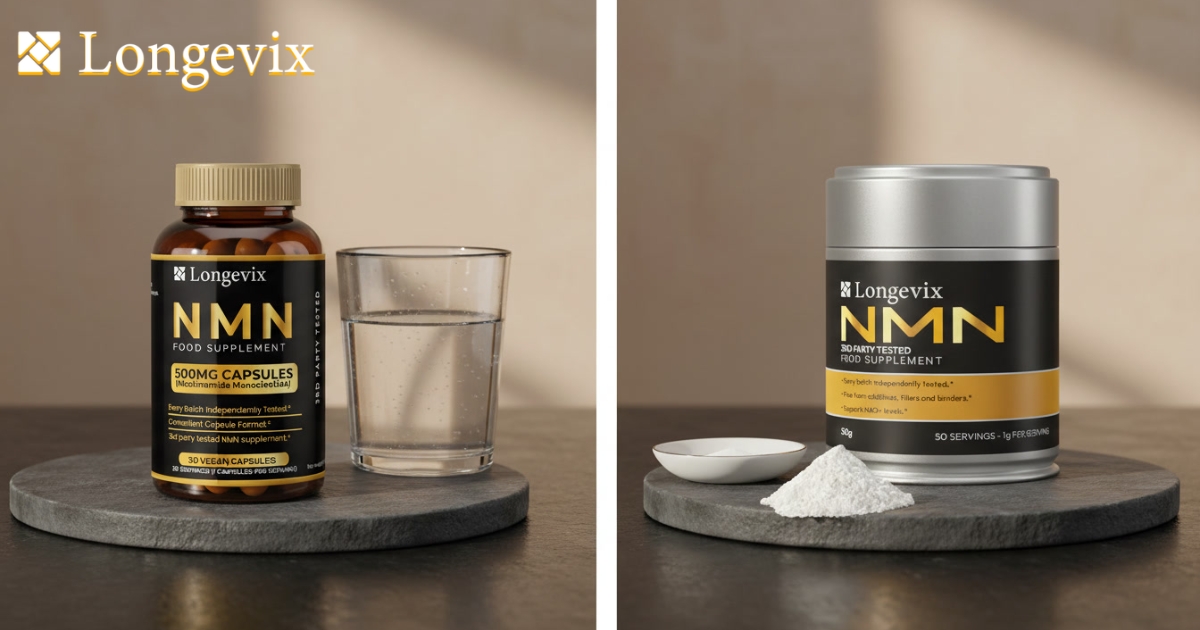
Longevix currently offers NMN in capsule and powder formats. Both provide NMN as an NAD+ precursor. Their clearest differences concern preparation, measuring, and convenience. No comparative human trial has shown that one format produces better memory, concentration, absorption, or long-term brain-health outcomes.
Longevix publishes scientific background information and selected analytical reports. Claims about NMN purity and testing need to be supported by the report for the actual material examined; supplement format alone does not prove superior neurological outcomes.
Longevix PURE NMN Capsules 500mg
Longevix PURE NMN Capsules provide a labelled 500mg of NMN per capsule. The current product information describes a 30-capsule vegan format; any purity percentage, excipient statement or independent-testing claim should be checked against the physical label and relevant analytical report. Capsules remove the need for daily measuring.
Longevix PURE NMN Powder 50g
Longevix offers PURE NMN Powder in a 50g format with a 500mg measuring scoop (1g labelled serving). Powder may suit people who prefer not to swallow capsules. It requires careful measuring and storage. No reliable evidence shows that powder improves cognition faster than capsules.
Longevix NMN Format Comparison
|
Feature |
Longevix NMN Capsules |
Longevix NMN Powder |
|
Format |
Pre-measured capsules |
Loose powder |
|
Labelled amount |
500mg per capsule |
a 500mg measuring scoop (1g labelled serving) included |
|
Product size |
Check the current live label |
50g |
|
Measuring required |
No |
Yes |
|
Practical benefit |
Convenient and portable |
Suitable for powder preference |
|
Proven brain advantage |
None established |
None established |
|
Quality positioning |
Check product-specific testing evidence |
Pure NMN and third-party testing |
Checking Longevix Testing Information
Longevix states that it tests each batch for purity and potency. Its Certificates of Analysis page explains the testing process. However, you should match any certificate to the exact product and batch. Contact Longevix when the relevant NMN document isn’t displayed publicly.
Supporting Brain Health Beyond NMN Supplements
A supplement cannot compensate for every neglected habit. Regular movement, restorative sleep, balanced nutrition, vascular care, meaningful relationships, and mental stimulation support brain health through overlapping pathways. These behaviours also influence blood pressure, metabolic health, mood, and the development of cognitive reserve.
Think of brain health as a pension rather than a lottery ticket. Small deposits accumulate over time. One capsule cannot replace years of poor sleep or unmanaged hypertension. NMN may complement a healthy routine, but it shouldn’t become the entire plan for maintaining memory and independence.
Exercise and Cerebral Circulation
Aerobic activity supports the heart and blood vessels supplying the brain. Resistance training helps preserve strength, glucose regulation, and functional independence. Together, these habits may support cerebral blood flow and general wellbeing. Choose activity that fits your health, mobility, and current fitness level.
Sleep and Brain Energy Production
Sleep supports attention, memory processing, emotional regulation, and metabolic balance. Poor sleep can imitate cognitive problems and worsen brain fog. A regular bedtime, morning daylight, reduced evening caffeine, and suitable treatment for sleep disorders may offer more value than adding supplements to chronic exhaustion.
Diet, Metabolic Health and Neuroinflammation
A varied diet provides fibre, healthy fats, protein, vitamins, and minerals. These nutrients support vascular and metabolic health through many interacting pathways. Dietary patterns may also influence neuroinflammation. Foods containing NMN shouldn’t be presented as supplement-equivalent sources because their quantities and wider composition differ.
Learning, Relationships and Cognitive Reserve
Reading, conversation, music, hobbies, and new skills challenge different neural networks. Social connection also supports mood and engagement. Over time, these experiences may strengthen cognitive reserve, helping the brain manage age-related changes. Hearing and vision care matter because sensory loss can reduce participation.
Closing Summary
NMN and brain health share a credible biological link through NAD+ metabolism. NAD+ supports mitochondrial activity, vascular responses, cellular maintenance, and other processes relevant to ageing. Animal research provides intriguing findings. Human studies show changes in blood NAD+, but they haven’t established reliable memory improvement or dementia prevention.
For now, view NMN as a supplement rather than a neurological treatment. Choose transparent products, read the evidence, and follow current directions. Longevix provides capsule and powder formats for different routines. Neither replaces sleep, movement, balanced nutrition, medical care, or the careful research still needed.
Frequently asked questions
Does NMN improve cognitive function or brain health?
Animal studies suggest NMN may support brain blood flow and cellular energy. However, human trials haven’t yet shown reliable improvements in memory or cognitive function.
What are the benefits of NMN for brain fog or memory?
NMN may influence pathways linked with cellular energy, but there’s no strong clinical evidence that it reduces brain fog or improves memory in humans.
How does NMN affect NAD+ levels in the brain?
Human studies show that NMN can raise blood NAD+ levels, but researchers haven’t clearly established how much oral NMN reaches the human brain or crosses the blood-brain barrier.
Is NMN safe for brain health and cognitive decline?
Short-term studies generally found NMN well tolerated at tested doses. However, long-term safety, medication interactions, and its effects on cognitive decline remain uncertain.
Can NMN help with Alzheimer’s disease or age-related cognitive decline?
Preclinical research looks promising, but no human clinical evidence proves that NMN prevents, treats, or slows Alzheimer’s disease or age-related cognitive decline.