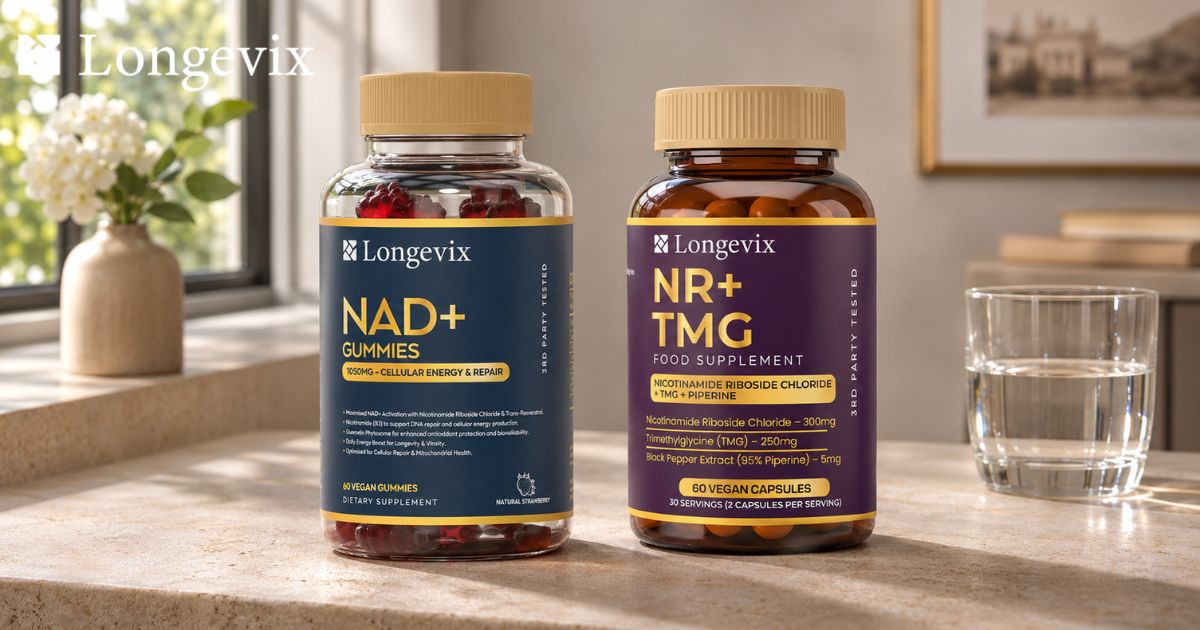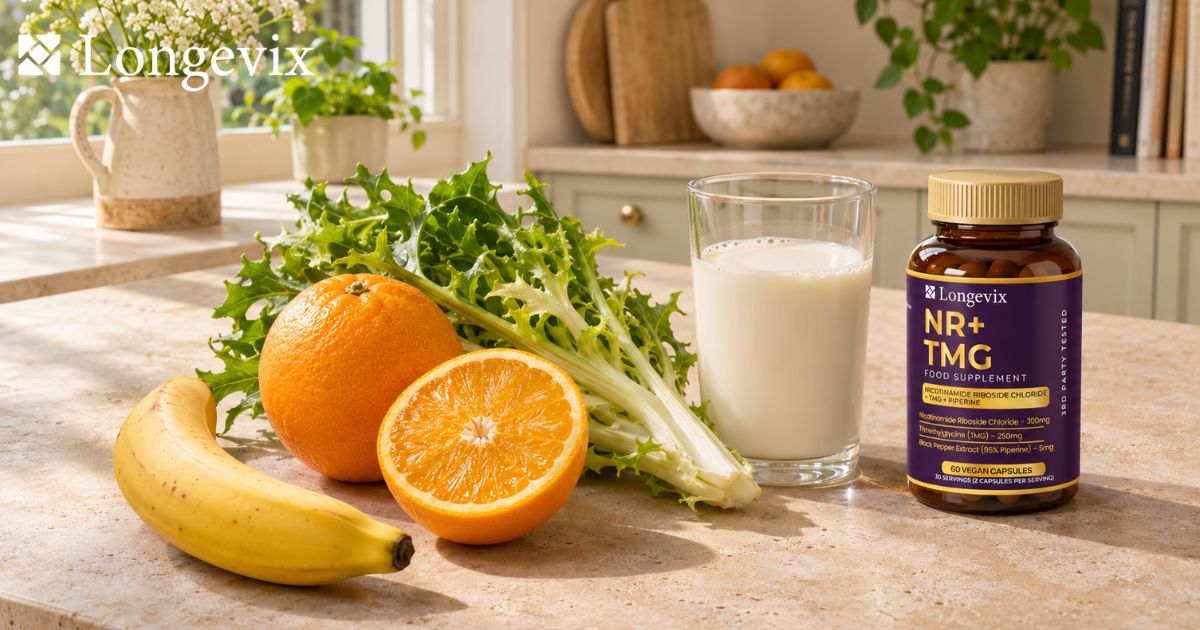
Nicotinamide riboside (NR) occurs naturally in several foods, including cow's milk, bananas, oranges and certain leafy plants. However, the amounts vary, and many familiar claims about NR-rich foods are based on limited evidence rather than comprehensive nutritional testing.
Research published in 2025 identified several previously underexplored plant sources of NR, offering a clearer picture of where this NAD+ precursor occurs naturally.
This guide examines the best-supported nicotinamide riboside food sources, compares measured concentrations, explains how NR differs from other forms of vitamin B3 and explores what current research tells us about dietary NR and NAD+ metabolism.
What Foods Contain Nicotinamide Riboside?
Nicotinamide riboside is a naturally occurring compound associated with vitamin B3 metabolism. It is one of several precursors the body can use to produce nicotinamide adenine dinucleotide (NAD+), a coenzyme involved in essential cellular processes.
Although NR is often discussed in connection with supplements, researchers have identified it in ordinary foods.
The most useful distinction is between foods in which NR has been directly measured and foods that are merely considered possible sources.
Foods with directly measured NR
Scientific studies have detected NR in:
· Cow's milk: One of the earliest and most extensively studied dietary sources.
· Bananas: Among the plant foods with relatively high NR concentrations in a 2025 analysis.
· Oranges: Another familiar fruit in which researchers measured NR.
· Wild chicory: The highest NR concentration among the plant samples reported in that study.
· Moringa leaves: A less conventional food with measurable NR.
· Purple taro: Another plant examined in the 2025 research.
A 2016 study established the presence of NR in cow's milk, while research published in CyTA – Journal of Food in 2025 expanded the evidence to a wider selection of plant foods.
Sources: Trammell et al., 2016 and Alegre and Pastore, 2025.
Foods with less certain NR evidence
Yeast-containing foods, bread and certain fermented products are also frequently described as natural NR sources.
There is a scientific basis for investigating these foods because NR participates in microbial metabolism, and researchers have detected NR in some fermentation products.
However, that does not mean every yeast-containing food provides a meaningful or predictable amount of NR.
Reliable measurements for ordinary retail bread and nutritional yeast remain limited. These foods should therefore not be ranked alongside directly tested milk and plant samples without further evidence.
How Much Nicotinamide Riboside Do Foods Actually Contain?
Knowing that a food contains NR is useful, but its measured concentration provides much more context.
The 2025 study by Gabriela Fabiana Soares Alegre and Glaucia Maria Pastore analysed NR, nicotinamide mononucleotide (NMN) and NAD+ in a selection of conventional and less commonly consumed plant foods.
Researchers used high-performance liquid chromatography, with additional mass-spectrometry confirmation, to identify and quantify these compounds.
NR content in selected plant foods
The following measurements were reported for specific samples examined in the study.
|
Food |
NR per 100 g fresh weight |
Equivalent in milligrams |
|---|---|---|
|
Wild chicory |
1,644 µg |
1.644 mg |
|
Banana |
1,209 µg |
1.209 mg |
|
Orange |
1,013 µg |
1.013 mg |
|
Moringa leaves |
930 µg |
0.930 mg |
|
Purple taro (June sample) |
923 µg |
0.923 mg |
Source: Alegre and Pastore, 2025. These are study-specific measurements, not standardised values for all commercially available foods.
The distinction between micrograms and milligrams matters: 1,000 micrograms equal 1 milligram.
For example, using the study's measured banana concentration, a hypothetical 120 g edible portion would contain approximately:
1.209 mg × 1.2 = 1.45 mg NR
This is an illustrative calculation, not a measured amount for every 120 g banana.
Actual concentrations can vary with plant variety, growing conditions, maturity, storage and analytical methods.
The study does not establish a recommended daily NR intake or demonstrate that consuming these quantities produces a particular health outcome.
Understanding NR measurements in milk
Milk studies commonly report NR in micromoles per litre (µmol/L), rather than milligrams per 100 g.
Trammell and colleagues reported an average of 4.3 ± 2.6 µmol/L in 18 raw cow's milk samples after excluding one unusually high sample.
Using the molecular mass of the NR compound itself, approximately 255.25 g/mol, that average corresponds to around 1.10 mg NR per litre.
A 250 mL portion would therefore contain approximately 0.27 mg NR, if it had the same concentration as the study average.
This calculation is illustrative. The amount in an individual carton of milk cannot be determined without testing it.
It is also important not to confuse the molecular mass of naturally occurring NR with that of nicotinamide riboside chloride, the salt form used in certain supplements.
Sources: Trammell et al., 2016 and PubChem: Nicotinamide Riboside.
Is Milk a Natural Source of Nicotinamide Riboside?
Yes. Cow's milk is among the best-established natural sources of nicotinamide riboside.
Researchers have identified NR in milk using specialised analytical techniques that distinguish it from related compounds, including nicotinamide.
The 2016 study also found that NR accounted for a substantial proportion of the measured NAD+ precursor vitamin content in the tested samples.
This finding is significant for understanding milk chemistry, but it does not mean milk contains large quantities of NR compared with concentrated supplement formulations.

What researchers measured in cow's milk
The researchers examined samples from individual cows and a smaller collection of commercially purchased milk.
They observed considerable variation between samples.
NR concentrations were also associated with certain milk characteristics, including the presence of Staphylococcus aureus, a bacterium relevant to dairy-herd health.
In their limited retail sample, conventionally produced milk showed higher average NR concentrations than organically labelled milk.
However, only four brands in each category were tested, making the evidence insufficient to conclude that conventional milk generally contains more NR than organic milk.
Consumers should not use this small comparison as a reason to favour one type of milk solely for NR content.
Do other dairy products contain NR?
It is reasonable to investigate whether yoghurt, cheese and other dairy products contain NR, particularly because some originate from cow's milk.
Nevertheless, their concentrations cannot simply be estimated from measurements of fresh milk.
Fermentation, processing, water removal and storage may alter the composition of individual compounds.
Without product-specific analytical data, it would be misleading to assign an NR amount to a serving of cheddar, Greek yoghurt or whey-based food.
For now, cow's milk has stronger directly documented evidence than many other everyday dairy products.
Which Fruits, Vegetables and Plant Foods Contain NR?
One of the most interesting developments in NR food research came in February 2025.
Alegre and Pastore examined a range of plant foods, including familiar fruits and non-conventional edible plants.
Their findings challenged the older impression that natural NR research was largely confined to milk and yeast.
Banana and orange
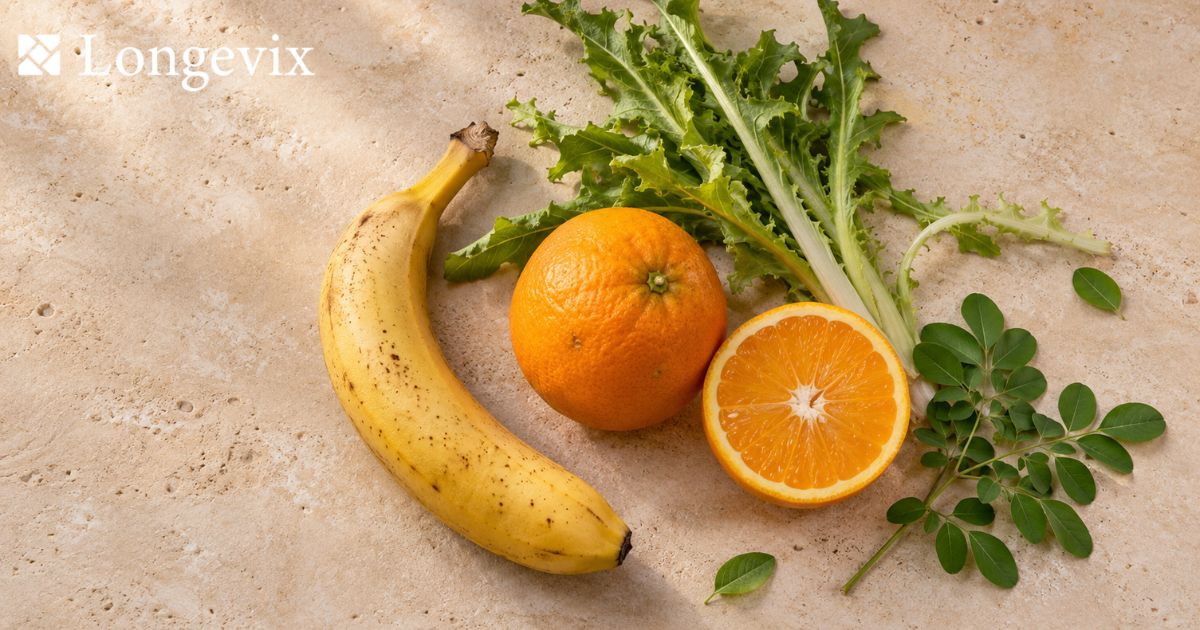
Banana and orange were among the foods with the highest measured NR concentrations in the study.
The researchers reported approximately 1.209 mg NR per 100 g of banana and 1.013 mg per 100 g of orange.
Both are familiar foods that can fit naturally into a varied diet.
However, there are two important limitations.
First, the concentrations represent the researchers' particular samples. They are not official values for every banana or orange sold in UK supermarkets.
Second, detecting NR in fruit does not establish how much reaches different tissues after digestion or whether eating these fruits produces measurable changes in human NAD+.
Bananas and oranges provide several recognised nutritional components, including dietary fibre and various vitamins and minerals. Their value in a balanced diet does not depend on unproven claims about NR.
Wild chicory and moringa
Wild chicory produced the highest reported NR concentration among the plant foods studied, at approximately 1.644 mg per 100 g.
This does not automatically mean standard supermarket chicory contains the same amount. Plant identity, variety and growing conditions may differ.
Moringa leaves were another notable example, with approximately 0.930 mg NR per 100 g in the tested material.
The paper also examined purple taro, including samples gathered in different seasons.
These findings broaden scientific understanding of NR in plants, but several of the foods are not commonly consumed in ordinary British diets.
They should be viewed as research examples rather than ingredients people need to seek out.
What the plant-food research does not establish
The 2025 analysis was a food-composition study, not a human clinical trial.
It measured chemical compounds in food samples. It did not measure what happened when people ate those foods.
Consequently, the study cannot answer whether a person who eats more bananas or wild chicory will experience higher blood NAD+ concentrations, improved physical performance or better long-term health.
It also does not establish that the foods tested represent a complete ranking of all dietary NR sources.
Further independent testing across different varieties, production environments and preparation methods would help build a more reliable food-composition database.
Do Yeast, Bread and Fermented Foods Contain Nicotinamide Riboside?
Yeast is frequently included in lists of natural NR sources. The association is understandable, but the evidence needs careful interpretation.
NR is involved in metabolic pathways found in microorganisms, including yeast.
Scientists have also investigated NR and related NAD+ precursors in fermented beverages, demonstrating that fermentation conditions and microbial strains can influence the resulting chemical composition.
However, a compound's involvement in yeast metabolism does not necessarily indicate how much of it remains in a finished food.
Why yeast is associated with NR
The yeast species Saccharomyces cerevisiae is commonly used in breadmaking and several fermentation processes.
Research into yeast metabolism has helped scientists understand NR-related biochemical pathways.
A 2021 study investigating craft-beer fermentation also identified NR and NMN, with concentrations influenced by the yeast strain and other production conditions.
These observations are relevant to food chemistry, but alcoholic beverages should not be promoted as a strategy for obtaining NR.
What remains uncertain about bread and nutritional yeast
Ordinary bread undergoes mixing, fermentation and baking. Nutritional yeast may also be processed or heat-inactivated.
These procedures can affect compounds differently.
The presence of yeast in a product is therefore not sufficient evidence that its final NR concentration is high, stable or nutritionally meaningful.
Until more direct measurements become available, it is better to describe yeast-containing foods as potential sources rather than assign unsupported NR quantities to them.
How Is NR Different from NMN and Other Forms of Vitamin B3?
Nicotinamide riboside, nicotinamide mononucleotide, niacin and nicotinamide all participate in the wider biology of vitamin B3 and NAD+ metabolism.
They are related, but they are not interchangeable compounds.
Understanding the difference is particularly important when reading food-composition tables or comparing supplement labels.
|
Compound |
Relationship to NAD+ |
Main distinction |
|---|---|---|
|
Nicotinamide riboside (NR) |
Can be converted through metabolic pathways involving NMN to produce NAD+ |
A riboside form involved in vitamin B3 metabolism |
|
Nicotinamide mononucleotide (NMN) |
A direct intermediate in NAD+ biosynthesis |
Chemically distinct from NR |
|
Nicotinic acid (niacin) |
Can contribute to NAD+ production through a separate metabolic pathway |
An established dietary form of vitamin B3 |
|
Nicotinamide (niacinamide) |
Participates in NAD+ salvage metabolism |
Another established form of vitamin B3 |
NR versus NMN
NR and NMN have related biochemical functions, but their chemical structures differ.
NR can be converted to NMN through enzymes known as nicotinamide riboside kinases. NMN can subsequently participate in NAD+ synthesis.
This does not mean that a food high in NMN is automatically high in NR.
For example, the 2025 plant-food study identified broccoli and green beans as notable sources of NMN, whereas wild chicory, banana and orange ranked prominently for NR among the tested foods.
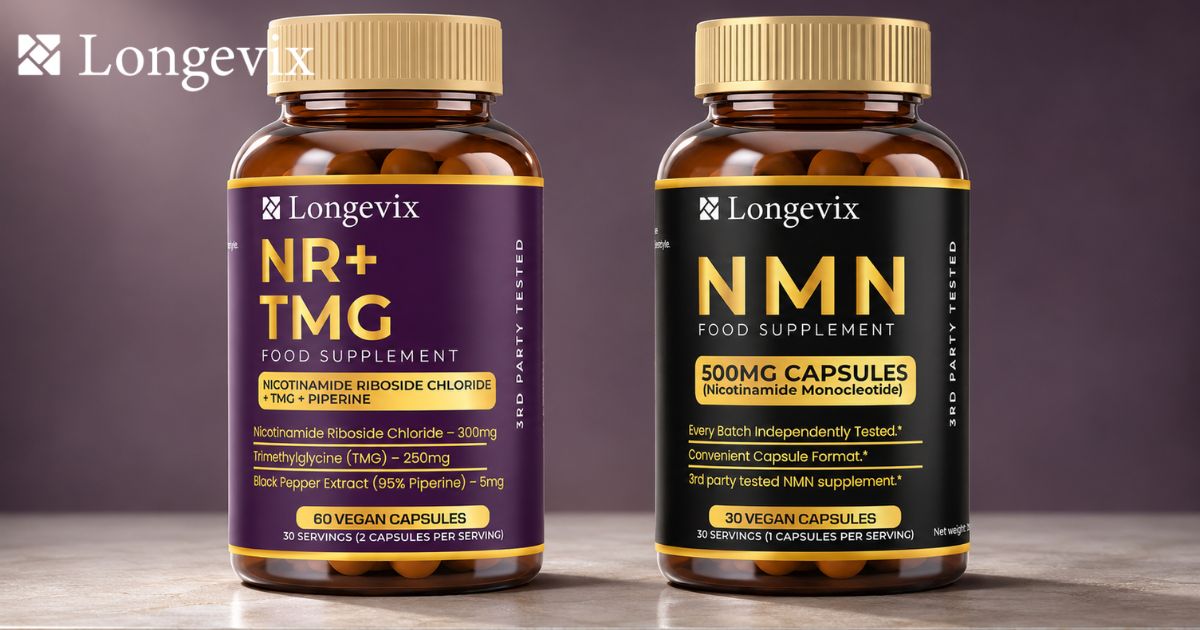
Readers interested specifically in NMN can explore Longevix's separate guide to NMN in foods and natural food sources.
NR versus niacin and niacinamide
Niacin is often used as a general term for vitamin B3, particularly the established forms nicotinic acid and nicotinamide.
Unlike NR, these forms are routinely considered in nutritional intake assessments.
The body can also make NAD+ from some dietary tryptophan, an amino acid found in protein-containing foods.
This is one reason why general vitamin B3 nutrition cannot be judged simply by measuring NR in food.
For more detail on the different compounds, see Longevix's nicotinamide riboside versus niacinamide comparison.
The NIH Office of Dietary Supplements' niacin fact sheet provides further information about vitamin B3 sources, metabolism and nutritional requirements.
Can Eating NR-Containing Foods Increase NAD+ Levels?
NR can contribute to NAD+ biosynthesis, but it remains uncertain whether the amounts normally supplied by NR-containing foods produce measurable increases in human NAD+.
This distinction is essential.
The biological ability to use NR does not automatically establish a health benefit from eating more of it.
What NR does in the body
NAD+ is a coenzyme involved in many cellular reactions, including those associated with energy metabolism and other essential biological processes.
The body maintains NAD+ through interconnected metabolic pathways using multiple precursors.
NR is one of these precursors.
After entering relevant metabolic pathways, NR can contribute to the production of NMN and ultimately NAD+.
That is an established biochemical relationship, not evidence that increasing dietary NR improves a particular health outcome.
What human studies have and have not demonstrated
Human research has mainly investigated purified NR supplements rather than naturally occurring NR in complete foods.
In a randomised, placebo-controlled trial published in 2019, researchers studied daily supplemental amounts of 100 mg, 300 mg and 1,000 mg over eight weeks.
They observed dose-dependent increases in whole-blood NAD+ concentrations.
However, changes in a blood biomarker are not the same as demonstrated improvements in physical function, cognition or lifespan.
Furthermore, the study did not test NR-containing meals or establish that ordinary dietary NR produces comparable results.
A 2026 systematic review of NAD+ augmentation research examined 33 human intervention studies alongside 80 rodent studies.
The review found more consistent evidence for changes in NAD-related biomarkers than for reliable improvements across clinical and functional outcomes.
It would therefore be inappropriate to claim that eating foods containing NR will improve memory, increase energy, slow ageing or prevent disease.
Longevix's separate NR benefits and human evidence guide explores these research limitations in greater detail.
Does Cooking or Processing Affect NR in Foods?
Food processing may influence NR concentrations, but the effect is not identical across every food.
Both the food's physical structure and the conditions used during preparation may matter.
What laboratory and food-processing studies show
Trammell and colleagues examined NR stability under different chemical conditions.
They found that NR remained relatively stable in tested milk and neutral-pH laboratory conditions, while stability decreased under certain acidic or alkaline conditions.
The 2025 plant-food study also compared raw and heat-treated samples.
Its findings were not uniform.
NR was no longer detected in the cooked green-bean samples following the study's particular treatment. By contrast, differences between raw and cooked broccoli, aubergine and purple cabbage were not statistically significant in the reported comparisons.
These findings suggest that heat-related changes may depend on the food and treatment used.
They do not justify a general statement that cooking always destroys NR.
Why everyday cooking figures remain uncertain
Household preparation methods vary considerably.
Boiling, steaming, roasting, microwaving and frying expose food to different temperatures, moisture levels and preparation times.
The available research does not provide sufficiently comprehensive data to calculate how much NR remains after every common cooking method.
Claims such as "steaming preserves 90% of NR" or "boiling destroys half the NR" would therefore be unsupported without direct evidence.
There is also no established reason to favour raw foods solely to maximise NR intake. Normal food safety and overall dietary quality remain more important practical considerations.
Natural Food Sources Versus NR Supplements: What Is Different?
Natural food sources and concentrated NR supplements provide very different nutritional contexts.
Foods contain mixtures of nutrients and other compounds, while supplements deliver specified amounts of selected ingredients.
A comparison may help readers understand the scale of published measurements, but it should not be interpreted as a recommendation to achieve a supplement-equivalent amount through diet.
Food concentrations versus supplement amounts
The 2025 study reported approximately 1.209 mg of NR in 100 g of tested banana material.
Clinical supplementation studies, by comparison, have investigated amounts measured in hundreds of milligrams per day.
These figures represent different forms of evidence.
Food studies identify compounds present in specific samples. Supplement trials investigate the response to manufactured ingredients under controlled conditions.
Neither automatically establishes how much NR a person should consume.
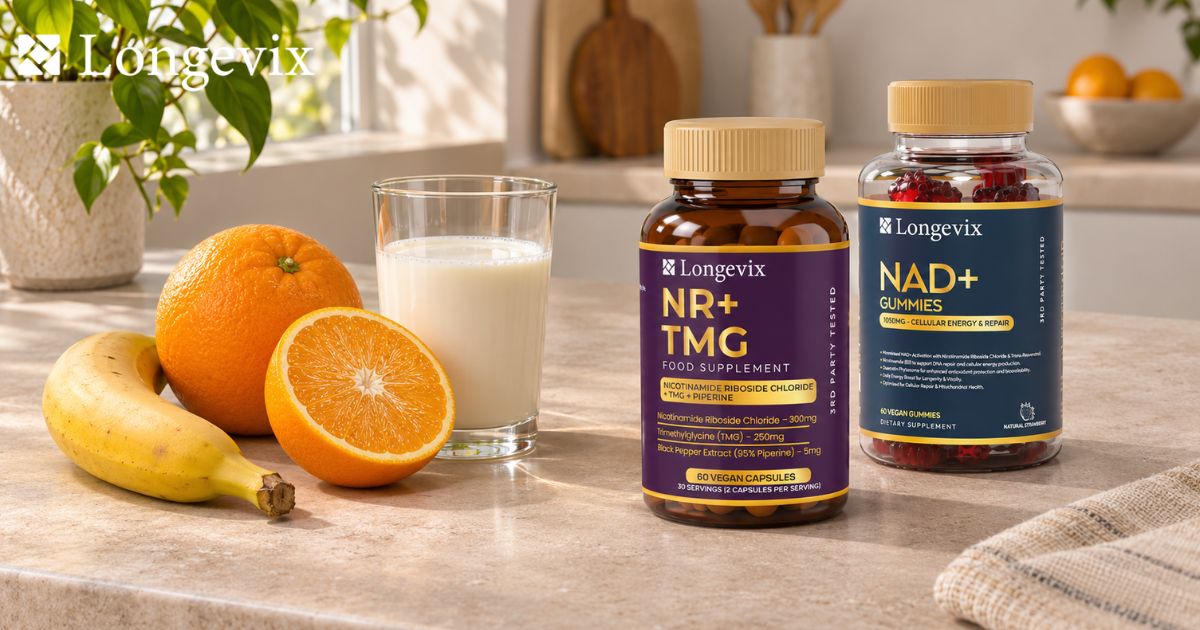
For an example of how supplement labels are presented, Longevix's NR + TMG Capsules product page lists 300 mg nicotinamide riboside, 250 mg trimethylglycine and 5 mg piperine per two-capsule serving.
These are manufacturer-listed quantities, not independent verification of the finished product's composition, ingredient form, legal status or clinical effectiveness.
Why higher amounts do not prove better outcomes
A larger NR amount is not necessarily better.
Some human studies show that supplementation increases NAD+ biomarkers. However, evidence for clinically meaningful benefits remains mixed, and long-term outcomes are not adequately established.
The results of high-dose studies should not be treated as instructions for everyday consumption.
A greater amount of a precursor also does not guarantee a proportionately greater effect across different tissues or biological systems.
The most responsible approach is to distinguish an ingredient's measured amount from evidence of its effects.
What UK readers should check
In Great Britain, nicotinamide riboside chloride is subject to specific novel-food authorisation conditions.
The Food Standards Agency's authorised novel-food register specifies a maximum of 300 mg/day in food supplements for the general adult population, excluding pregnant and breastfeeding women.
The authorisation separately specifies 230 mg/day for pregnant and breastfeeding women.
These are permitted-use conditions, not recommended doses, and they should not be interpreted as advice to take NR during pregnancy or breastfeeding.
Other authorisation requirements, including ingredient specifications and labelling, must also be satisfied.
Northern Ireland generally follows EU novel-food rules, subject to relevant arrangements for eligible retail goods moving under the Northern Ireland Retail Movement Scheme.
US dietary supplement requirements differ from UK rules, so US research doses and products should not be assumed to be suitable for the UK market.
Readers considering supplements should check the exact ingredient form, full product label, directions and applicable regulations. Professional advice is particularly important during pregnancy or breastfeeding, when taking medicines or when managing a medical condition.
Longevix provides further educational information in its guides to nicotinamide riboside dosage and NR side effects and safety.
What Should You Take Away About Dietary NR?
Nicotinamide riboside is present naturally in several foods, and modern analytical research is gradually improving our understanding of its dietary sources.
Milk has been studied directly for more than a decade, while newer evidence identifies notable concentrations in selected plant foods, including banana, orange and wild chicory.
However, measured concentrations vary, food-composition research is incomplete and the effects of ordinary dietary NR intake on human health are not well established.
There is currently no recognised dietary NR target that people need to achieve for longevity.
Rather than concentrating on a single NAD+ precursor, a varied, balanced diet remains the more appropriate foundation for nutritional wellbeing.
Readers interested in the broader science can explore Longevix's research and ingredient resources, which distinguish biochemical mechanisms from demonstrated human outcomes.
Frequently asked questions
Which foods contain the most nicotinamide riboside?
Among the plant foods tested in a 2025 study, wild chicory, banana and orange had some of the highest reported NR concentrations. These results do not establish a universal ranking of all foods.
Does banana contain nicotinamide riboside?
Yes. A 2025 food-analysis study measured approximately 1.209 mg NR per 100 g of banana in its tested samples. Actual concentrations may differ between varieties and growing conditions.
Is milk a natural source of NR?
Yes. Research has directly identified nicotinamide riboside in cow's milk. One 2016 study reported an average concentration of 4.3 µmol/L in 18 selected raw milk samples after excluding an unusually high result.
Does nutritional yeast contain nicotinamide riboside?
Yeast participates in NR-related metabolic pathways, but reliable quantitative evidence for the NR content of typical retail nutritional yeast remains limited. A specific amount should not be assumed without product testing.
Can food provide the same amount of NR as supplements?
The amounts measured in ordinary food samples are generally much smaller than those investigated in concentrated NR supplementation studies. However, matching a supplement dose through food is not an established nutritional requirement or a proven way to improve health.