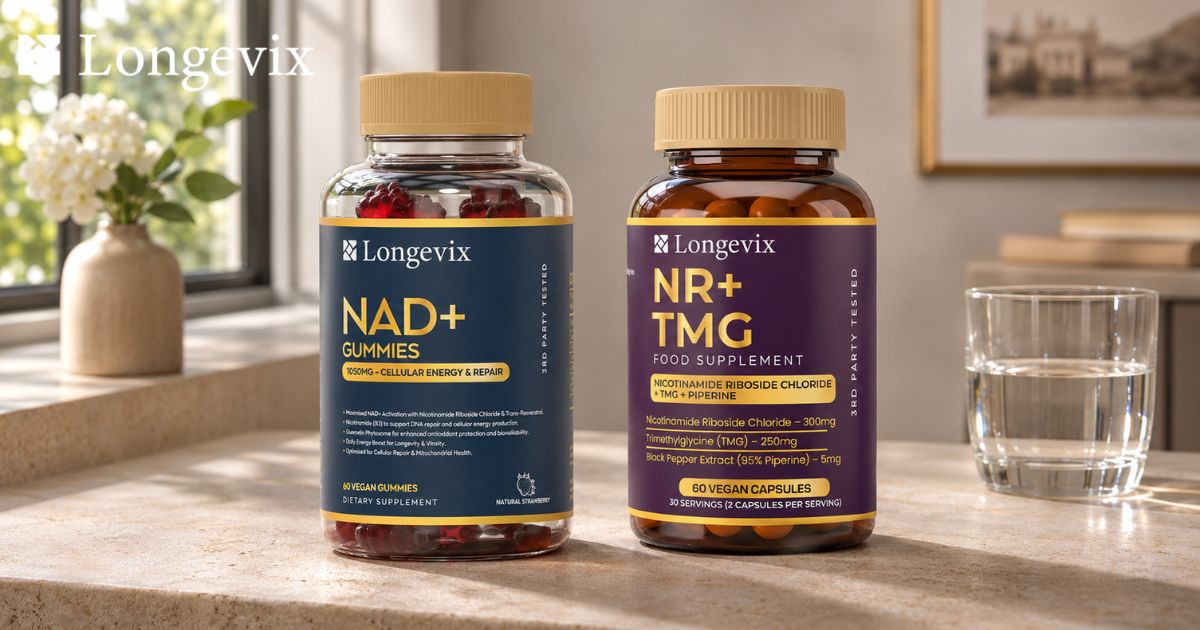
Nicotinamide riboside vs niacinamide is an increasingly common comparison among people exploring vaitamin B3, NAD+ supplements and healthy ageing. Although both compounds contribute to NAD+ metabolism, they are chemically different and do not necessarily produce identical effects after supplementation.
Recent human research suggests that nicotinamide riboside (NR) can produce sustained increases in blood NAD+ concentrations under certain conditions, whereas niacinamide, also called nicotinamide (NAM), may produce a more temporary response.
However, higher blood NAD+ levels do not automatically mean better energy, improved health or a longer life.
This guide explains the differences, examines clinical evidence, addresses UK safety considerations and helps you understand supplement ingredients without relying on exaggerated claims.
Nicotinamide Riboside vs Niacinamide: The Main Differences
The main difference is how these two forms of vitamin B3-related compounds are processed within the body's NAD+ metabolic pathways.
Nicotinamide riboside is a nucleoside that can contribute to NAD+ production through pathways involving nicotinamide mononucleotide (NMN). Niacinamide is another name for nicotinamide, which participates in NAD+ recycling through the nicotinamide salvage pathway.
Both have established biochemical roles, but that does not make them interchangeable supplements.
|
Comparison |
Nicotinamide Riboside (NR) |
Niacinamide (NAM) |
|---|---|---|
|
Chemical identity |
Vitamin B3-related nucleoside |
Form of vitamin B3 |
|
Alternative name |
NR |
Nicotinamide |
|
Role in NAD+ metabolism |
NAD+ precursor |
NAD+ precursor and recycling substrate |
|
Main cellular pathway |
Involves NR kinase enzymes and NMN |
Involves the nicotinamide salvage pathway |
|
Human blood NAD+ evidence |
Sustained increases demonstrated in several trials |
Temporary changes observed; sustained increases were not demonstrated in one recent direct comparison |
|
Typical supplement formats |
Capsules, powders and combined formulations |
Tablets, capsules and multivitamins |
|
Nicotinic acid-type flushing |
Not typically associated with NR |
Not typically associated with niacinamide |
|
Proven to extend human lifespan? |
No |
No |
The NIH Office of Dietary Supplements explains how different forms of vitamin B3 contribute to normal metabolic functions.
The important question is not simply which compound increases a laboratory measurement. It is whether that change produces a meaningful benefit for the person taking it.
For a separate explanation of NAD+ itself, see Longevix's NR vs NAD supplement guide.
What Are Nicotinamide Riboside and Niacinamide?
Nicotinamide riboside and niacinamide belong to a related family of compounds involved in vitamin B3 and NAD+ metabolism. Their structures and metabolic pathways differ, which helps explain why researchers study them separately.
Is Niacinamide the Same as Nicotinamide?
Yes. Niacinamide and nicotinamide are two names for the same chemical compound.
The scientific abbreviation NAM is commonly used for nicotinamide in studies of NAD+ metabolism.
Nicotinamide is one of the forms of vitamin B3 that the body can use to maintain normal cellular functions. It is also produced when certain enzymes consume NAD+ during cellular processes.
The body can recycle nicotinamide through metabolic reactions that contribute to NAD+ formation.
Niacinamide should not be confused with nicotinic acid, even though both belong to the vitamin B3 family.
How Is NR Different from Niacin and Vitamin B3?
Nicotinamide riboside contains a nicotinamide component attached to a ribose sugar.
This structural difference allows NR to participate in a different sequence of reactions involved in NAD+ production.
By comparison, nicotinic acid follows another NAD+ synthesis route known as the Preiss–Handler pathway.
These distinctions also matter when interpreting supplement side effects.
For example, high amounts of nicotinic acid can cause noticeable skin flushing. Nicotinamide generally does not produce the same flushing response, according to the NIH vitamin B3 guidance.
Different chemical structures, however, do not automatically establish that one supplement is more effective or safer than another at every amount.
How Do NR and Niacinamide Support NAD+ Production?
NAD+, short for nicotinamide adenine dinucleotide, is a coenzyme involved in numerous reactions throughout the body.
It participates in the transfer of electrons during normal metabolism and contributes to processes required for cells to function.
NAD+ is also used by enzymes involved in cellular signalling and responses to DNA damage.
The body maintains NAD+ through several interconnected pathways rather than relying on a single dietary ingredient.
The Nicotinamide Salvage Pathway
Nicotinamide enters a recycling pathway that helps the body rebuild NAD+ after it has been consumed during cellular activity.
An enzyme called nicotinamide phosphoribosyltransferase, or NAMPT, participates in converting nicotinamide into NMN. Further reactions then contribute to NAD+ formation.
This recycling process is important because the body continually uses and replenishes NAD+.
However, adding more nicotinamide through supplements does not guarantee a proportional increase in NAD+ concentrations. Enzyme activity, tissue requirements, metabolism and other factors influence the response.
The NR Pathway and NAD+ Formation
NR can participate in NAD+ production through reactions involving nicotinamide riboside kinase enzymes, commonly called NRK enzymes.
A simplified cellular pathway is:
Nicotinamide riboside → NMN → NAD+
This pathway is useful for understanding the chemistry, but it does not fully describe what happens when someone swallows an NR supplement.
Digestion, intestinal microorganisms, absorption and additional metabolic reactions can influence how an oral ingredient reaches different tissues.
A 2026 study published in Nature Metabolism investigated the possibility that intestinal microorganisms convert some orally administered NR into nicotinic acid, which may then contribute to circulating NAD+ through another pathway.
The researchers combined human supplementation data with laboratory experiments involving human-derived microbiota and blood.
Their proposed mechanism is scientifically interesting, but the complete contribution of intestinal conversion in living humans remains to be established.
A pathway diagram alone cannot predict how much NAD+ will increase or whether someone will experience a health benefit.

Which Ingredient Has Stronger Human Clinical Evidence?
Nicotinamide riboside has a substantial body of human research examining its effects on NAD-related blood measurements.
Niacinamide also has an established role in nutrition and has been investigated in different clinical settings.
However, the two compounds have not been compared extensively in long-term human trials assessing everyday health outcomes.
One recent study offers particularly useful evidence.
What the 2026 NR vs Nicotinamide Trial Found
In January 2026, researchers published a direct comparison titled The Differential Impact of Three Different NAD+ Boosters on Circulatory NAD and Microbial Metabolism in Humans.
The randomised, open-label, placebo-controlled study analysed 65 healthy adults over 14 days.
Participants received one of the following daily interventions:
· Nicotinamide riboside: 1,000 mg
· Nicotinamide: 500 mg
· Nicotinamide mononucleotide: 1,000 mg
· Placebo
The researchers measured changes in NAD+ and related metabolites.
After 14 days, NR and NMN produced significant increases in baseline whole-blood NAD+ concentrations compared with placebo.
Nicotinamide did not produce the same sustained increase at the amount tested.
However, nicotinamide did produce an earlier, temporary response in NAD-related blood measurements following administration.
These findings suggest that the compounds can affect circulating NAD+ differently over time.
The distinction matters: an ingredient that produces a short-term metabolic response should not automatically be described as ineffective.
Likewise, an ingredient that produces a longer-lasting biomarker increase should not automatically be described as clinically superior.

What were the study's limitations?
The trial lasted only two weeks and primarily evaluated biochemical measurements.
It did not establish that NR improves physical performance, memory, longevity or everyday wellbeing.
The tested ingredients also differed in mass and molecular amount. The findings therefore cannot establish which ingredient would perform better at every possible dose.
The study was open-label, involved healthy adults aged 18–50, and was conducted by researchers with commercial affiliations. Those factors should be considered when interpreting its results.
Importantly, the 1,000 mg NR amount was used under a clinical research protocol. It should not be treated as a recommended UK supplement dose.
What Earlier NR Trials Found
A 2019 randomised, double-blind, placebo-controlled trial investigated NR chloride supplementation in generally healthy adults with overweight.
Researchers examined daily amounts of 100 mg, 300 mg and 1,000 mg over eight weeks.
Within the first two weeks, whole-blood NAD+ concentrations increased in a dose-dependent manner.
At the 300 mg research amount, the average increase from baseline after 14 days was approximately 51%.
That percentage describes a blood biomarker response within a particular study population. It does not mean participants experienced 51% more energy or any equivalent improvement in health.
Other trials have examined whether the biochemical effects translate into improvements in metabolic health.
For example, a 2018 placebo-controlled study involving men with obesity and insulin resistance did not identify an improvement in insulin sensitivity from NR supplementation.
Together, these studies illustrate why biochemical and clinical results must be considered separately.
Why Higher NAD+ Does Not Prove Better Health
NAD+ plays an essential role in cellular metabolism, which makes its biological regulation an important research topic.
Yet increasing NAD+ in a blood sample is not necessarily the same as increasing it in every organ or producing a practical health improvement.
Researchers may measure NAD+ in whole blood, plasma, specific cells or tissues. These measurements are not automatically interchangeable.
There is also a difference between improving a biomarker and demonstrating that an intervention helps people feel, function or live better.
A 2023 critical review of NR supplementation in humans highlighted the gap between promising biological findings and consistent improvements in clinically relevant outcomes.
The most evidence-supported conclusion is that NR can affect NAD+ biomarkers under particular conditions, while its wider long-term health benefits remain uncertain.
Does Either Supplement Improve Energy, Skin Health or Longevity?
People frequently encounter NR and niacinamide in discussions about cellular energy, healthy ageing, skin health and longevity.
These topics are related through biology, but the available evidence differs considerably between them.
Energy and Physical Performance
NAD+ is essential for normal energy metabolism.
It participates in reactions that help cells process nutrients and generate usable energy.
However, an important biological role does not prove that taking extra NR or niacinamide will make someone feel more energetic.
Clinical studies of NR have produced mixed findings across metabolic, cardiovascular and physical-performance measurements.
Neither ingredient has been shown consistently to improve everyday energy or exercise performance in otherwise healthy adults.
Persistent tiredness can have many causes, including poor sleep, inadequate nutrition, medication effects and medical conditions.
It should not automatically be attributed to low NAD+.
Skin Health and Nicotinamide Research
Niacinamide is widely recognised as an ingredient in skincare formulations, but topical skincare research should not be treated as evidence for the benefits of an oral supplement.
Oral nicotinamide has also been investigated in particular dermatological research settings.
For example, a 2015 randomised clinical trial examined oral nicotinamide in people with a history of certain skin cancers.
Those findings relate to a defined high-risk clinical population and should not be generalised into claims that ordinary niacinamide supplements prevent disease, reverse skin ageing or improve skin appearance.
Evidence from a clinical intervention cannot automatically substantiate commercial claims about an unrelated supplement formulation.
Healthy Ageing and Lifespan
NAD+ metabolism has attracted interest because of its involvement in cellular maintenance, metabolic regulation and biological processes associated with ageing.
Laboratory and animal research has explored how these pathways may affect ageing-related mechanisms.
Human evidence is considerably more limited.
At present, there is no established evidence that ordinary NR or niacinamide supplementation extends human lifespan.
Similarly, a measurable change in NAD+ does not demonstrate that someone has reversed their biological age.
Readers interested in the wider evidence can consult Longevix's NAD supplement for healthy ageing guide.
For now, factors such as physical activity, balanced nutrition, sufficient sleep and appropriate medical care remain more firmly supported foundations for maintaining health.

NR vs Niacinamide: Safety, Side Effects and Interactions
Safety matters just as much as the possible biological effects of an ingredient.
NR and niacinamide have been studied in humans, but many trials are relatively short and involve carefully selected participants.
This makes it difficult to draw universal conclusions about long-term supplementation.
Does Niacinamide Cause Flushing?
Niacinamide does not usually produce the characteristic flushing associated with higher supplemental amounts of nicotinic acid.
Flushing can involve warmth, redness or tingling sensations, particularly around the face and upper body.
These reactions are linked to the pharmacological activity of nicotinic acid rather than being a universal effect of all vitamin B3 forms.
The NIH Office of Dietary Supplements distinguishes these compounds and their adverse-effect profiles.
However, avoiding flushing does not mean a supplement is free from other possible adverse effects.
What Do Short-Term Human Studies Tell Us?
Some controlled NR studies have reported generally acceptable short-term tolerability at the specific amounts and durations investigated.
Other research has recorded adverse events, including gastrointestinal symptoms or other individual reactions.
Niacinamide is also generally well tolerated at nutritional amounts, but large supplemental intakes can cause unwanted effects.
Very high intakes of nicotinamide have been associated with adverse effects, including gastrointestinal problems and signs of liver toxicity.
The absence of serious problems in a short clinical trial should not be interpreted as proof that an ingredient is harmless at every amount or over many years.
Who Should Seek Professional Advice?
Anyone considering substantial supplemental amounts should review their circumstances with an appropriate healthcare professional, particularly if they:
· Are pregnant or breastfeeding.
· Take regular prescription medicines.
· Have liver, kidney or other significant health conditions.
· Already use multivitamins or other products containing vitamin B3-related ingredients.
· Experience unexplained symptoms they hope to address with supplements.
Products containing additional ingredients may require separate consideration because their overall interaction profile can differ from an NR-only or nicotinamide-only preparation.
The correct approach is to examine the full formulation rather than focusing exclusively on the ingredient highlighted on the front of the package.
UK Supplement Rules: NR Chloride, Niacinamide and Daily Amounts
Regulatory requirements are particularly important when comparing supplements sold to UK consumers.
A quantity used in a clinical study does not automatically represent an authorised amount in a commercial food supplement.
Nicotinamide Riboside Chloride in Great Britain
Nicotinamide riboside chloride is listed as an authorised novel food in the Food Standards Agency's register for England, Scotland and Wales.
The official FSA authorisation specifies a maximum level of 300 mg per day in food supplements for the general adult population, excluding pregnant and lactating women.
A separate authorisation condition specifies 230 mg per day for pregnant and lactating women.
These are conditions attached to the authorisation of the ingredient, not personalised instructions to consume those amounts.
The existence of an authorisation also does not establish that every product containing NR complies with applicable formulation, labelling or marketing requirements.
Consumers should not interpret the separate pregnancy-related authorisation condition as medical advice to use NR during pregnancy or breastfeeding.
Understanding Research Amounts Versus Product Limits
Some human clinical trials have investigated NR amounts greater than those permitted under the current Great Britain general-adult novel-food authorisation.
Those studies were conducted in controlled research settings.
It would be inappropriate to treat the amounts used in such studies as a general recommendation for everyday supplementation.
For niacinamide, the NHS vitamin B guidance states that taking 500 mg or less per day from nicotinamide supplements is unlikely to cause harm.
That statement is not a guarantee of safety for every individual, nor does it mean that 500 mg is necessary or beneficial.
The NHS also advises that most people should be able to obtain their vitamin B3 requirements from a varied and balanced diet.
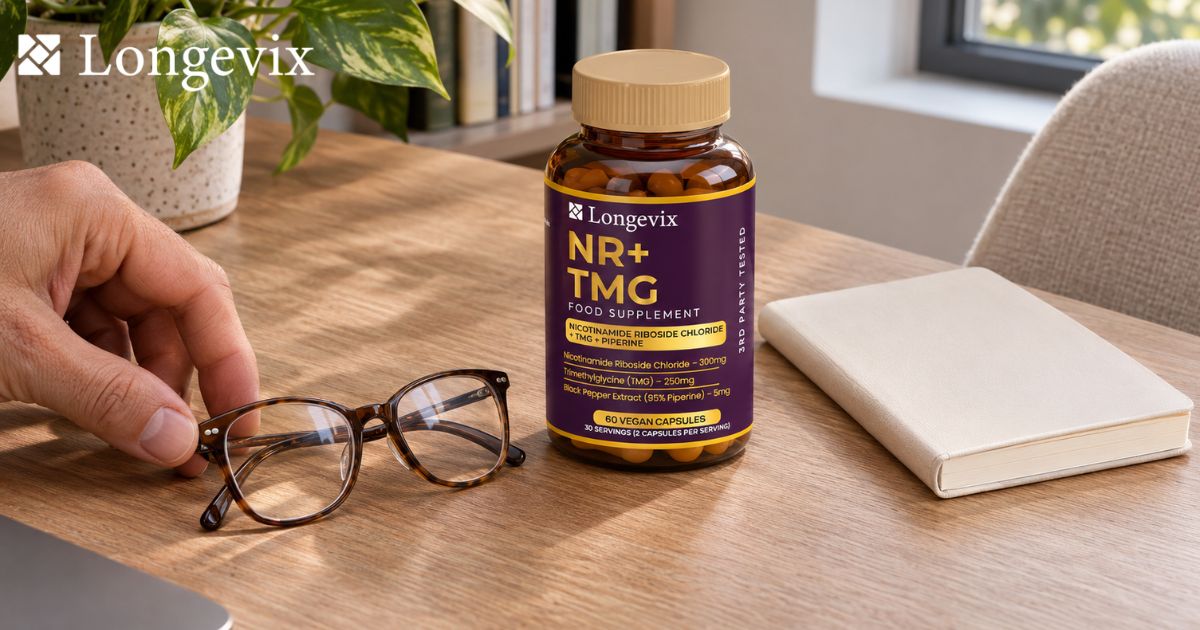
For more detailed discussion of NR study amounts and regulatory conditions, see Longevix's nicotinamide riboside dosage guide.
What About Northern Ireland and the US?
Great Britain and Northern Ireland do not operate under identical food regulatory arrangements.
Rules applying to novel foods and supplement marketing in Northern Ireland may differ because of its EU-aligned framework.
In the United States, dietary supplements are subject to a different regulatory system involving the Food and Drug Administration and Federal Trade Commission.
Permission to market an ingredient in one jurisdiction does not automatically establish its regulatory status elsewhere.
Commercial claims also require separate attention. The Great Britain nutrition and health claims register provides the framework for applicable authorised claims and their conditions.
Claims about treating disease, reversing ageing or extending life should not be inferred from preliminary NAD+ research.
Can Nicotinamide Riboside and Niacinamide Be Taken Together?
Yes, supplements containing both NR and nicotinamide exist. However, the fact that two ingredients participate in NAD+ metabolism does not mean taking them together produces an additive or superior health effect.
The biochemical pathways are interconnected, and the body already obtains and recycles vitamin B3-related compounds through normal dietary and metabolic processes.
There is insufficient direct clinical evidence to conclude that routinely combining NR and niacinamide produces better health outcomes than taking either ingredient separately.
Understanding a Real Combined Supplement Label
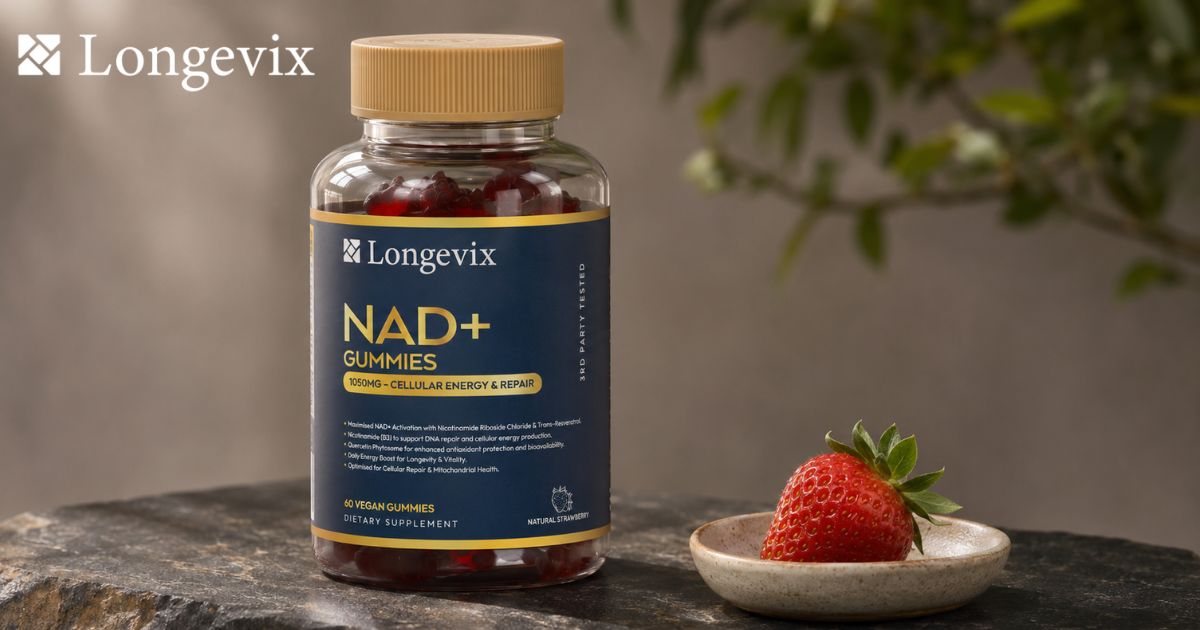
An example is Longevix NAD+ Support Gummies.
The publicly listed formulation contains the following amounts per two-gummy serving:
|
Listed ingredient |
Amount |
|---|---|
|
Nicotinamide riboside |
300 mg |
|
Nicotinamide (vitamin B3) |
250 mg |
|
Quercetin |
250 mg |
|
Trans-resveratrol |
250 mg |
The listed bottle contains 60 gummies, representing 30 two-gummy servings.
This example demonstrates why reading the complete ingredient panel matters.
A product promoted as NAD+ support may contain several distinct compounds rather than NAD+ itself.
It also illustrates why research involving one isolated ingredient cannot automatically be applied to a combination containing several substances.
The exact NR chemical form, quantity declaration, current physical label and applicable regulatory conditions should be confirmed before relying on the product's suitability for a particular market.
Consumers should also consider their total intake from other supplements and seek professional advice where appropriate.
Which Should You Choose? A Practical Evidence-Based Conclusion
The choice between nicotinamide riboside and niacinamide depends on what you are actually trying to understand or achieve.
If your interest is meeting ordinary vitamin B3 nutritional requirements, a balanced diet is the appropriate starting point. There is no established reason for everyone to take a specialised NAD+ precursor supplement.
If your interest is NAD+ research, NR has stronger evidence for sustained increases in whole-blood NAD+ under specific experimental conditions, including the 2026 head-to-head human study.
That is a meaningful scientific distinction, but it does not prove NR is the better choice for general health, energy, disease prevention or longevity.
Niacinamide remains an important form of vitamin B3, with its own established nutritional functions and distinct clinical research history.
Before selecting any supplement, look beyond marketing phrases and examine the ingredient identity, declared amounts, additional ingredients, available quality documentation and relevant UK regulatory conditions.
For a wider comparison of supplement categories, see Longevix's guide to NAD booster supplements.
The most useful decision is an informed one based on the actual evidence, not simply the largest amount or most impressive promise on a label.
Related Longevix reading: NMN vs Niacinamide: Differences, Evidence and UK Rules.
References
Frequently asked questions
Is Niacinamide the Same as Nicotinamide?
Yes. Niacinamide and nicotinamide are different names for the same form of vitamin B3. Nicotinamide riboside is chemically distinct.
Is Nicotinamide Riboside Better Than Niacinamide for NAD+ Levels?
A 2026 human trial found that NR increased baseline whole-blood NAD+ after 14 days, whereas nicotinamide did not at the tested amount. This does not establish that NR provides better overall health outcomes.
Does Niacinamide Cause Flushing Like Niacin?
Niacinamide does not typically cause the characteristic flushing associated with higher amounts of nicotinic acid. However, it can still cause other adverse effects, especially at high intakes.
Can You Take NR and Niacinamide Together?
Products containing both ingredients exist, but there is insufficient clinical evidence that the combination produces superior health benefits. Check total ingredient amounts, the complete formulation and individual suitability before use.
Is Nicotinamide Riboside Legal in the UK?
Nicotinamide riboside chloride is an authorised novel food in Great Britain under specified conditions. Other formulations, amounts and marketing claims must be assessed against the applicable rules; Northern Ireland may have different requirements.