

Perimenopause can change how you sleep, think, and feel. That explains the growing interest in NMN and perimenopause. NMN, or nicotinamide mononucleotide, supports the body’s production of NAD+, a molecule involved in energy metabolism and normal cellular activity. However, perimenopause itself develops through changing ovarian hormone patterns.
Symptoms such as hot flashes, brain fog, and disrupted sleep quality can have several causes. NMN research has produced interesting findings in selected areas, particularly metabolism. Yet NMN hasn’t been established as a treatment for perimenopause. Understanding that boundary helps you separate plausible biology from proven clinical benefit.
This article provides general educational information. It does not replace personalised medical advice, diagnosis, or treatment.
NMN and Perimenopause: What Does the Evidence Really Show?
The evidence starts with an important distinction. Nicotinamide mononucleotide is an NAD+ precursor studied in human ageing, metabolic, vascular, and exercise research. Scientists have measured changes in biological markers and selected functional outcomes. However, NMN hasn’t been established as a treatment for menopause symptoms, including hot flushes or sleep disruption.
That gap matters because mechanisms can look compelling without producing noticeable benefits. Longevix makes this principle central to its evidence approach: “Mechanism is not an outcome.” Changing NAD-related biology doesn’t automatically improve symptoms, healthspan, or quality of life. Human outcomes need their own evidence. (Longevix NMN dosage guide)
Has NMN Actually Been Studied for Perimenopause?
Human NMN studies exist, including a randomized controlled trial in postmenopausal women. However, researchers examined metabolic function rather than perimenopause itself. The participants were already postmenopausal, had prediabetes, and were overweight or obese. That population cannot represent every woman experiencing the menopause transition.
Biological Plausibility Is Not Clinical Proof
Think of NAD+ as one component inside a complicated engine. Improving one component doesn’t prove the entire machine will perform differently. NMN may alter certain NAD-related pathways while leaving important outcomes unchanged. That is why a plausible mechanism should never be presented as proven clinical trial evidence.
What Happens During Perimenopause—and Where Does NAD+ Fit In?
Perimenopause is part of reproductive aging. Ovarian activity becomes less predictable, while oestrogen and progesterone patterns fluctuate. Menstrual cycles often change as menopause approaches. For people aged 45 or over, NICE considers newly developing vasomotor symptoms alongside menstrual changes useful clinical indicators of perimenopause.
NAD+ serves a different biological role. Cells need it for redox reactions and many metabolic processes. It also acts as a required cofactor for sirtuin enzymes and participates in pathways connected with mitochondrial function. These facts explain interest in NAD+ precursors. They don’t show that low NAD+ causes perimenopause.
Why Perimenopause Can Feel Different for Every Woman
Experiences vary enormously. Vasomotor symptoms include hot flushes and night sweats, while sleep disruption, mood changes, and cognitive complaints may also occur. The Menopause Society reports that up to 80% of women experience hot flushes or night sweats at some stage of the menopause transition.
Where Cellular Energy Fits Into the Conversation
NAD+ helps cells process energy-producing nutrients through normal metabolic reactions. However, a higher NAD-related biomarker doesn’t necessarily mean you will feel more energetic. That difference becomes particularly important when evaluating fatigue claims. Longevix explores NAD biology further in its Low NAD Symptoms guide.
Does NMN Affect Oestrogen, Progesterone or Female Hormones?
Questions about NMN and hormones are understandable because perimenopause involves major endocrine changes. However, strong human evidence doesn’t show that NMN restores oestrogen or progesterone to youthful concentrations. Claims about hormone balancing therefore go beyond established NMN research. Hormonal patterns during perimenopause are dynamic rather than simply “high” or “low”.
During ovarian aging, follicle numbers and ovarian responsiveness change over time. Oestrogen patterns can fluctuate before becoming persistently lower after menopause. That process is more complicated than simple estrogen withdrawal. NMN research doesn’t establish that increasing NAD+ reverses ovarian ageing, prolongs fertility, or stops the natural menopause transition.
Does NMN Increase Oestrogen?
Current human evidence doesn’t establish NMN as an oestrogen-raising treatment for perimenopausal women. Demonstrating such an effect would require well-designed controlled studies that measure relevant hormones in the appropriate population. Without those data, statements claiming that NMN “boosts oestrogen” remain unsupported.
Can NMN Balance Female Hormones?
“Balance” sounds reassuring, yet it has little precision without clearly defined outcomes. Female hormones naturally vary across cycles and reproductive stages. During perimenopause, variability can become pronounced. A dietary supplement shouldn’t be described as balancing hormones unless suitable human trials demonstrate a specific, reproducible hormonal effect.
Can NMN Help Perimenopause Fatigue, Brain Fog or Poor Sleep?
Fatigue, brain fog, and changing sleep quality often motivate women to investigate NMN. Yet these complaints have numerous possible causes. Night sweats can repeatedly interrupt sleep. Anaemia, thyroid problems, medicines, mood disorders, stress, nutrition, and sleep conditions can produce similar symptoms. Treating every problem as “low NAD+” oversimplifies the picture.
NMN remains interesting because NAD+ participates in cellular energy metabolism. Still, cellular metabolism and the subjective feeling of energy aren’t interchangeable outcomes. Human NMN trials have produced different results across populations and endpoints. Longevix examines that distinction more closely in its NMN for Tiredness guide.

NMN and Perimenopause Brain Fog
Perimenopausal brain fog often describes temporary difficulty concentrating, remembering words, or retrieving information. It doesn’t automatically indicate neurological disease. Current evidence hasn’t established NMN as a treatment for these cognitive complaints. The wider evidence is explored separately in Longevix’s NMN and Brain Health guide.
Could NMN Improve Sleep During Perimenopause?
Some NMN research outside perimenopause has explored sleep-related outcomes. That doesn’t establish efficacy for menopause-associated sleep disturbance. Night sweats, anxiety, mood changes, and altered sleep patterns may each contribute. NICE currently recommends considering menopause-specific CBT for sleep problems associated with vasomotor symptoms.
NMN, Weight Gain and Metabolic Health During Midlife
Midlife body changes deserve more nuance than the phrase “menopause weight gain”. Longitudinal SWAN research found that fat gain accelerated while lean mass declined around the menopause transition. Interestingly, overall body weight didn’t show the same menopause-specific acceleration. Ageing, lifestyle, sleep, activity, and hormonal changes can all contribute.
This background makes NMN metabolism research relevant without turning NMN into a slimming product. One important study reported better muscle insulin sensitivity after NMN supplementation in selected postmenopausal women. Yet body composition and several other measured outcomes didn’t significantly improve during the trial.
Case Study: What the 2021 NMN Trial Really Found
The 10-week double-blind study involved postmenopausal women with prediabetes who were overweight or obese. Participants receiving NMN took 250mg daily. Researchers found improved insulin-stimulated glucose disposal and muscle insulin signalling. However, measured physical function, body composition, and mitochondrial oxidative capacity didn’t show corresponding improvement.
Does NMN Help With Menopause Weight Gain?
Current human evidence doesn’t establish NMN as a weight-loss treatment during perimenopause. The 2021 trial provides useful information about insulin sensitivity in a narrowly defined population. It doesn’t demonstrate that NMN reduces abdominal fat, prevents menopausal weight change, or produces broad metabolic improvements in otherwise healthy women.
|
Evidence question |
What current research supports |
What it does not establish |
|
NMN and NAD+ biology |
NMN participates in NAD+ biosynthesis |
Relief of perimenopause symptoms |
|
2021 NMN study |
Improved muscle insulin sensitivity in a specific postmenopausal population |
Weight loss or treatment of hot flushes |
|
Body composition research |
Fat gain and lean-mass changes can accelerate around menopause |
NMN prevents these changes |
|
NMN and hormones |
Biological pathways remain scientifically interesting |
Proven oestrogen or progesterone “balancing” |
Menopause Research on NAD+ Precursors: NMN Is Not NR
Newer NAD+ research requires especially careful reading. A 2026 study investigated nicotinamide riboside combined with pterostilbene for seven days. Forty healthy women over 35 participated, with 32 reporting menopause-transition symptoms. Researchers reported changes in several self-reported symptoms. However, this study tested NR plus pterostilbene, not NMN.
The study was also open-label, short, and lacked a placebo-treated comparison group. These design limitations don’t make the findings meaningless, but they reduce how confidently cause and effect can be inferred. Most importantly, findings from a different NAD+ precursor shouldn’t become evidence that NMN treats perimenopause.
NMN vs NR: Similar Destination, Different Compounds
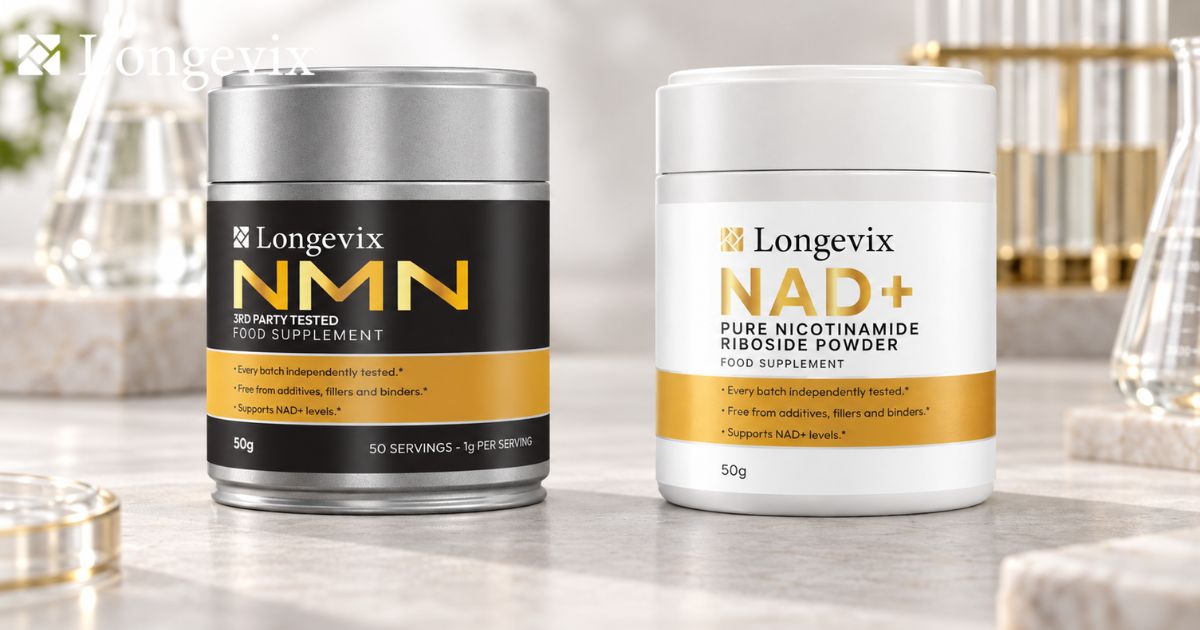
NR and NMN both contribute to biochemical pathways leading towards NAD+ synthesis. However, they are chemically distinct compounds with separate clinical evidence bases. Longevix correctly treats them as different ingredients rather than interchangeable names. Its current range contains both NMN products and a distinct nicotinamide riboside powder.
What Did the 2026 Menopause-Transition Study Show?
The study reported reductions in several self-reported complaints, including hot flashes and poor sleep, after seven days of NR plus pterostilbene. Researchers also observed a change in the urinary estradiol-to-estrone ratio. These findings remain exploratory because the study was small, brief, and lacked a placebo group.
Why Those Results Don’t Prove NMN Benefits
Two routes can lead towards the same destination without producing identical journeys. NR and NMN both relate to NAD+ metabolism, yet their absorption, metabolism, formulations, doses, and trial evidence differ. Applying an NR result directly to NMN would erase those distinctions and overstate what the research actually tested.
How Much NMN Should Women Take During Perimenopause?
There is no clinically established NMN dose specifically for perimenopause. Human research has tested different quantities in different populations for different outcomes. Therefore, a study dose isn’t automatically an appropriate personal recommendation. Longevix’s dedicated NMN Supplement Dosage guide examines research doses in greater detail.
The difference becomes especially important here. The 2021 metabolic study used 250mg daily. Longevix currently provides 500mg per capsule, while its powder lists a 500mg serving. Those product amounts shouldn’t be interpreted as clinically proven perimenopause doses. Serving information and treatment evidence answer two very different questions.
Is 500mg NMN Proven for Perimenopause?
No direct clinical evidence establishes 500mg as an optimal perimenopause dose. NMN studies have used several quantities across different populations and endpoints. A dose only makes scientific sense when considered alongside the participants, duration, formulation, comparator, and measured outcome. The number itself cannot predict whether you will notice a benefit.
Does More NMN Mean Better Results?
Biology rarely works like a volume control. A higher amount doesn’t automatically produce a larger benefit. Longevix therefore advises users to follow the current product label rather than copying doses from unrelated experiments. Its dosage guidance also stresses that research protocols shouldn’t become universal supplement recommendations.
Longevix NMN Capsules vs Powder: Which Format Fits Your Routine?
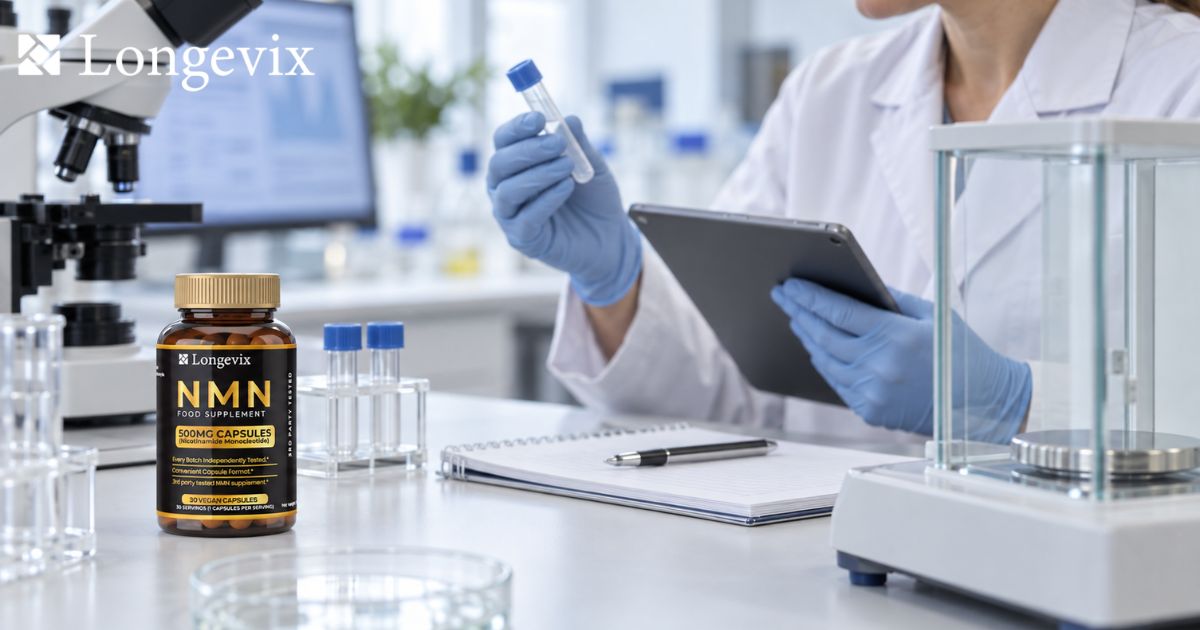
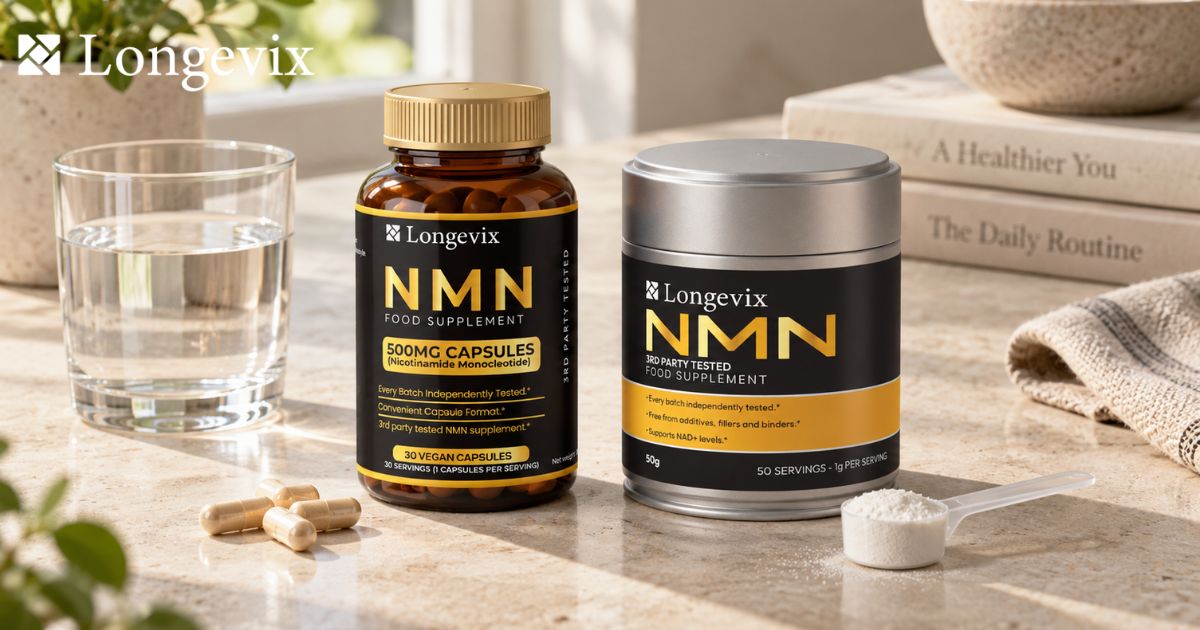
Longevix currently offers two direct NMN formats. Pure NMN Capsules 500mg provide 500mg per capsule in a 60-capsule vegan format. A testing document is currently listed for the product. Testing evidence should always be matched to the relevant product, batch, and analyses reported.
Alternatively, Pure NMN Powder 50g contains NMN in powder form. The current product record lists a 500mg serving, an included 500mg scoop, and approximately 100 servings per 50g tin. Neither format has demonstrated superior clinical effectiveness specifically for perimenopause.
|
Feature |
Longevix Pure NMN Capsules 500mg |
Longevix Pure NMN Powder 50g |
|
Product format |
Vegan capsule |
Powder |
|
Stated NMN amount |
500mg per capsule |
500mg per serving |
|
Pack size |
60 capsules |
50g |
|
Measuring method |
Pre-measured capsule |
Included 500mg scoop |
|
Approximate servings |
60 capsule units |
Approximately 100 |
|
Testing document currently listed |
Yes |
Yes |
|
Proven specifically for perimenopause |
No |
No |
Capsules or Powder: What Actually Changes?
The meaningful difference is practical rather than clinical. Capsules provide a fixed, pre-measured amount. Powder requires scoop-based measuring and offers approximately 100 stated servings. No robust head-to-head human trial shows that standard NMN powder produces better perimenopause outcomes, absorption, NAD+ effects, or clinical benefits than an ordinary capsule format.
Can You Take NMN With HRT or Other Perimenopause Treatments?
Combining NMN with menopausal hormone therapy cannot be reduced to a universal yes or no. HRT formulations, doses, routes, health histories, and treatment goals vary. A lack of a widely recognised interaction doesn’t prove that every combination is appropriate. Medication and supplement use should be reviewed with a qualified healthcare professional.
More importantly, NMN shouldn’t replace evidence-based menopause care. NICE recommends offering HRT for vasomotor symptoms associated with menopause, while ACOG describes systemic hormone therapy as the most effective treatment for hot flashes and night sweats. Suitability still depends on individual benefits, risks, and medical history.
Can You Take NMN and HRT Together?
Direct controlled evidence specifically testing NMN alongside HRT during perimenopause remains insufficient for a universal recommendation. Your medicines, bleeding pattern, medical history, pregnancy possibility, and personal risk factors may all matter. Professional review offers more meaningful guidance than a generic online interaction checker.
Why NMN Shouldn’t Replace Proven Menopause Treatment
NMN research primarily investigates NAD-related biology and emerging metabolic outcomes. HRT and recognised non-hormonal therapies have direct evidence for particular menopause symptoms. That difference is substantial. A supplement can form part of a broader wellness routine, but it shouldn’t quietly displace treatments supported by stronger symptom-specific evidence.
Is NMN Safe During Perimenopause? What We Still Don't Know
Short-term human NMN studies provide useful safety information within their tested conditions. However, they don’t establish indefinite safety. In the 10-week study of postmenopausal women, researchers did not identify serious treatment-related safety concerns. The study was small, though, so it cannot detect every uncommon or long-term effect.
That limitation matters because perimenopause may continue for several years. Pregnancy also remains possible before menopause is confirmed. Longevix advises seeking professional guidance when pregnant, breastfeeding, taking medicines, or managing a medical condition. Testing documents confirm only the analyses stated within each report, not individual suitability.
What Does Short-Term NMN Safety Really Mean?
“Well tolerated” has a specific meaning. Participants generally managed the tested intervention during a defined study period without concerning patterns emerging. It doesn’t mean rare reactions are impossible or that long-term use is proven safe across every age, medicine, or medical condition. Larger and longer studies provide different information.
When Perimenopause Symptoms Need More Than a Supplement
Persistent exhaustion, severe sleep disruption, significant mood changes, unusual bleeding, or rapidly changing symptoms deserve proper assessment. Similar complaints may result from conditions unrelated to menopause. ACOG advises discussing abnormal bleeding during perimenopause with a healthcare professional rather than assuming every change is part of the transition.
The Confident Bottom Line on NMN and Perimenopause
NMN and perimenopause make a scientifically interesting combination, but current evidence is narrower than many marketing claims suggest. NMN participates in NAD+ biology, while one notable human trial found a specific metabolic effect in selected postmenopausal women. That doesn’t prove relief from hot flushes, brain fog, weight change, poor sleep, or hormonal fluctuations.
Confidence comes from understanding both evidence and uncertainty. NMN may fit an informed supplement routine for some adults, but it isn’t an established menopause treatment. Longevix currently offers capsule and powder formats with clear serving information and available testing documentation. Perimenopause care should remain centred on individual symptoms, medical context, and reliable clinical evidence.
Frequently asked questions
Does NMN help with hot flashes or night sweats?
There is currently no strong human evidence showing that NMN reduces hot flushes or night sweats. These vasomotor symptoms are well recognised during the menopause transition, while established treatment options have a different and much stronger clinical evidence base.
Is there any human trial of NMN for menopause or perimenopause?
NMN has been tested in postmenopausal women for metabolic outcomes, including muscle insulin sensitivity. However, that study wasn’t designed to prove that NMN treats perimenopause symptoms. Direct evidence for NMN as a menopause-symptom treatment remains insufficient.
Can NMN balance my hormones?
Current human evidence doesn’t show that NMN reliably balances oestrogen, progesterone, or other reproductive hormones. Claims that NMN provides hormone balancing should therefore be treated cautiously unless future controlled trials demonstrate a clear hormonal effect.
Is NMN safe to take during perimenopause or menopause?
Short-term human studies suggest NMN can be tolerated under studied conditions, but long-term evidence remains more limited. If you take prescription medicines, use HRT, are pregnant or breastfeeding, or manage a medical condition, seek personalised healthcare guidance before taking a dietary supplement.
Could NMN still help with menopausal energy, sleep or brain fog?
NMN supports pathways connected with NAD+ and cellular metabolism, which makes these questions scientifically interesting. However, current evidence doesn’t establish NMN as a treatment for menopausal fatigue, impaired sleep quality, or brain fog specifically.


