
Choosing supplements for energy and focus is not simply a matter of finding the strongest formula. Feeling physically tired, struggling to concentrate and experiencing mental fatigue can have different causes, which means the most appropriate response may not involve a supplement at all.
Some nutrients are essential for normal energy metabolism, while ingredients such as caffeine have been studied for their short-term effects on attention. Others, including creatine and NAD+ precursors, are attracting scientific interest, although their benefits for everyday concentration remain uncertain.
This guide examines what human research actually shows, which ingredients deserve consideration, how to interpret supplement labels and what UK consumers should know before making a decision.
Which Supplements Actually Help With Energy and Focus?
No single supplement has been shown to provide reliable, lasting improvements in both physical energy and mental focus for everyone.
The available evidence depends heavily on the ingredient, the outcome being measured and the individual taking it. Correcting a nutritional deficiency, for example, is fundamentally different from temporarily increasing alertness with caffeine.
The comparison below highlights these distinctions.
|
Supplement or nutrient |
What the evidence suggests |
Main consideration |
|---|---|---|
|
Vitamin B12 and folate |
Essential for normal neurological and metabolic functions; deficiencies can cause fatigue and cognitive symptoms |
Additional supplementation is not a proven energy boost when nutritional status is adequate |
|
Iron |
Correcting iron deficiency may improve fatigue, including in some people without anaemia |
Iron status should be assessed before supplementation |
|
Magnesium |
Contributes to normal energy-yielding metabolism and nervous system function |
Its established biological role does not prove that extra magnesium enhances focus |
|
Caffeine |
Controlled trials support short-term improvements in some attention measures |
Sleep disruption, sensitivity and total caffeine intake matter |
|
L-theanine with caffeine |
Some studies suggest benefits for particular attention tasks |
Effects vary, and research findings do not establish the effectiveness of every supplement formula |
|
Creatine monohydrate |
Emerging evidence suggests possible benefits for selected cognitive outcomes |
Findings are mixed and do not establish a universal concentration benefit |
|
NR and NMN |
Participate in pathways associated with NAD+ metabolism |
Changes in biomarkers do not establish meaningful improvements in fatigue or cognition; UK regulatory status also matters |
The most useful starting point is therefore to identify what you want to improve. Someone experiencing persistent exhaustion may need a different approach from someone who feels well rested but wants to understand the evidence behind cognitive supplements.
Why Do Low Energy and Poor Concentration Occur Together?
Energy and concentration are connected, but they are not interchangeable.
Your brain depends on a continuous supply of nutrients and oxygen, adequate sleep and normal metabolic function. When one of these factors is disrupted, you may feel tired, find decisions more difficult or struggle to sustain attention.
However, those experiences do not establish that you are lacking a particular vitamin or need a supplement.
Sleep, Stress and Everyday Lifestyle Factors
Insufficient or disturbed sleep can affect alertness, motivation and concentration. Stress, irregular eating patterns, alcohol consumption, medication effects and limited physical activity may also contribute to tiredness.
Consider someone who sleeps poorly, drinks several coffees to remain alert and then struggles to fall asleep the following night. Adding another stimulating product may complicate the problem rather than address its underlying cause.
The NHS guidance on tiredness and fatigue recommends considering sleep, lifestyle and other possible causes before assuming that a supplement is the answer.
Nutritional Deficiencies and Medical Causes
Low energy can sometimes be associated with iron deficiency, vitamin B12 deficiency or an underlying medical condition.
For example, vitamin B12 deficiency may cause tiredness alongside neurological or cognitive symptoms. Iron-deficiency anaemia can cause fatigue, breathlessness and palpitations.
Other conditions, including thyroid disorders, diabetes and sleep apnoea, may also contribute to persistent tiredness.
A suitable supplement cannot be selected reliably from symptoms alone. If tiredness has continued for several weeks, affects daily activities or occurs alongside other concerning symptoms, a GP can assess whether further investigation is needed.
Which Vitamins and Minerals Are Relevant to Energy and Focus?
Vitamins and minerals support normal biological processes, but their roles should not be confused with the effects of taking additional supplements.
Understanding this distinction can prevent unnecessary purchases and unrealistic expectations.
Vitamin B12, Folate and Iron
Vitamin B12 is involved in normal nervous system function and the formation of red blood cells. Folate also contributes to normal blood formation and other essential functions.
A deficiency in either nutrient may produce symptoms that include tiredness, weakness and problems with memory or concentration.
Importantly, taking additional vitamin B12 is not known to increase energy in people who already obtain enough of it.
The NHS guide to vitamin B12 and folate deficiency explains the associated symptoms and why appropriate diagnosis matters.
Iron deserves similar consideration. It is essential for haemoglobin, the protein responsible for transporting oxygen in the blood.
A 2018 systematic review of randomised controlled trials found that iron supplementation reduced self-reported fatigue in some iron-deficient adults who did not have anaemia. However, the review did not establish corresponding improvements in objective physical performance.
These findings are relevant to people with iron deficiency. They do not justify taking iron routinely without assessing whether it is needed.
Magnesium and Normal Energy Metabolism
Magnesium participates in numerous enzyme-dependent processes, including those involved in normal energy metabolism.
It also contributes to normal nervous system and muscle function.
These are established nutritional functions. They do not mean that magnesium supplementation automatically improves concentration, memory or daytime alertness.
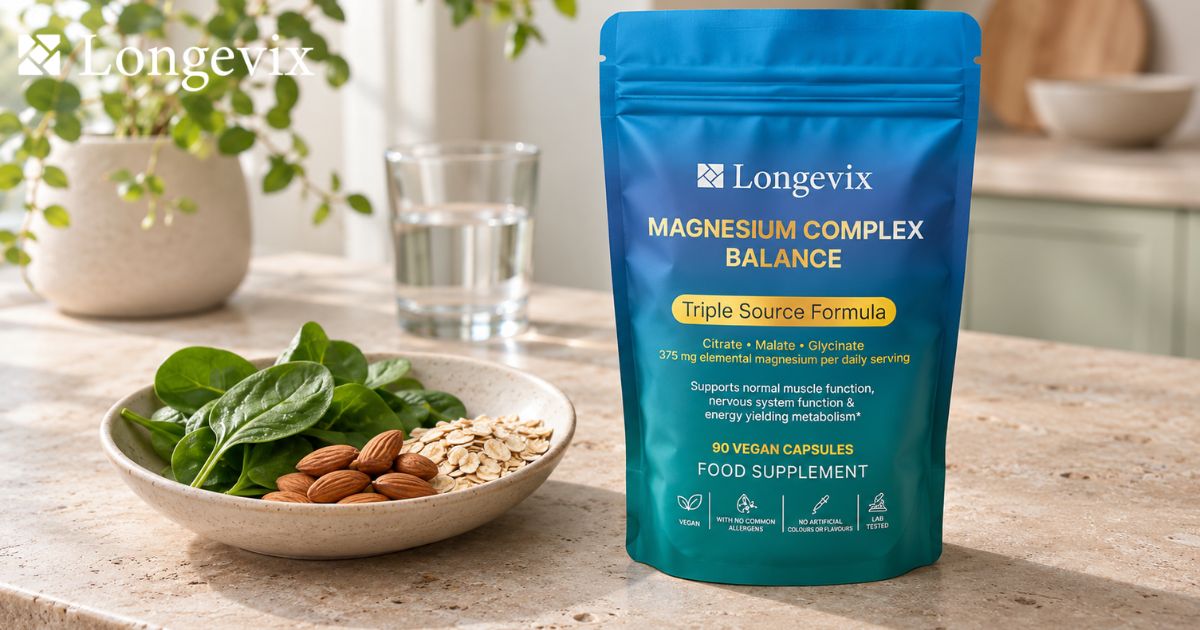
The NHS magnesium guidance explains that magnesium can generally be obtained through a varied diet containing foods such as nuts, spinach and wholegrains.
For people considering supplements, both the quantity of magnesium and the amount already being obtained from other products should be reviewed. Larger supplemental amounts may cause digestive side effects.
Vitamin D in a UK Context
Vitamin D is particularly relevant to UK nutritional guidance because sunlight exposure varies considerably throughout the year.
The NHS advises that adults should consider a daily supplement containing 10 micrograms of vitamin D during autumn and winter. Some people at greater risk of deficiency are advised to supplement throughout the year.
This recommendation supports adequate vitamin D intake, particularly for bone and muscle health. It should not be interpreted as evidence that vitamin D supplements immediately improve concentration.
Further details are available in the NHS vitamin D guidance.
Can Caffeine and L-Theanine Improve Alertness?
Caffeine is among the most extensively studied substances for short-term alertness and attention.
Unlike nutrients that correct deficiencies, caffeine produces a relatively immediate physiological effect through its action on the central nervous system.
Nevertheless, being more alert for a short period is not the same as treating persistent fatigue or improving long-term cognitive health.
What Caffeine Studies Demonstrate
A 2025 systematic review and meta-analysis examined 31 randomised, double-blind, placebo-controlled trials involving 1,455 participants.
The researchers reported modest improvements in reaction time and accuracy on attention tests following caffeine consumption.
However, the studies focused on acute effects in rested, healthy adults. They do not establish that caffeine addresses chronic tiredness, nutritional deficiencies or medical causes of concentration problems.
The research also suggests that more caffeine is not necessarily better for every aspect of attention.
What Adding L-Theanine May Change
L-theanine is an amino acid naturally associated with tea.
Researchers have investigated its effects both independently and in combination with caffeine.
A 2025 systematic review and meta-analysis reported potentially favourable effects on selected attention-related outcomes, including attention switching and vigilance tasks.
The findings are interesting, but the measured effects were not consistent across every outcome. Differences between study populations, formulations, amounts and testing methods also limit how confidently the results can be generalised.
Scientific evidence for an ingredient combination should not be treated as proof that every commercially available product containing those ingredients is effective.
Why Timing, Sleep and Individual Sensitivity Matter
Caffeine can disrupt sleep, particularly when consumed later in the day or by people who are more sensitive to its effects.
Some individuals also experience nervousness, palpitations or digestive discomfort.
A supplement that temporarily increases alertness may be counterproductive if it reduces sleep quality and leaves the person more tired the following day.
When assessing caffeine-containing products, consider total intake from coffee, tea, energy drinks and other supplements rather than evaluating one product in isolation.
What Does Research Say About Creatine and Brain Performance?
Creatine is widely associated with exercise supplementation, but it also has a role in cellular energy systems relevant to the brain.
This has encouraged researchers to investigate whether creatine supplementation affects memory, attention and other cognitive functions.
The science is developing, although the available findings are not sufficient to establish creatine as a dependable everyday focus supplement.
Creatine's Biological Role
Creatine participates in the phosphocreatine system, which helps cells regenerate adenosine triphosphate, or ATP, during periods of increased energy demand.
ATP provides usable energy for numerous cellular processes.
The brain requires substantial energy to maintain nerve signalling and other functions. Creatine's involvement in cellular energy therefore provides a plausible reason to investigate its potential cognitive effects.
However, a plausible biological mechanism is not the same as a demonstrated cognitive benefit.
What Human Trials Have Found
A 2024 systematic review and meta-analysis examined 16 randomised controlled trials involving 492 participants.
The analysis reported favourable findings for certain memory, attention-time and processing-speed outcomes.
However, significant improvements were not found across all cognitive measures, including overall cognitive function and executive function.
The studies also differed in participant characteristics, supplementation approaches and outcome measurements.
Consequently, the results are better understood as evidence of potential effects in particular circumstances rather than proof that creatine reliably improves concentration for every adult.
Why Product Dose and Format Matter
The creatine form used in these trials was creatine monohydrate.
However, not every product containing creatine provides the same amount, serving size or combination of ingredients.
Capsules, powders and gummies can differ considerably in how their active ingredients are presented.
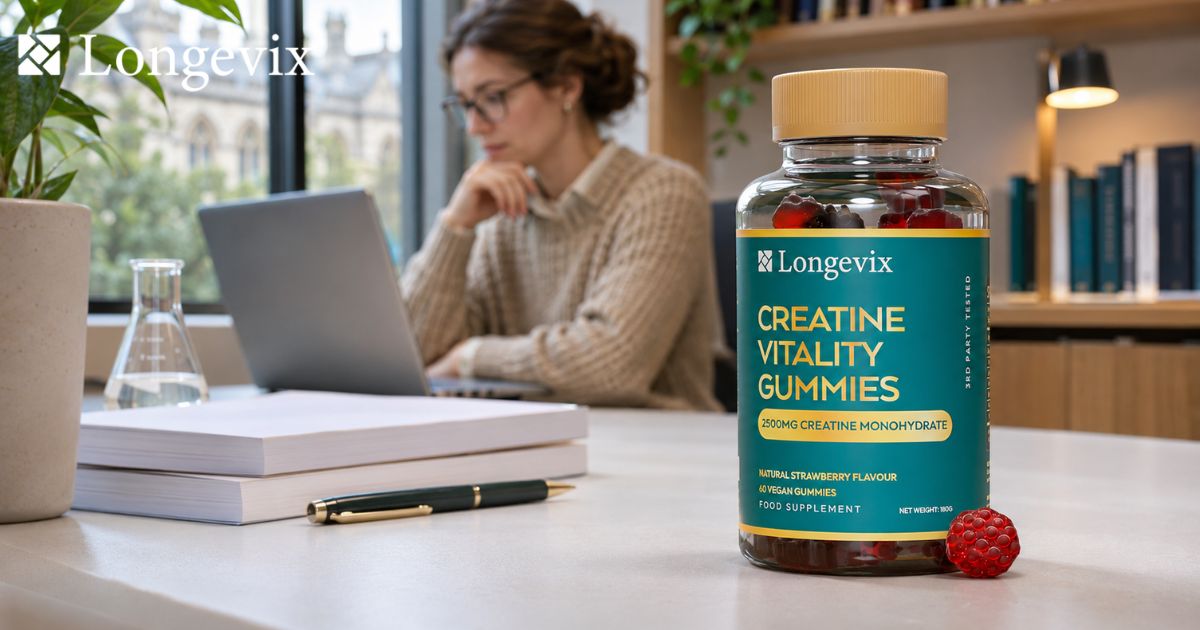
For example, a gummy may contain creatine alongside vitamins or other compounds. Its clinical relevance cannot be assessed simply because creatine appears on the ingredient list.
To compare a product with published research, consumers need to know the actual amount of creatine delivered per serving.
This is why transparent product labelling matters more than claims about a particular format being inherently better for brain performance.
Do NAD+, NR and NMN Supplements Improve Energy or Focus?
Nicotinamide adenine dinucleotide, commonly called NAD+, is a coenzyme involved in essential cellular reactions.
Nicotinamide riboside (NR) and nicotinamide mononucleotide (NMN) are compounds associated with pathways through which the body produces NAD+.
These connections have generated interest in supplements marketed around cellular energy, healthy ageing and cognitive performance.
Yet the scientific question is more complicated than whether an ingredient can influence NAD+ metabolism.
Cellular Energy Is Not the Same as Feeling Energetic
Cells continually regenerate ATP to meet their energy requirements. NAD+ participates in reactions that help make this process possible.
However, a compound's involvement in energy metabolism does not mean that consuming more of it will make a healthy person feel more alert or motivated.
Human research on NAD+ precursors has reported changes in certain biochemical markers, but these changes have not established consistent, clinically meaningful improvements in everyday fatigue or cognitive performance.
A higher measured NAD-related marker is not, by itself, evidence of better memory or concentration.
Readers interested in these biological pathways can explore the Longevix guides to cellular energy supplements and supplements for mitochondrial health.
What Human Research Has and Has Not Established
NR and NMN are still being investigated for potential effects on metabolism, physical performance and aspects of healthy ageing.
There are important limitations in translating this research into consumer recommendations.
Studies may involve different formulations, amounts, participant populations and intervention periods. Some focus primarily on blood biomarkers rather than outcomes a person would notice in daily life.
It is therefore inappropriate to describe NR or NMN as proven treatments for tiredness, brain fog or cognitive difficulties.
The existing Longevix article on NAD supplements for fatigue examines this specific question in greater depth, while its NMN and brain health guide discusses cognitive research and its limitations.
UK consumers must also consider ingredient-specific regulatory requirements. NR chloride has defined authorisation conditions in Great Britain, while an application concerning β-NMN remains under assessment in the Food Standards Agency's published register. Neither a promising study nor a retail product listing establishes that a particular formulation is authorised for sale.
How to Read an Energy-and-Focus Supplement Label
A supplement label should help you answer a straightforward question: what exactly would I be taking, and in what quantity?
Product names, ingredient combinations and marketing descriptions are not substitutes for this information.
Check the Active Ingredient Amount per Serving
A product may display a large number on the front of its packaging, but that number can refer to the combined weight of several compounds rather than the amount of the nutrient itself.
Magnesium offers a useful example.
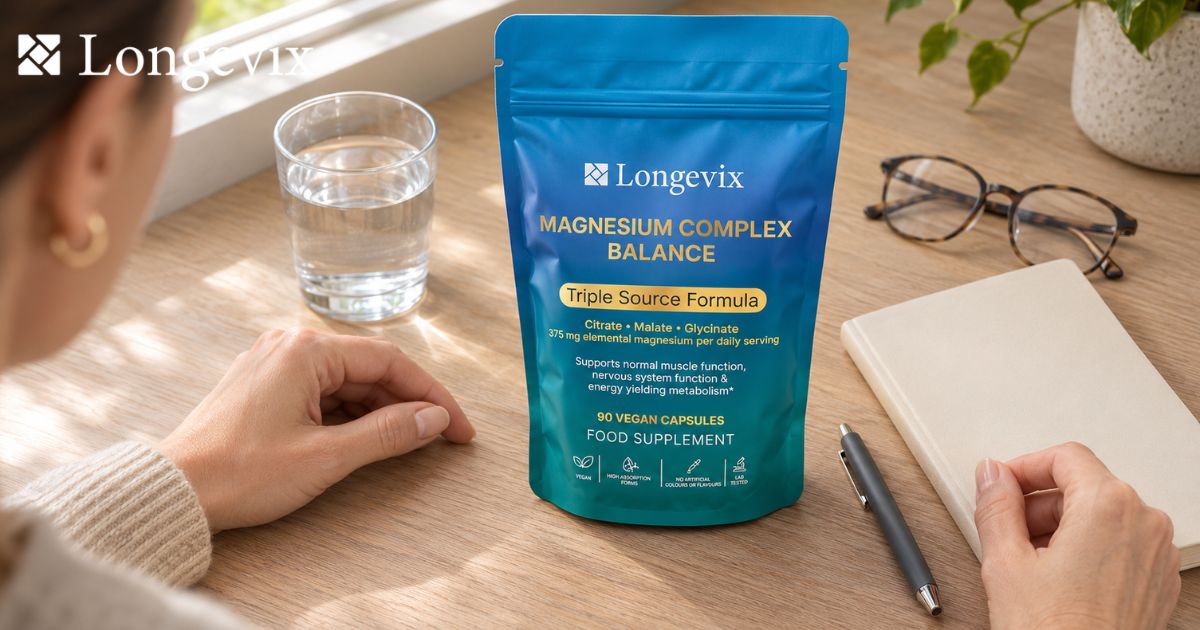
The LONGEVIX Magnesium Complex 3-in-1 combines magnesium glycinate, malate and citrate.
According to its product listing, a three-capsule serving contains:
· 2,223 mg of magnesium complex.
· 375 mg of elemental magnesium.
· Three capsules per serving, with 90 capsules per pack.
The distinction matters because the elemental magnesium amount is the relevant nutrient quantity, not the total weight of the magnesium-containing compounds.
The larger number should not be interpreted as 2,223 mg of elemental magnesium.
The published information also does not establish the separate quantity contributed by each magnesium form.
Because 375 mg is a substantial supplemental amount, users should consider their total intake and individual circumstances rather than assuming that a larger serving is more beneficial.
Capsules Versus Gummies: Does Format Matter?
Different supplement formats may offer different practical advantages.
Capsules provide premeasured servings and can accommodate a range of ingredient quantities. Gummies may be more convenient for people who dislike swallowing capsules, although they may also contain sweeteners or other ingredients.
Neither format guarantees superior absorption, effectiveness or clinical outcomes.
What matters is the formulation, the actual active ingredient quantities and the available supporting evidence.
The appropriate format is one that provides clear information and is suitable for the individual's needs.
Check Combined Formulas and Duplicate Ingredients
Multi-ingredient products require particular attention.
For example, someone using separate magnesium products could unintentionally combine their supplemental magnesium intake. Similarly, an individual taking several products containing the same vitamin may consume more than expected.
Before combining products, compare the full ingredient lists, amounts per daily serving and warnings.
Also check whether a product contains caffeine or other stimulants, especially if you are sensitive to them or already consume several caffeinated drinks.
If exact amounts are unavailable, seek clarification from the manufacturer instead of assuming the ingredient is present at a clinically studied quantity.
Where Do Longevix Products Fit?
Longevix offers products containing ingredients associated with normal nutritional functions or currently being investigated in human research.
That does not mean every product has been clinically demonstrated to improve energy and concentration.
Two examples illustrate how ingredient relevance and evidence should be evaluated separately.
|
Longevix product |
Verified product information |
Important limitation |
|---|---|---|
|
Magnesium glycinate, malate and citrate; three capsules provide 375 mg elemental magnesium |
Magnesium has established nutritional functions, but this product is not clinically proven to improve focus |
|
|
Creatine monohydrate, taurine, TMG and vitamin B12; four-gummy serving; 60 gummies per bottle |
The accessible product listing does not specify the amount of each active ingredient, so comparison with clinical trial quantities is not possible |
The creatine gummies provide a particularly useful illustration of why ingredient-level transparency is important.
Their product information confirms the ingredients and serving size, but without individual quantities it is not possible to determine whether the formulation resembles those investigated in creatine cognition studies.

Similarly, the presence of several magnesium forms does not establish that a blend will outperform an appropriate dietary intake or another formulation for concentration.
Consumers should examine the full physical label, consider whether supplementation is necessary and avoid assuming that the presence of a scientifically studied ingredient guarantees the same results as published research.
What Safety and UK Regulatory Issues Matter?
Food supplements are not automatically suitable for everyone simply because their ingredients are available without a prescription.
Safety depends on the ingredient, amount, formulation, the person's circumstances and other products or medicines they may be using.
Excessive Intake, Interactions and Combining Products
Higher quantities do not necessarily produce greater benefits.
For example, magnesium supplementation can cause gastrointestinal effects at larger amounts. Caffeine can interfere with sleep or cause unwanted stimulation, while iron supplements should be used appropriately rather than taken without an identified need.
People taking prescription medicines, managing medical conditions, or who are pregnant or breastfeeding should seek appropriate professional guidance before introducing relevant supplements.
The same caution applies to combining multiple products with overlapping ingredients.
UK Health Claims and Novel-Food Requirements
In Great Britain, health claims made in commercial communications must comply with the relevant rules and authorised claims.
A laboratory finding or even a promising human trial does not automatically permit a manufacturer to advertise the same outcome as an established product benefit.
The Great Britain Nutrition and Health Claims Register provides information about authorised claims.
Novel-food rules create additional considerations for certain ingredients.
The Food Standards Agency lists nicotinamide riboside chloride as authorised in Great Britain under specified conditions, including daily quantity limits for particular populations.
A separate β-NMN application remains under risk assessment in the published register. An application does not itself amount to authorisation.
Regulatory arrangements may differ in Northern Ireland. Likewise, rules applying to dietary supplements in the United States should not be assumed to establish whether a product can be marketed lawfully in Great Britain.
For these reasons, ingredient-specific regulatory checks remain essential, particularly for products involving NAD+ precursors.
When Professional Advice Matters
It is sensible to speak to a GP if tiredness persists for several weeks without an obvious explanation, interferes with daily activities or occurs alongside symptoms such as unexplained weight changes, breathlessness or unusual sleep disturbances.
A healthcare professional can determine whether investigations or treatment may be appropriate.
A supplement should not delay assessment of symptoms that need medical attention.
How Should You Choose Your Next Step?
The most useful approach begins with the problem rather than the product.
If you are frequently tired, first consider whether sleep, nutrition, stress, illness or medication might be contributing. Persistent symptoms warrant appropriate medical assessment.
If you suspect a nutritional deficiency, discuss whether testing is appropriate before choosing high-strength supplements.
If your interest is primarily concentration, distinguish the short-term attention effects studied with caffeine from the more preliminary evidence surrounding ingredients such as creatine.
Finally, assess any product against four questions: Is the ingredient clearly identified? Is the amount per serving transparent? Does human evidence support the intended outcome? Are the product's safety and regulatory details appropriate for the UK market?

These questions are more useful than relying on an impressive ingredient list or a broad claim about improving mental performance.
Conclusion: Choosing Supplements for Energy and Focus
The evidence for supplements for energy and focus varies considerably.
Correcting an identified nutritional deficiency can be important, while caffeine has demonstrated short-term effects on selected attention outcomes. Research into creatine and NAD+ precursors continues, but the results do not justify promises of universal improvements in memory, concentration or daily energy.
For most people, the sensible approach is to consider the underlying cause of tiredness, maintain a balanced diet and adequate sleep, evaluate ingredient evidence and read supplement labels carefully.
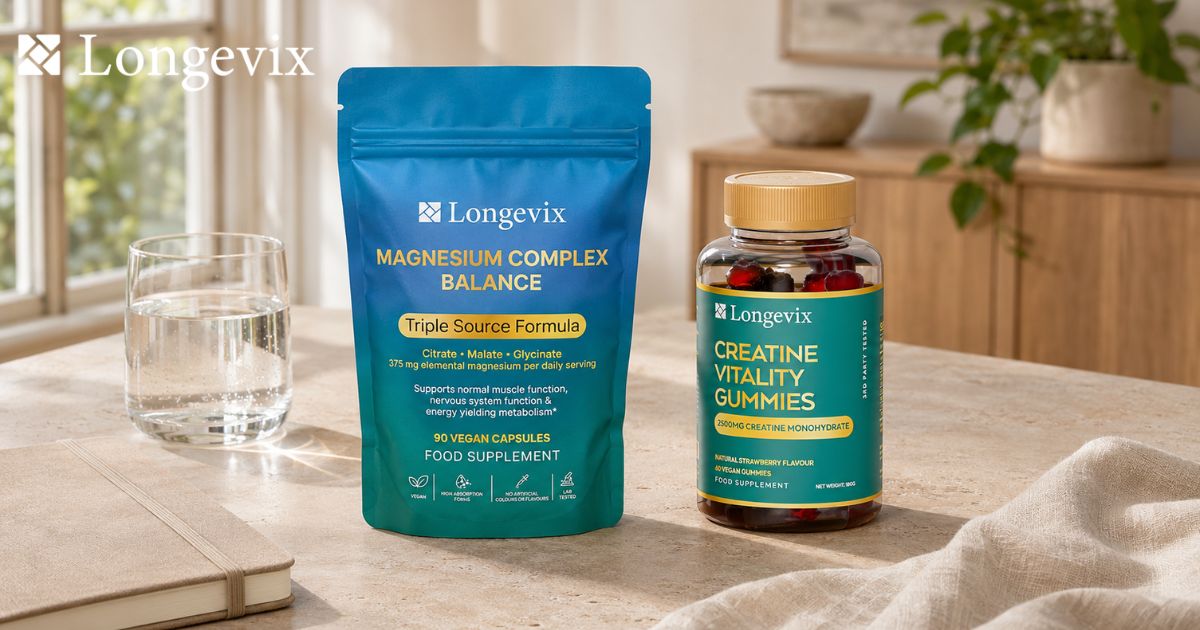
If you are comparing formulations, the verified Longevix Magnesium Complex and Creatine Vitality Gummies listings provide examples of product information worth checking, including serving sizes and disclosed ingredient quantities.
A well-informed decision does not begin with choosing the strongest supplement. It begins with understanding what you need, what the evidence supports and where important uncertainties remain.
References
Frequently asked questions
What Are the Best Supplements for Energy and Concentration?
There is no single best supplement for everyone. Correcting a confirmed nutrient deficiency may be important, while ingredients such as caffeine have evidence for particular short-term attention outcomes; the appropriate choice depends on the individual's circumstances.
Does Vitamin B12 Increase Energy if You Are Not Deficient?
Vitamin B12 supports normal biological functions, but taking additional B12 has not been shown to increase energy in people who already obtain enough of it. A deficiency should be assessed and managed appropriately.
Can Magnesium Supplements Improve Mental Focus?
Magnesium contributes to normal nervous system function and energy metabolism. However, there is insufficient evidence to conclude that additional magnesium reliably improves concentration in people with adequate magnesium status.
Is Creatine Effective for Memory and Concentration?
Some randomised trials and systematic reviews have reported favourable effects on selected cognitive outcomes, including certain memory and attention measures. Results remain inconsistent across domains, and no universal concentration benefit has been established.
When Should Persistent Tiredness and Brain Fog Be Checked by a GP?
Seek medical advice if tiredness continues for several weeks without a clear explanation, affects daily activities or occurs with other concerning symptoms. A GP can investigate possible causes rather than relying on supplements to address unexplained symptoms.


