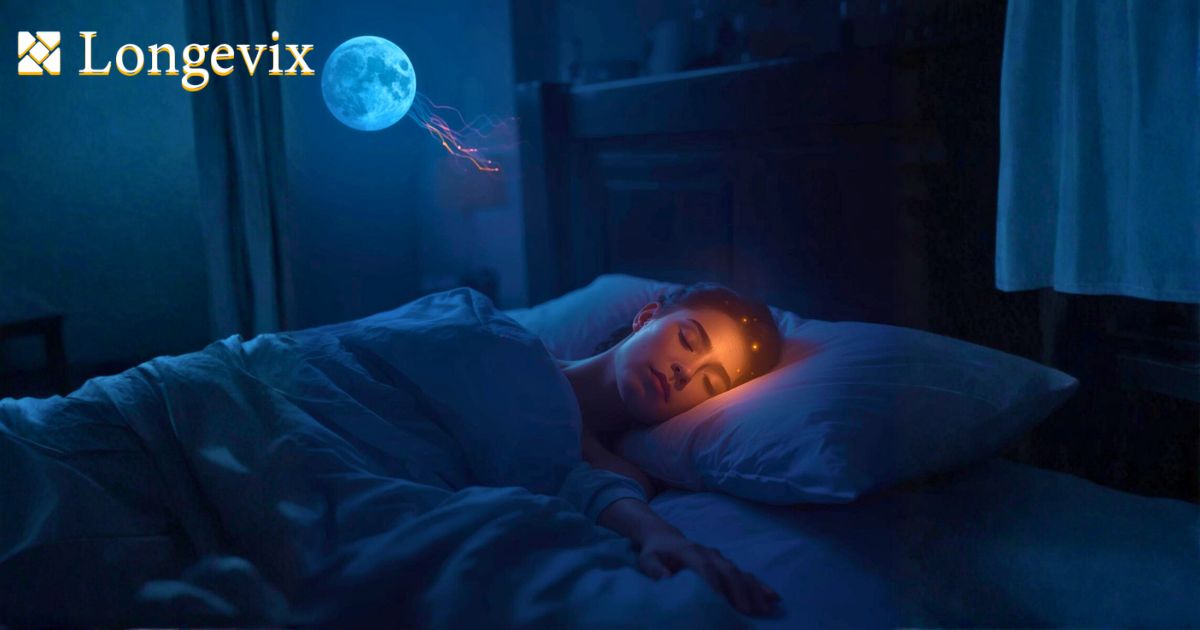
Deep sleep benefits go far beyond simply feeling rested in the morning. During the deepest stage of slow-wave sleep, your brain produces powerful delta waves that signal the body to begin intense overnight repair. This is when growth hormone release supports muscle recovery, cell regeneration, and full tissue repair after a long day. At the same time, your immune defences strengthen and your energy systems reset for tomorrow.
Editorial evidence note: This article discusses research and general information, not a diagnosis or a promise that a product will prevent, treat or cure a condition. Clinical questions and supplement suitability require individual professional advice.
Without enough deep sleep, fatigue builds quietly and mental clarity fades. Protecting this restorative phase is one of the most effective and natural ways to improve energy, resilience, and long-term health.
What Is Deep Sleep?
Deep sleep is the third stage of non-REM sleep. Experts call it slow-wave sleep because your brain produces large, slow delta waves during this time. These brain waves show that the body has entered full repair mode. Heart rate slows. Blood pressure drops. Muscles relax deeply. This stage is harder to wake from, and if someone does wake you, you may feel heavy and confused. That groggy feeling is called sleep inertia.
Scientists studying sleep for longevity explains that deep sleep usually happens more in the first half of the night. Adults in the USA and UK typically get one to two hours of deep sleep per night. This amount may shrink with age. Still, even small improvements can boost next-day energy. Deep sleep is not just rest. It is biological renewal.
What Happens in Your Body During Deep Sleep?
During deep sleep, powerful internal repair begins. The body increases growth hormone release, which drives tissue repair and cell regeneration. Muscles rebuild after daily wear. Tiny tears from exercise heal. Skin renews. This process supports longevity and reflects principles found in anti-ageing science. Without enough deep sleep, this repair slows down.

The brain also activates a cleansing system. Researchers at the University of Rochester discovered that deep sleep increases waste removal from the brain. Harmful proteins are cleared away. This process protects memory and focus. At the same time, immune function strengthens. Many experts confirm that deep sleep is important for immune system health. People who sleep well often recover faster from illness.
The table below explains what happens inside the body during deep sleep.
|
Body System |
What Happens in Deep Sleep |
Why It Matters |
|
Brain |
Strong delta waves, active waste removal |
Protects memory and focus |
|
Muscles |
Increased growth hormone release |
Supports repair and strength |
|
Immune System |
Boosted immune function |
Fights infection better |
|
Cells |
Faster cell regeneration |
Slows ageing signs |
|
Hormones |
Balanced cortisol levels |
Reduces fatigue |
Why Is Deep Sleep Important for Energy Levels?
Energy is created at the cellular level. During deep sleep, mitochondria recover and produce more fuel for the next day. This is why deep sleep benefits for better energy and reduced fatigue are so powerful. When you skip deep sleep, your body wakes up undercharged. Fatigue builds slowly.
Research published by the National Institutes of Health shows that disrupted deep sleep increases daytime tiredness and lowers physical endurance. Many people think they need more hours in bed. However, sleeping longer does not always help. In fact, sleeping too much may disrupt natural rhythms. What matters most is quality. Good deep sleep restores strength and reduces afternoon crashes.
Deep Sleep and Brain Function
Your brain depends on deep sleep. During this stage, memory consolidation takes place. That means your brain organises information from the day. This explains why students remember more after a full night’s sleep. Scientists confirm that deep sleep helps memory by strengthening neural pathways. When deep sleep drops, recall weakens.

There is more. Studies show that deep sleep affects brain function linked to emotions and decisions. It improves reaction time and focus. It also reduces stress sensitivity. If deep sleep declines, mood swings increase. Over time, such changes may raise the risk of cognitive decline. Protecting deep sleep protects mental clarity.
Deep Sleep Benefits for Better Energy and Reduced Fatigue in Daily Life
Consider a case study from a London sleep clinic. A 42-year-old executive reported constant fatigue. Tests showed low deep sleep time. Doctors recommended regular bedtime, reduced screen use, and simple stress reduction techniques. Within eight weeks, deep sleep improved by 35 per cent. Energy levels rose. Mood improved. The change was measurable and lasting.
How Much Deep Sleep Do You Need?
Most healthy adults need deep sleep to make up about 15 to 25 per cent of total rest. That equals roughly 90 minutes per night. The exact amount of deep sleep per night depends on age and lifestyle. Teenagers get more. Adults over 60 often get less. Wearable trackers estimate deep sleep, but sleep labs give the most accurate data.
If you wake refreshed and stay alert through the day, you likely get enough. If not, pay attention to signs you’re not getting enough deep sleep. These include morning grogginess, brain fog, and low stamina. Quality matters more than total hours.
What Happens If You Don’t Get Enough Deep Sleep?
Lack of deep sleep causes slow recovery. Muscles stay sore. Focus drops. Hormones become unstable. The immune system weakens. Over time, chronic sleep loss increases the risk of heart disease and diabetes. Energy declines become normal.

Many people ignore early warning signs. However, repeated nights of poor sleep reduce resilience. Fatigue becomes constant. Even motivation fades. This is why doctors emphasise that deep sleep benefits for better energy and reduced fatigue are not optional. They are essential.
Who Is at Risk of Not Getting Enough Deep Sleep?
Shift workers face high risk. So do people under constant stress. Blue light exposure late at night also disrupts deep sleep. Heavy alcohol intake reduces slow-wave sleep significantly. Ageing adults naturally see reductions as well.
Urban living adds challenges. Noise pollution and irregular routines interfere with healthy sleep cycles. Those who train late at night may also struggle. Timing of exercise matters. Intense workouts too close to bedtime may delay deep sleep onset.
How to Get More Deep Sleep Naturally
Improving deep sleep starts with routine. Go to bed at the same time daily. Lower room temperature slightly. Reduce screen light two hours before bed. These are proven ways to increase deep sleep. Gentle stretching or breathing exercises calm the nervous system.

Nutrition helps too. Magnesium-rich foods may support relaxation. Regular daytime exercise improves night recovery. Avoid caffeine late in the day. These practical tips for more slow-wave sleep can improve quality within weeks. Small changes create real results.
When to See a Doctor about Poor Sleep
Sometimes lifestyle changes are not enough. Loud snoring and breathing pauses may signal sleep apnoea. Chronic insomnia lasting more than three months needs medical review. If fatigue continues despite seven hours of sleep, seek professional advice.
Sleep specialists in the USA and UK use overnight monitoring to measure brain waves and oxygen levels. Early treatment prevents long-term health problems. Ignoring symptoms only delays recovery.
Optimising Deep Sleep for Maximum Energy
Deep sleep benefits for better energy and reduced fatigue go beyond daily comfort. They support long-term longevity and resilience. Deep rest strengthens the immune system, sharpens the mind, and restores the body nightly. It forms the base of true wellness.

When you protect deep sleep, you invest in your future. Science continues to confirm that high-quality slow-wave sleep is one of the strongest natural performance tools available. Prioritise it. Guard it. Your energy tomorrow depends on it.
Further Reading and Source Context
These external resources provide background or regulatory context. They do not prove that a particular Longevix product produces the health outcomes discussed above.
Frequently asked questions
How much deep sleep do you need?
Most adults need about 1–2 hours of deep sleep per night, which is roughly 15–25% of total sleep time.
What are the benefits of deep sleep?
Deep sleep restores energy, supports muscle repair, strengthens immunity, and improves memory and brain function.
What happens if you don't get enough deep sleep?
You may feel tired, foggy, moody, and more prone to illness due to poor recovery and a weakened immune response.
How can I increase my deep sleep?
Keep a consistent sleep schedule, reduce screen time at night, exercise regularly, and manage stress effectively.
Is deep sleep the same as REM sleep?
No, deep sleep is a non-REM stage focused on physical repair, while REM sleep supports dreaming and emotional processing.