Can you take NR gummies and creatine together? No well-established direct interaction between nicotinamide riboside (NR) and creatine was identified in the available research, but that does not mean the combination has been proven safe or more effective than either supplement alone.
Human studies have investigated NR and creatine separately. NR has been shown to increase certain blood measures of NAD+, while creatine has stronger evidence for specific exercise-performance outcomes. However, the effects of combining them have not been adequately tested in human clinical trials.
There is another consideration: NR gummies often contain additional ingredients. Understanding the full formulation, labelled quantities, medicines you take and relevant UK supplement rules matters more than simply deciding whether the two headline ingredients can be taken together.
Can You Take NR Gummies and Creatine on the Same Day?
For otherwise healthy adults, current research has not established a specific interaction that requires NR and creatine to be taken on different days. However, there is insufficient direct research to confirm the safety of using them together over the long term.
The distinction matters because scientists have studied the individual ingredients under controlled conditions, often in carefully selected participants. Those results cannot automatically establish what happens when two multi-ingredient supplements are combined.
NR and creatine are also not interchangeable. They participate in different aspects of cellular metabolism, and there is no established need to supplement both simply because they are associated with energy production.
What Does “No Known Interaction” Actually Mean?
When researchers have not identified an established interaction, it means available evidence has not demonstrated a specific problem. It does not mean every possible interaction has been investigated or excluded.
For NR and creatine, the available evidence does not establish that taking both produces additional improvements in muscle performance, mental energy or healthy ageing.
The practical question is therefore broader than whether the ingredients are chemically compatible. It is whether the full products are appropriate for the individual, particularly when other active ingredients and existing medicines are involved.
Readers specifically interested in a different NAD+ precursor can explore Longevix's separate guide to taking NMN and creatine together. NMN and NR are related but distinct compounds, so their research findings should not be treated as identical.
What Ingredients Are Actually in NR and Creatine Gummies?
The term NR gummies can make a product sound as though it contains only nicotinamide riboside. In practice, some gummies combine NR with other compounds intended for different nutritional or formulation purposes.
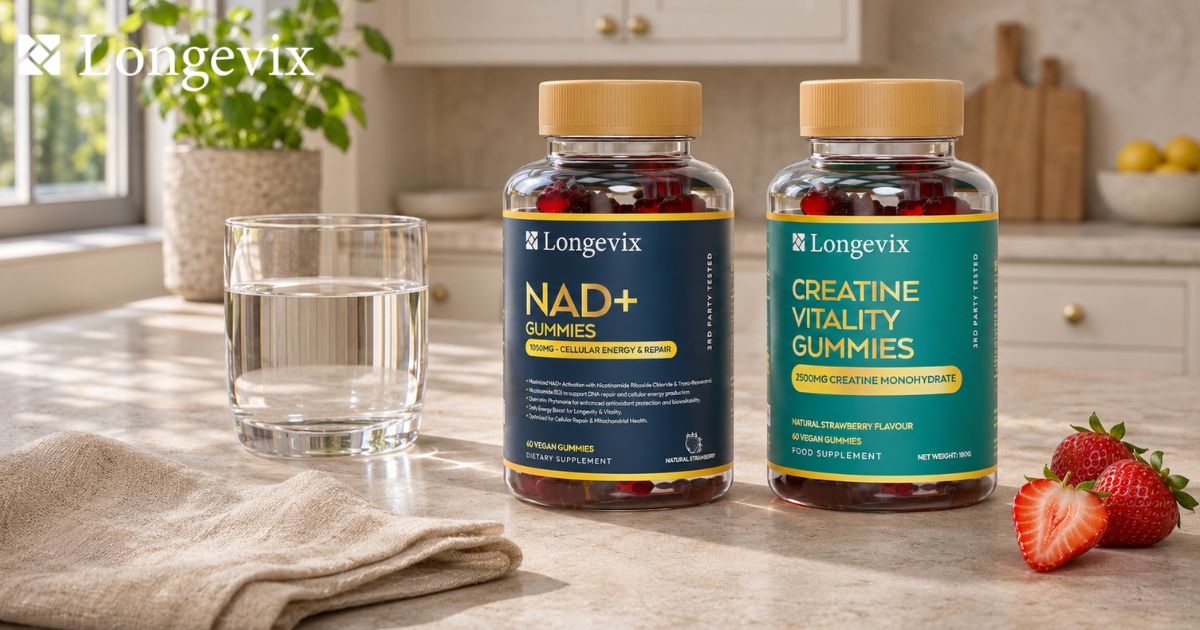
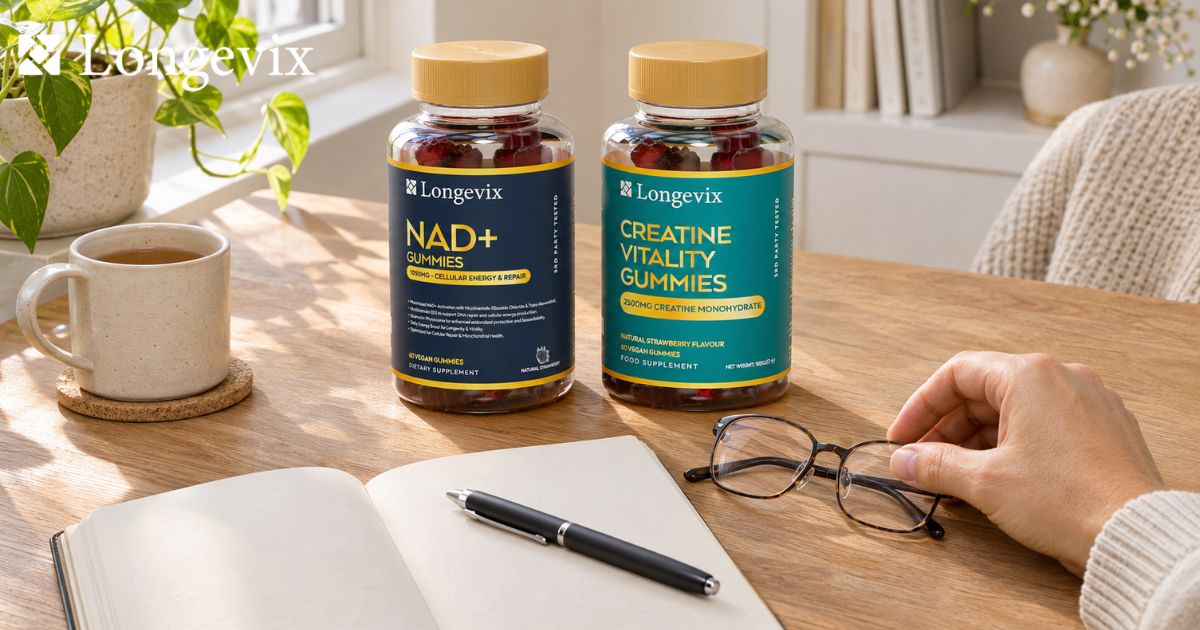
Longevix offers two relevant products: NAD+ Support Gummies and Creatine Vitality Gummies. They are sold as separate supplements, not as a clinically tested combined formula.
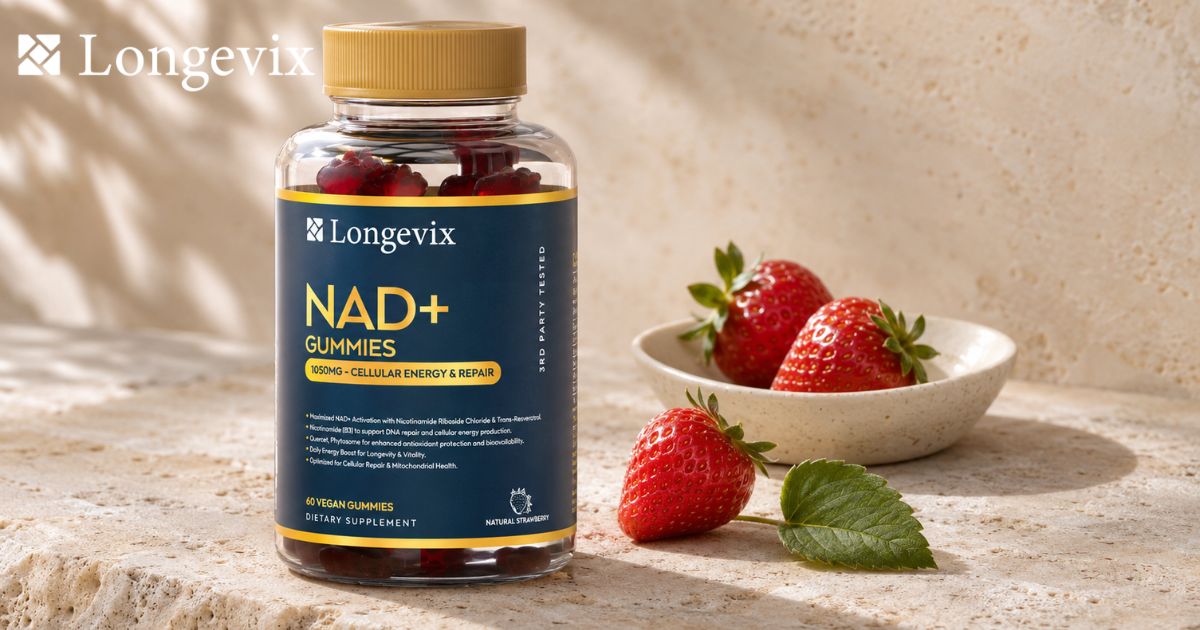
Inside Longevix NAD+ Support Gummies
The published product information for Longevix NAD+ Support Gummies identifies four active ingredients in each two-gummy serving.
|
Active ingredient |
Published amount per two gummies |
|---|---|
|
Nicotinamide riboside (NR) |
300 mg |
|
Quercetin |
250 mg |
|
Trans-resveratrol |
250 mg |
|
Nicotinamide (vitamin B3) |
250 mg |
The bottle contains 60 gummies, equivalent to 30 labelled servings. The published directions specify two gummies daily, subject to the physical product label.
NR is a precursor involved in NAD+ metabolism. Nicotinamide is another vitamin B3-related compound, while quercetin and trans-resveratrol are polyphenolic compounds investigated for several biological effects.
These ingredients should not be assumed to enhance one another's effects in humans simply because they appear in the same formulation.
Inside Longevix Creatine Vitality Gummies
Longevix Creatine Vitality Gummies contain:
· Creatine monohydrate
· Trimethylglycine (TMG), also called betaine
· Taurine
· Vitamin B12
The published information identifies a four-gummy serving, with directions stating up to four gummies daily. A 60-gummy bottle therefore contains 15 four-gummy servings.
The exact quantities of creatine, TMG, taurine and vitamin B12 are not disclosed in the accessible online ingredient information. These amounts must be checked against the full physical product label before making dose-based comparisons.
This is particularly important for creatine, because human studies generally describe intake in grams rather than numbers of gummies.
Why NR Gummies Are Not the Same as Pure NR
A clinical trial testing one purified NR ingredient does not establish the same safety profile or benefits for gummies containing NR alongside other compounds.
Similarly, findings from creatine monohydrate research cannot automatically be applied to a finished gummy containing additional ingredients, particularly when its actual creatine quantity has not been confirmed.
The full formula matters when evaluating possible medicine interactions, cumulative vitamin exposure and product suitability.
For a broader explanation of the NR formulation, see Longevix's guide to NR gummies.
How Do NR and Creatine Work Differently in the Body?
NR and creatine are frequently associated with cellular energy, but their biological functions are different.
NR and the NAD+ Production Pathway
Nicotinamide riboside is a form of vitamin B3-related compound that can be converted through metabolic pathways into nicotinamide adenine dinucleotide, or NAD+.
NAD+ is a coenzyme involved in numerous cellular reactions. One of its important functions is helping transfer electrons during the metabolism of carbohydrates, fats and other nutrients.
It also participates in cellular signalling processes involving enzymes such as sirtuins and PARPs.
Because NAD+ has these essential biological roles, researchers have investigated whether supplying additional precursors such as NR changes NAD+ availability.
Human trials demonstrate that NR can raise certain NAD+ biomarkers. However, increasing a biomarker does not necessarily mean a person will feel more energetic, think more clearly or experience healthier ageing.
Creatine and the Phosphocreatine–ATP System
Creatine works through a different mechanism.
Cells use adenosine triphosphate (ATP) to power many activities, including muscle contraction. During periods of high demand, ATP can be used rapidly.
The creatine kinase system helps regenerate ATP by transferring a phosphate group from phosphocreatine to adenosine diphosphate (ADP).
This system is particularly important during short bursts of intense activity.
Creatine supplementation can increase muscle creatine stores, and research supports benefits for certain high-intensity exercise tasks and resistance-training outcomes.
The International Society of Sports Nutrition's position stand provides an extensive review of creatine's mechanisms, performance effects and safety evidence.

Why Different Pathways Do Not Prove Synergy
NR and creatine participate in biological systems that contribute to normal energy metabolism. That connection makes the combination interesting to researchers, but it does not establish a useful interaction when the substances are supplemented together.
For example, increasing NAD+ measurements does not automatically increase ATP production in a way that improves exercise performance. Nor does increasing muscle creatine stores demonstrate that NR supplementation becomes more effective.
To establish an additional benefit, researchers would need human trials comparing the combination against NR alone, creatine alone and an appropriate control.
Until those studies are available, any proposed additional benefit remains a hypothesis.
What Does Human Research Say About Combining Them?
The most useful evidence comes from human studies of each ingredient. These studies reveal important differences in what is established and what remains uncertain.
What Human Trials Show About NR
A 2018 randomised crossover trial by Martens and colleagues investigated NR in 30 healthy middle-aged and older adults. Participants received 1,000 mg of NR daily or placebo during separate six-week treatment periods.
Researchers reported that NR was generally well tolerated under the study conditions and increased measures associated with NAD+ metabolism.
However, the trial was relatively small and short. It did not establish that NR extends lifespan or produces broad improvements in daily functioning.
Another randomised trial published in 2019 investigated daily NR amounts of 100 mg, 300 mg and 1,000 mg over eight weeks in otherwise healthy adults with overweight.
Whole-blood NAD+ increased in a dose-dependent manner. Although this helps establish a biochemical response, it does not demonstrate that someone taking NR gummies will experience improved memory, physical energy or exercise recovery.
A 2026 human study comparing NR, NMN and nicotinamide found that NR and NMN increased circulating NAD+ concentrations over 14 days, while nicotinamide did not produce the same response under the study conditions.
The study involved 65 healthy participants and focused on short-term metabolic measurements. It was not a trial of NR gummies combined with creatine.
What Human Trials Show About Creatine
Creatine monohydrate has a more extensive human evidence base for physical performance.
Research consistently supports benefits in certain activities involving repeated short bursts of high-intensity exercise, provided the amount and conditions are appropriate.
Systematic reviews also suggest that creatine supplementation alongside resistance training can improve some strength and lean-mass outcomes, although the size and consistency of effects vary across populations and study designs.
For example, a systematic review and meta-analysis examining resistance training and creatine in older adults reported improvements in some muscle-related outcomes, while not all strength measures showed meaningful effects.
These findings concern creatine intake under particular research conditions. They do not validate every commercially available gummy formulation.
Have Scientists Tested NR Gummies and Creatine Together?
No published randomised human trial directly evaluating the precise NR-gummy-and-creatine combination was identified in the research reviewed for this article.
One potentially relevant 2021 laboratory study investigated creatine monohydrate alongside nicotinamide in cultured human skin cells exposed to oxidative stress.
Importantly, the study used nicotinamide rather than NR. It was conducted in cells, not in people taking supplements.
Its results cannot demonstrate that NR gummies and creatine prevent ageing, enhance recovery or provide additional clinical benefits.
The evidence can be summarised as follows:
|
Research area |
What has been demonstrated |
What remains unproven |
|---|---|---|
|
NR supplementation |
Increased NAD-related blood biomarkers in human trials |
Consistent improvements in energy, cognition or longevity |
|
Creatine supplementation |
Benefits for certain exercise-performance and resistance-training outcomes |
Equivalent benefits from every gummy formulation |
|
NR plus creatine |
Different established biochemical roles |
Added benefits, optimal combination doses and long-term safety |
|
Creatine plus nicotinamide in cell experiments |
Selected laboratory responses |
Relevant benefits in humans taking NR gummies |
The distinction between a biological mechanism, a measured biomarker and a meaningful health outcome is central to interpreting supplement research responsibly.
Are There Additional Risks From the Other Gummy Ingredients?
Evaluating only NR and creatine overlooks the other active compounds in multi-ingredient products.
Someone using both Longevix gummies would also need to consider quercetin, trans-resveratrol, nicotinamide, TMG, taurine and vitamin B12.
Quercetin, Trans-Resveratrol and Medicine Interactions
Quercetin and resveratrol are widely studied plant-related compounds, but their effects can depend on the amount, formulation and individual circumstances.
Resveratrol is particularly relevant for people taking certain medicines.
According to Memorial Sloan Kettering Cancer Center's resveratrol review, laboratory research suggests that resveratrol can influence platelet activity. The clinical importance of this effect is not fully established, but caution is appropriate with antiplatelet medicines and other treatments affecting bleeding risk.
Potential interactions involving drug-metabolising enzymes have also been investigated. These do not establish a predictable interaction at every supplement amount.
Anyone taking prescription medicines should have the complete ingredient list reviewed by a pharmacist or other qualified healthcare professional rather than relying on a general statement that NR and creatine have no known direct interaction.
Further context is available in Longevix's resveratrol side effects guide.
Nicotinamide and Other Vitamin B3 Supplements
Nicotinamide, also called niacinamide, is a form of vitamin B3. It differs from nicotinic acid, particularly in its tendency to produce flushing.
The published NAD+ Support Gummies formulation contains 250 mg of nicotinamide alongside 300 mg of NR per two-gummy serving.
People already taking a B-complex, additional niacinamide, NR capsules or other NAD+ precursor supplements should check for overlapping ingredients.
Different forms of vitamin B3 have different safety considerations, and the amounts should not simply be added together and compared against a limit intended for a different chemical form.
The NIH Office of Dietary Supplements' niacin fact sheet explains the distinctions between forms and the available safety evidence.
TMG, Taurine and Vitamin B12 in Creatine Gummies
TMG participates in methyl-group metabolism. Taurine is involved in several physiological processes, while vitamin B12 contributes to normal biological functions including red blood cell formation and nervous-system maintenance.
These established roles do not establish that the three ingredients increase creatine's effectiveness when combined in a gummy.
The exact amounts present in Longevix Creatine Vitality Gummies have not been independently confirmed from the public online ingredient listing.
That uncertainty is a reason to review the physical label rather than assume an effective or appropriate amount.
A Practical Safety Comparison
|
Ingredient or consideration |
Why it matters |
What to check |
|---|---|---|
|
NR |
Human safety evidence is limited to studied populations, amounts and periods |
Ingredient form, amount and existing NR use |
|
Trans-resveratrol |
Potential medicine interactions and source-specific UK rules |
Medicines, ingredient source and label warnings |
|
Quercetin |
Interaction and formulation uncertainties |
Medication use and total supplement exposure |
|
Nicotinamide |
May overlap with other vitamin B3 supplements |
Other products containing niacinamide or niacin |
|
Creatine monohydrate |
Actual amount matters for evidence comparisons; influences creatinine interpretation |
Gram quantity, kidney history and medical tests |
|
TMG, taurine and B12 |
Additional active ingredients require a full-label assessment |
Individual quantities and duplicate supplementation |
For a wider discussion of the formulation, see NAD+ gummies side effects and safety.
How Much NR and Creatine Would You Actually Be Taking?
Supplement research measures ingredient exposure in milligrams or grams, not in numbers of capsules or gummies.
A product containing four gummies per serving does not necessarily provide more of its main ingredient than a product containing two.
Understanding the Two-Gummy NR Serving
Longevix's published NAD+ Support Gummies information lists 300 mg NR per two-gummy serving.
The same serving contains 250 mg each of quercetin, trans-resveratrol and nicotinamide.
The bottle contains 60 gummies, so the arithmetic is straightforward:
60 gummies ÷ 2 gummies per serving = 30 labelled servings.
This calculation establishes the pack's serving count. It does not establish that the product matches every condition of a clinical trial or relevant novel-food authorisation.
Why Four Creatine Gummies Do Not Reveal a Creatine Dose
Longevix Creatine Vitality Gummies have a four-gummy labelled serving and 60 gummies per pack.
Therefore:
60 gummies ÷ 4 gummies per serving = 15 labelled servings.
However, because the accessible online listing does not disclose the precise creatine monohydrate quantity, it is not possible to calculate how many grams of creatine that serving supplies.
Nor is it appropriate to estimate the amount from the number or physical size of the gummies.
For a more detailed comparison of delivery formats, read creatine gummies versus powder.
Research Doses Versus Personal Supplement Instructions
Many creatine studies investigate daily amounts measured in several grams. The NIH Office of Dietary Supplements discusses the amounts and study conditions used in exercise-performance research.
Those research protocols are not instructions to increase the number of gummies beyond a product's directions.
Likewise, an NR trial using 1,000 mg daily does not establish that someone should increase a lower-amount product to match the trial.
If the amounts on a physical product label are unclear, the sensible next step is to seek clarification from the manufacturer, rather than adjust intake based on an assumption.
Does It Matter When You Take NR Gummies and Creatine?
There is no clinically established timing schedule showing that NR and creatine work better when taken together or separated by a particular number of hours.
The question of timing is often influenced more by convenience and individual tolerance than by direct combination research.
Taking Both Supplements at the Same Time
No reliable human trial was identified demonstrating that simultaneous NR and creatine intake either improves or reduces the effectiveness of the combination.
Equally, there is no established requirement to separate their use by several hours.
Whether simultaneous use is appropriate depends on the full formulations, product directions, medicines and the individual rather than a universal timing rule.
Morning Versus Post-Workout Timing
People may encounter recommendations to take NAD+ precursors in the morning and creatine after training.
However, an optimal NR–creatine timing strategy has not been demonstrated in human research.
Creatine's established exercise-related effects are generally associated with changes in muscle creatine availability over time, rather than an immediate stimulant-like response.
NR research has also examined changes in NAD-related measurements over different supplementation periods, not a proven morning energy benefit.
There is insufficient evidence to recommend a specific hour for obtaining additional effects from the combination.
Why a Consistent Routine Matters More Than an Unproven Timing Rule
For anyone considering supplementation, understanding the labelled amount and following suitable product directions is more useful than constructing a complicated schedule around untested claims.
If a supplement causes gastrointestinal discomfort, or the person takes medicines at specified times, a pharmacist can advise whether adjustments or avoidance are appropriate.
Longevix also provides a separate explanation of creatine gummies before a workout.
Who Should Seek Professional Advice Before Combining Them?
NR and creatine supplementation may require more careful consideration for people with existing medical conditions, particularly when the supplements contain additional active compounds.

Kidney Disease, Creatinine and Blood Tests
Creatine can influence serum creatinine, a measurement commonly used when assessing kidney function.
This matters because creatinine is produced partly through creatine metabolism. An increase in serum creatinine does not always mean that kidney filtration has deteriorated.
A 2026 systematic review and meta-analysis examined creatine supplementation and kidney-function measurements across randomised trials.
Another 2026 review highlighted the importance of distinguishing creatinine-based estimates from other kidney-function measures.
These findings should not be interpreted as proof that creatine is harmless in every person with kidney disease.
Someone with chronic kidney disease, unexplained abnormal kidney tests or another relevant medical condition should seek individual professional advice before using creatine supplements.
It is also important to tell healthcare professionals about creatine use when blood tests are being interpreted.
Prescription Medicines and Multiple Supplements
A pharmacist should review the full ingredient list when someone is taking medicines, particularly those affecting blood clotting or drugs with important interaction risks.
The relevant question is not simply whether creatine interacts with NR, but whether any component of either supplement could affect the individual's treatment.
Taking several products with overlapping ingredients can also complicate assessment of unwanted effects.
Pregnancy, Breastfeeding and Other Medical Conditions
The safety of the complete NR-gummy-and-creatine combination has not been established for pregnancy or breastfeeding.
People who are pregnant, breastfeeding, managing significant medical conditions or receiving specialist treatment should not start the combination without appropriate professional advice.
The absence of a recognised interaction in otherwise healthy adults is not a substitute for safety evidence in these groups.
What UK Rules Should You Check Before Using These Supplements?
Supplement ingredients and claims are regulated differently depending on the jurisdiction and the precise ingredient formulation.
In Great Britain, some ingredients fall under novel-food authorisation requirements. These rules can specify chemical identity, permitted uses, daily amounts and mandatory labelling.
This is particularly relevant to NR-containing gummies.
Nicotinamide Riboside Chloride and Novel-Food Authorisation
The Great Britain Food Standards Agency authorisation for nicotinamide riboside chloride, identified as NOVEL-96, includes a maximum of 300 mg per day for the general adult food-supplement category, excluding pregnant and lactating women.
The authorisation applies to a specified chemical form and is subject to its full conditions.
Although Longevix publishes a two-gummy serving containing 300 mg nicotinamide riboside, the public ingredient listing does not establish every detail needed to assess conformity with that authorisation, including the precise ingredient specification and quantity basis.
The published amount alone must not be interpreted as regulatory approval of the finished product.
Why the Source of Trans-Resveratrol Matters
Trans-resveratrol raises a further product-specific regulatory question.
The Great Britain register contains an authorisation for synthetic trans-resveratrol with conditions specifying a maximum of 150 mg per day for adults in capsule or tablet food supplements.
A separate authorisation for trans-resveratrol from a microbial source has different conditions.
Longevix's published NAD+ Support Gummies information lists 250 mg trans-resveratrol per two-gummy serving, but does not establish its exact ingredient source or applicable authorisation.
This requires product-specific regulatory verification. It would be incorrect to conclude either that the gummies comply with the applicable rules or that they breach them without establishing the ingredient's identity, source, authorised use and relevant conditions.
The authorisations also contain labelling requirements relating to people using medicines.
Creatine Health Claims and UK Labelling Rules
Great Britain's permitted creatine performance claim is subject to specified conditions, including the provision of a daily intake of 3 g of creatine.
The relevant retained legislation describes those conditions.
Because the public Creatine Vitality Gummies listing does not disclose the precise amount of creatine per labelled serving, it is not possible to establish that the product meets the applicable threshold.
General scientific discussions of creatine should therefore be distinguished from authorised health claims for a particular commercial product.
Northern Ireland may operate under different applicable food rules because of the Windsor Framework. Readers and businesses should not assume every Great Britain authorisation applies identically across the United Kingdom.
For readers in the United States, the regulatory framework is different again. The FDA explains that dietary supplements generally are not approved for safety and effectiveness before marketing. Advertising claims must also satisfy relevant FTC substantiation requirements.
None of these regulatory frameworks should be interpreted as evidence that combining NR and creatine has been clinically shown to provide additional benefits.
Is Taking NR Gummies With Creatine Worth Considering?
NR and creatine are associated with different aspects of cellular metabolism, but their scientific evidence is not equally developed.
Creatine monohydrate has substantial human research supporting defined exercise-related outcomes. NR has demonstrated changes in NAD-related blood biomarkers, but corresponding improvements in everyday energy, cognition or longevity have not been consistently established.
There is currently insufficient direct evidence to conclude that combining NR gummies and creatine offers additional benefits.
The decision should also account for the complete formulation, actual ingredient quantities, personal health circumstances, existing medicines and the relevant UK regulatory requirements.
For readers primarily interested in exercise performance, the evidence concerning creatine itself is more directly relevant than unproven supplement-stacking claims. For those interested in NAD+ research, understanding the limits of NR trials is equally important.
Before making a decision, review the available NR gummies information and creatine monohydrate gummies guide. The exact product labels and regulatory status should be verified before treating either formulation as suitable for a combined routine.
Ultimately, there is no established requirement to take NR gummies and creatine together. Clear ingredient information, realistic expectations and appropriate professional advice provide a stronger basis for decision-making than promises of supplement synergy.
Frequently asked questions
Can you take NR gummies and creatine at the same time?
No established direct interaction was identified in the reviewed evidence, but simultaneous use has not been adequately tested in human combination trials. The full ingredients, medicines and individual health circumstances should be considered before taking both.
Does combining NR and creatine increase energy or exercise performance?
Creatine has evidence supporting certain exercise outcomes, while NR can increase NAD-related biomarkers. There is no reliable direct clinical evidence showing that combining them produces additional energy or performance benefits.
Should NR gummies be taken in the morning and creatine after exercise?
No clinically established schedule shows that this timing produces better results. Follow appropriate product directions and seek individual advice if medicines or health conditions affect supplement timing.
Can NR gummies and creatine affect kidney blood tests?
Creatine can influence serum creatinine, which is used in some kidney-function assessments. Tell your healthcare professional about creatine use, especially if you have kidney disease or are undergoing relevant blood tests.
Is combining NAD+ Support Gummies with Creatine Vitality Gummies the same as taking pure NR and creatine?
No. Both Longevix products contain additional active ingredients. Their complete formulations require separate assessment, and research on isolated NR or creatine cannot automatically establish the safety or effectiveness of taking the finished gummies together.